
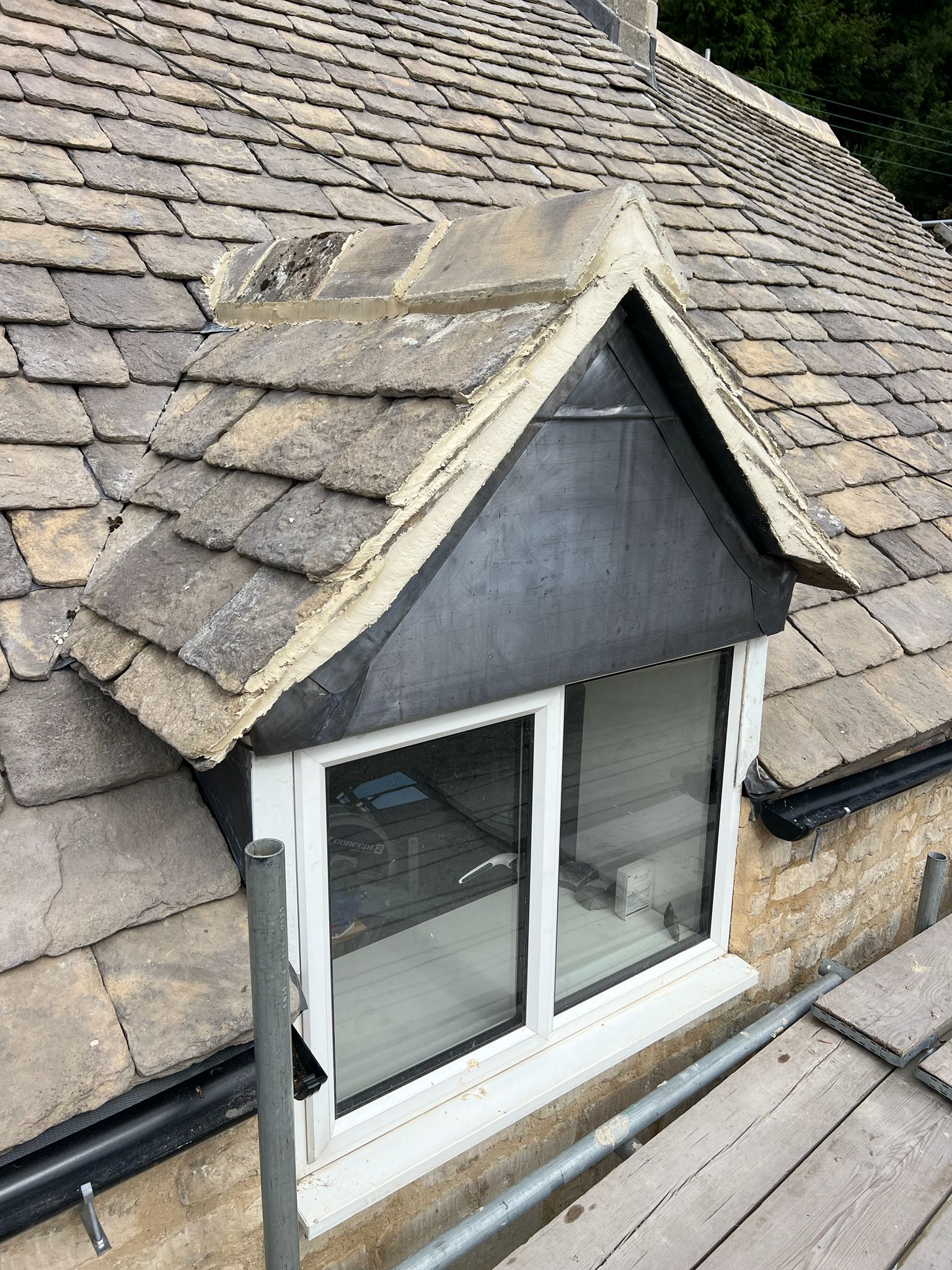
When a brand-new tiled roof started leaking and failing across almost every detail, the original installer had already gone out of business. We were called in to strip the lot back and rebuild it properly — with reclaimed tiles to match what was there, a properly engineered warm-roof build-up, new lead throughout, new rooflights, rise-and-fall gutter brackets to deal with a curved roof line, and a slate undercloak solution to straighten a wonky verge.
The property and brief
A property with a brand-new roof tiled in Bradstone reconstituted stone — installed by another contractor and failing in multiple places. The customer was already dealing with leaks, damp, expanding foam where lead detailing should have been, ineffective flashings, leaking rooflights and a verge that wasn’t straight. The original installer had gone out of business, so any recourse was through us. The brief was simple to state and a lot of work to deliver: strip the failed roof off, source matching tiles, and rebuild the whole thing properly.
What we found
The roof was newly installed but failing in almost every aspect:
- Leaks and damp through multiple junctions.
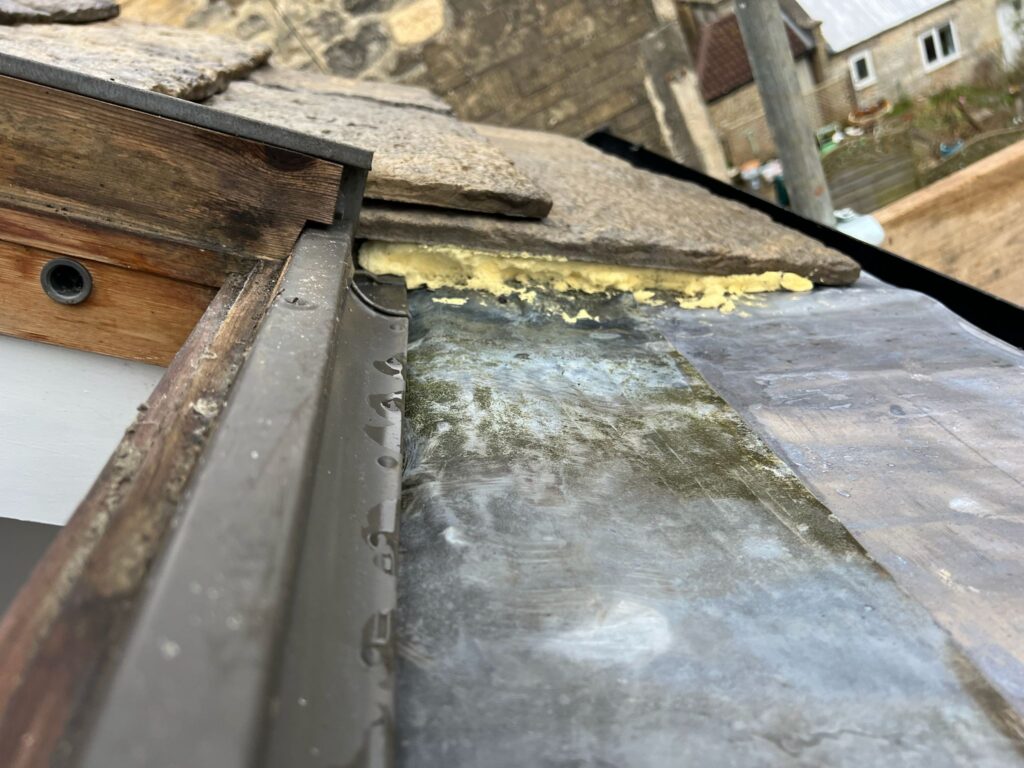
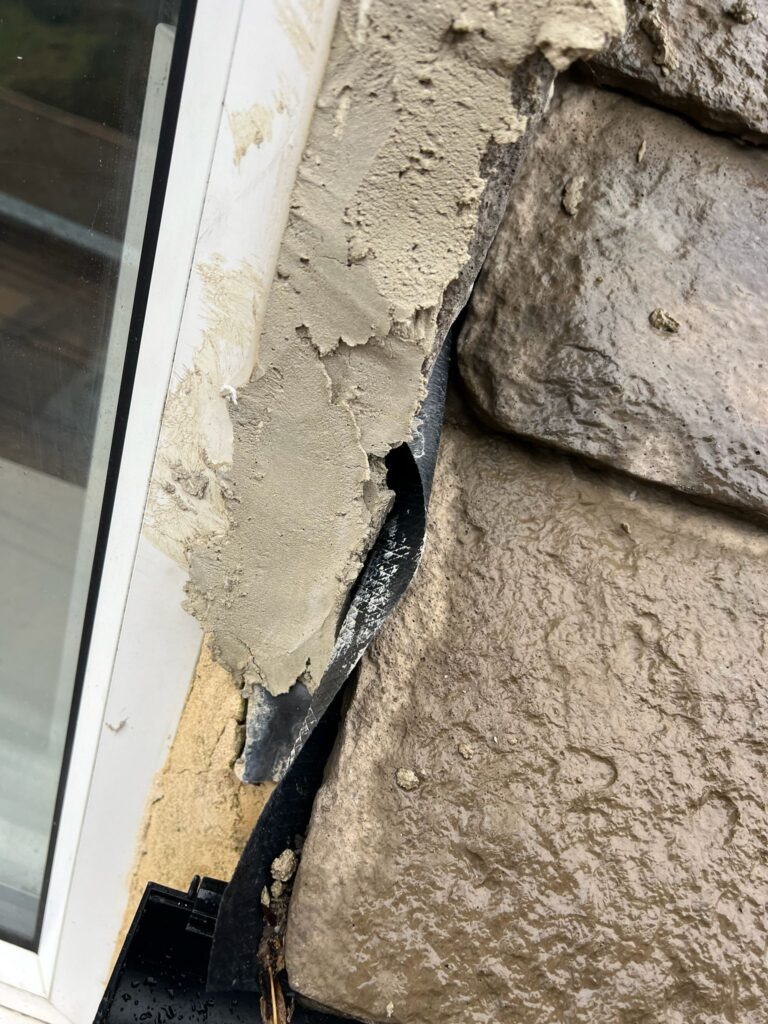
- Expanding foam used in place of proper lead detailing — never the right answer on a roof.
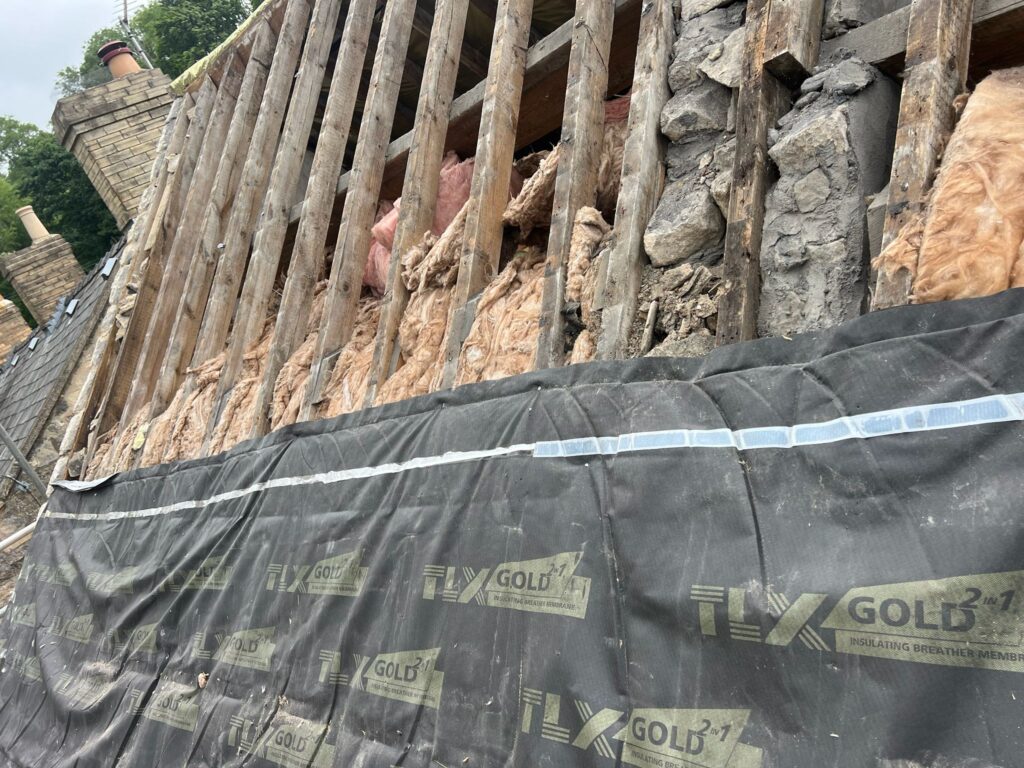
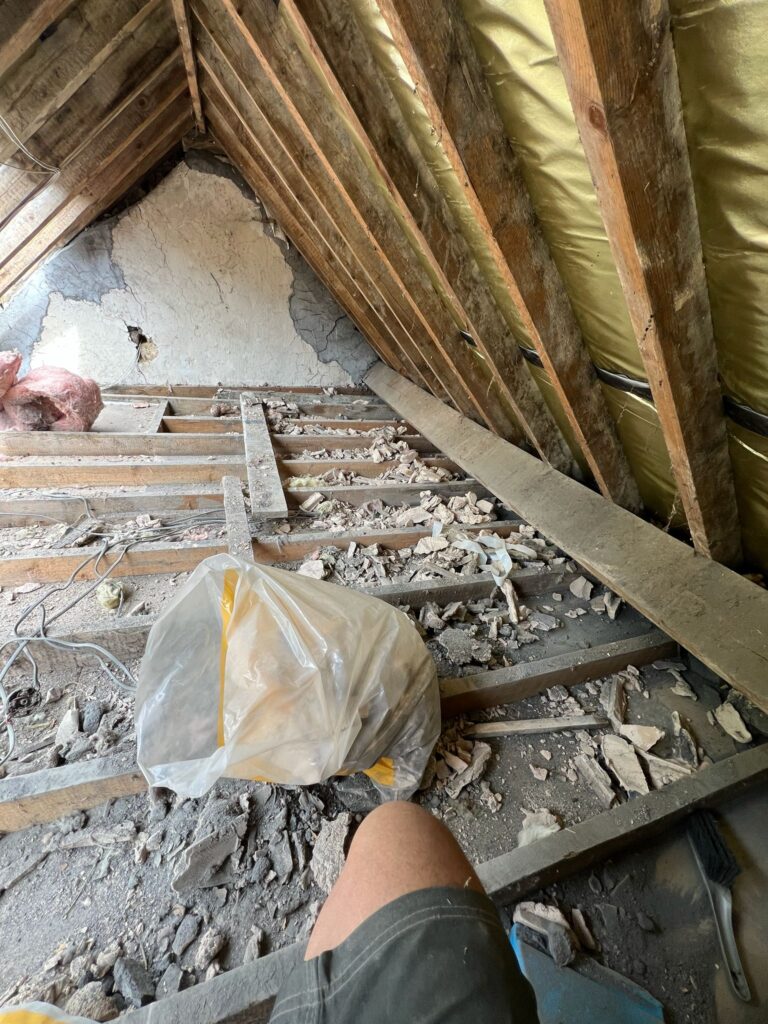
- All the previous installer’s debris left in the attic — lime mortar that had fallen off the backs of the tiles, packaging, offcuts and rubbish, none of it cleared down.
- Lead flashings fitted too low to act as proper weatherings, because the counter battens had been set out wrong, leaving the lead sitting below the height it needed to be at.
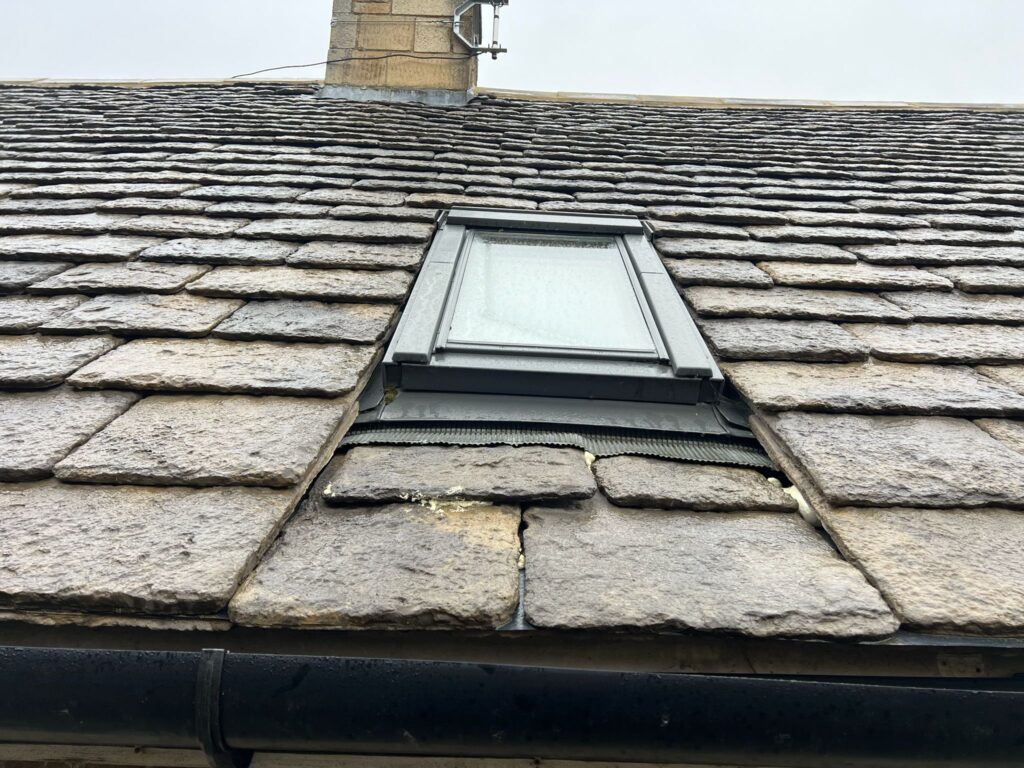
- Leaking Velux rooflights that hadn’t been installed or flashed correctly.
- A curved roof line that hadn’t been addressed in the original installation.
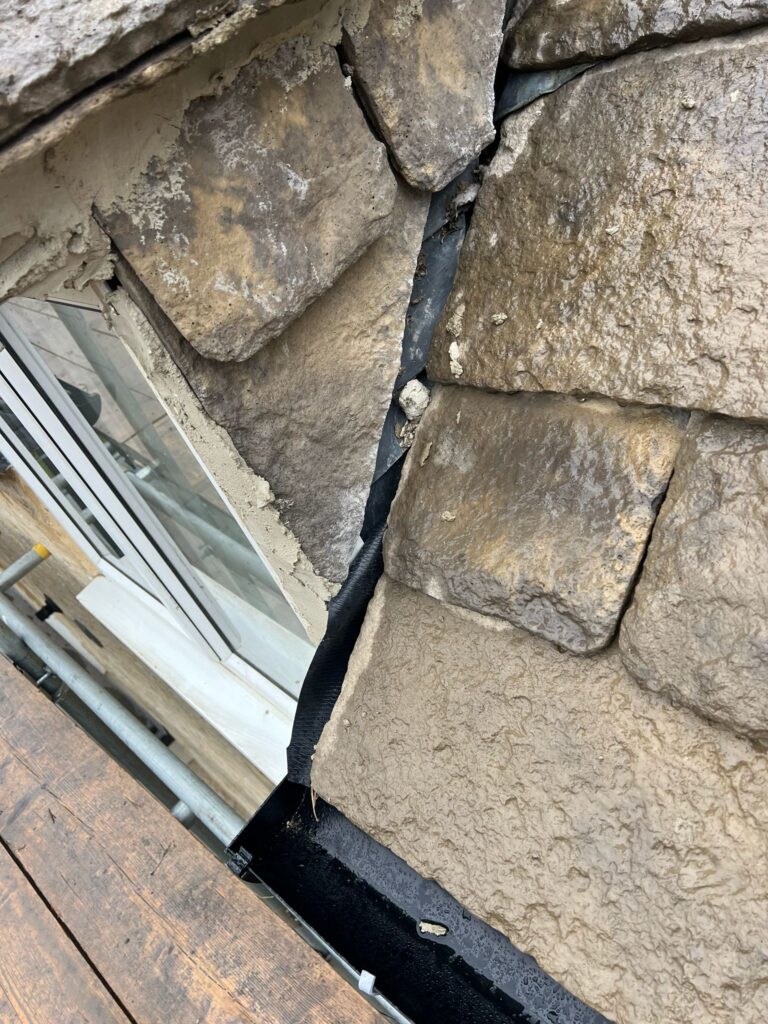
- A wonky verge that had simply been tiled to without correction.
- The original Bradstone tile range was no longer available new — by the time we were called in, sourcing brand-new replacements wasn’t an option.
What we did
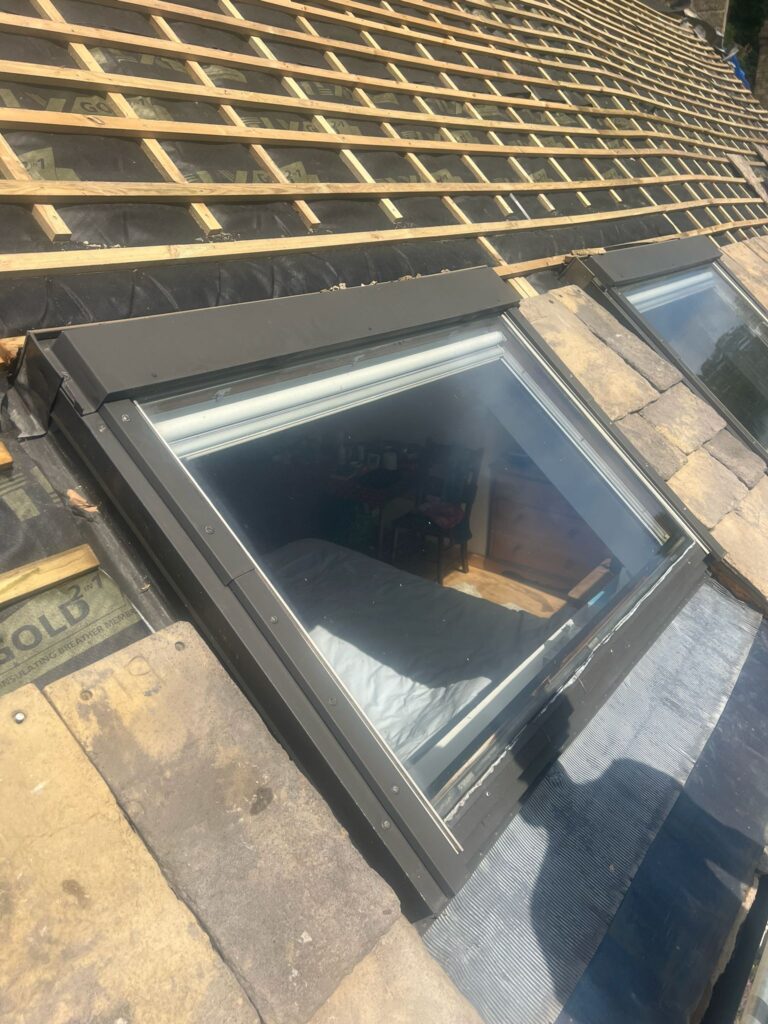
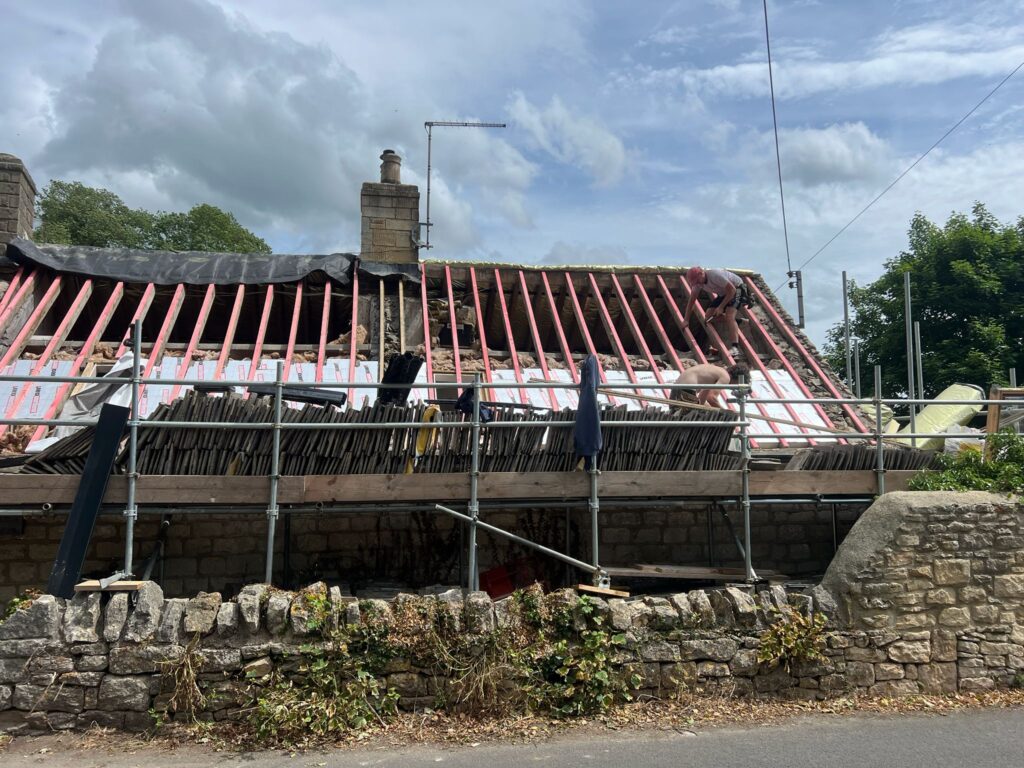
We stripped the entire roof and salvaged what could be reused. The original Bradstone stones came off carefully and were set aside, along with the existing insulated underlay. Shortfall in tiles was made up with reclaimed Bradstone sourced to match.
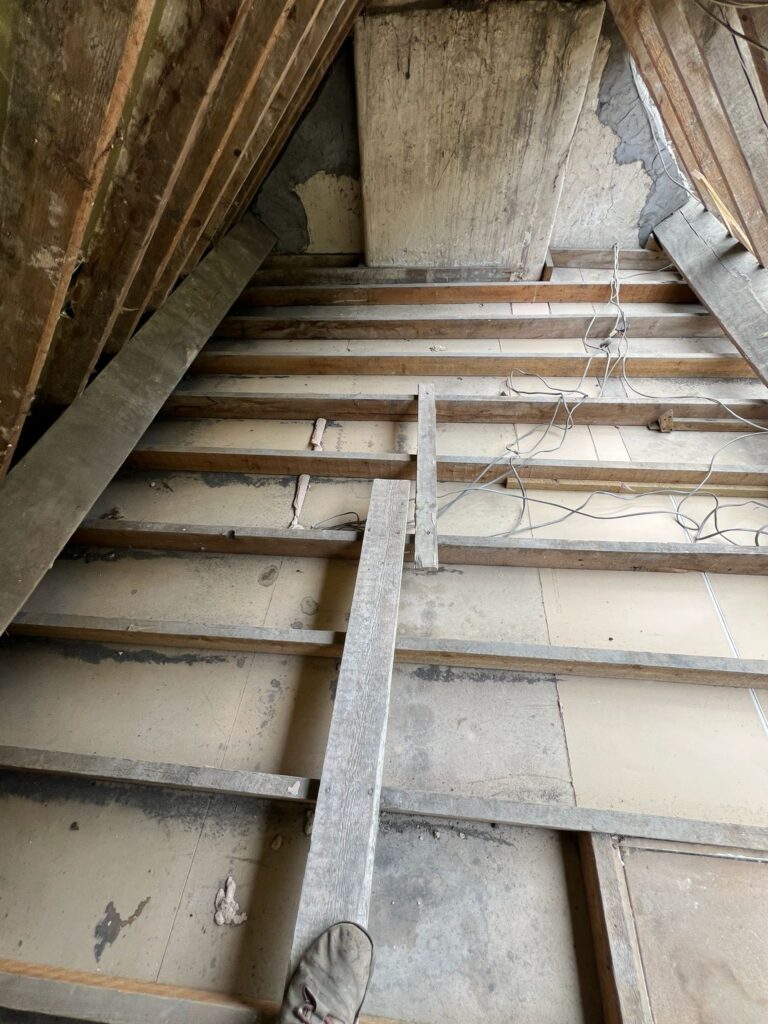
Before any rebuilding could start, we had to clear the attic. The previous installer had bedded the tiles with lime mortar on their backs, and a lot of that mortar had ended up in the attic when the tiles came off — alongside all the rubbish, packaging and offcuts they’d simply left behind. Clearing it out properly meant working through the void by hand, sweeping and bagging the debris. Itchy, dusty, time-consuming — but you can’t rebuild a roof on top of a tip.
The new build-up was engineered properly:
- 100mm PIR insulation to bring the roof to a modern thermal standard.
- Counter battens above the PIR to maintain a continuous airflow gap.
- The saved insulated underlay reinstalled — and then a new felt sheet laid over the top to seal the nail holes left from stripping out the previous tile fixings.
- Tile battens above.
- Breather membrane as the primary weatherproofing layer.
- A second batten layer to which the tiles were fixed — 25 x 50mm at the bottom of the slope to carry the larger, heavier stones, dropping to 25 x 38mm near the ridge for the smaller stones and their smaller hooks, in a proper diminishing course.
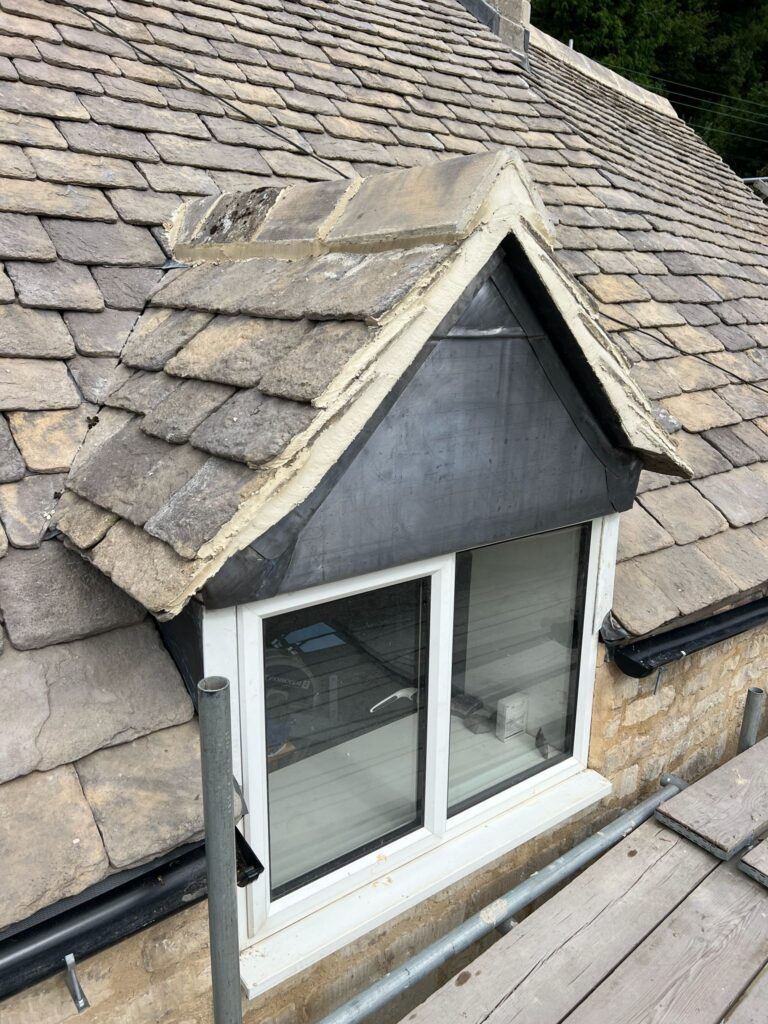
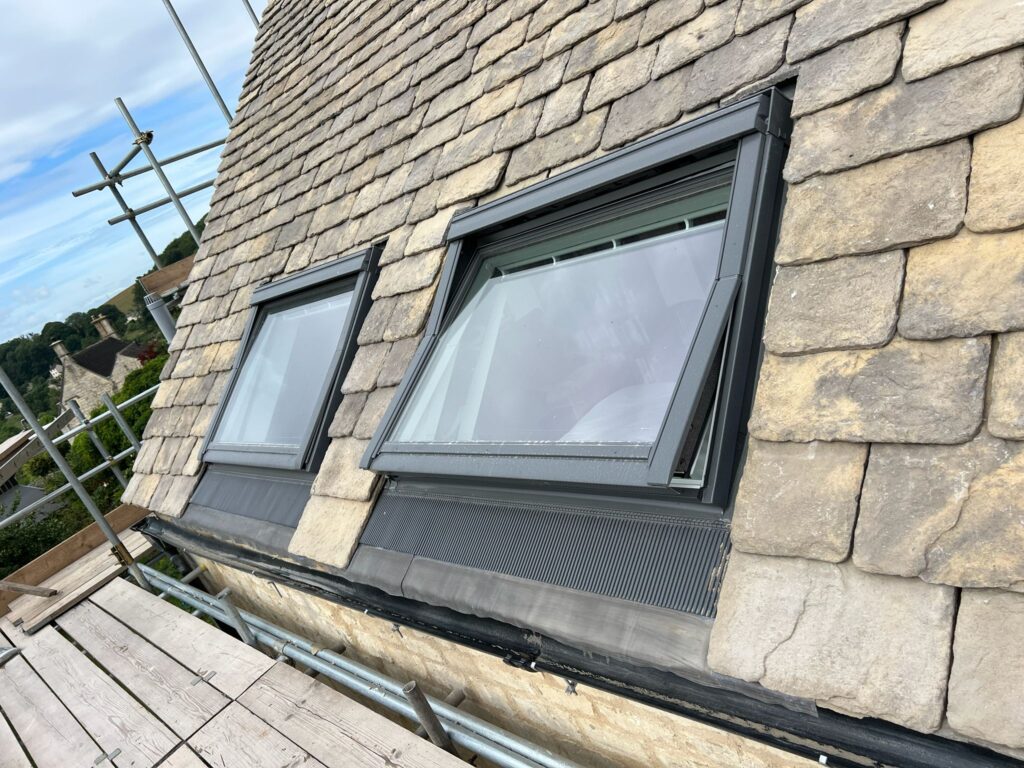
Around the chimneys, all-new lead flashings were dressed in at the correct heights this time. The dormer was re-clad in new lead properly. The valleys were re-formed in new lead. The leaking Velux rooflights were taken out and new ones installed and flashed in correctly.
For the curve in the roof, we fitted new rise-and-fall gutter brackets so the gutter line could be set true across a roof that wasn’t. And for the wonky verge — rather than living with the line we’d been left with — we used a slate undercloak under the verge tiles to bring it dead straight, giving a clean, finished line where there hadn’t been one.
While we were there, we fitted the matching Velux blinds to the new rooflights as well.
The result
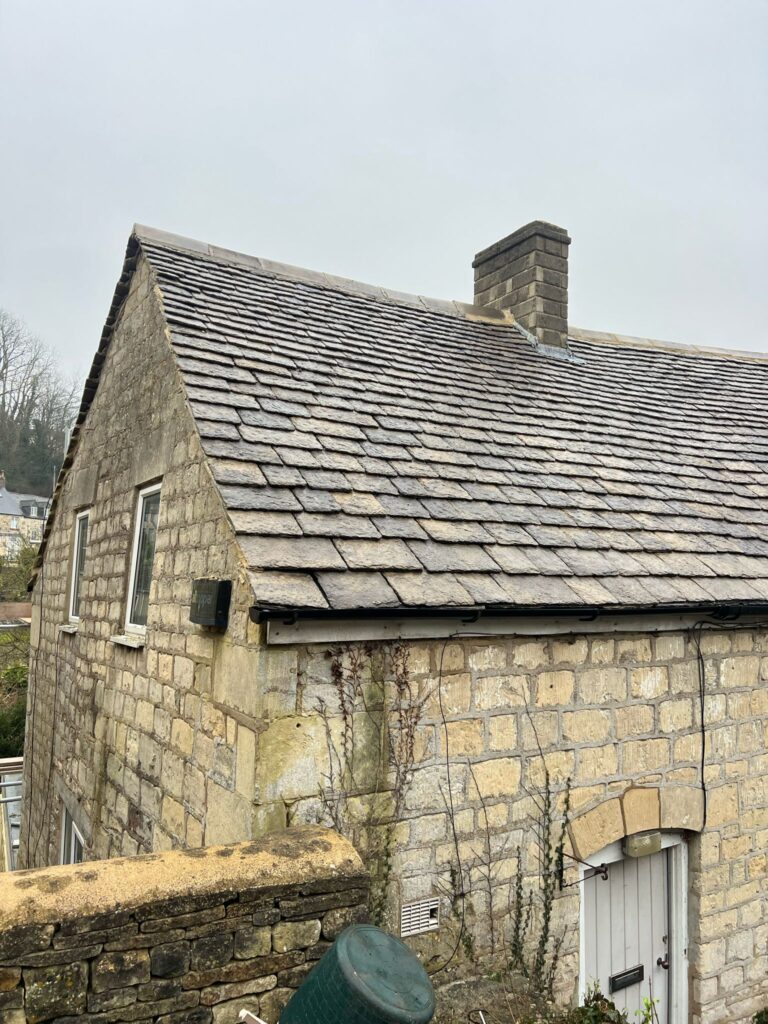
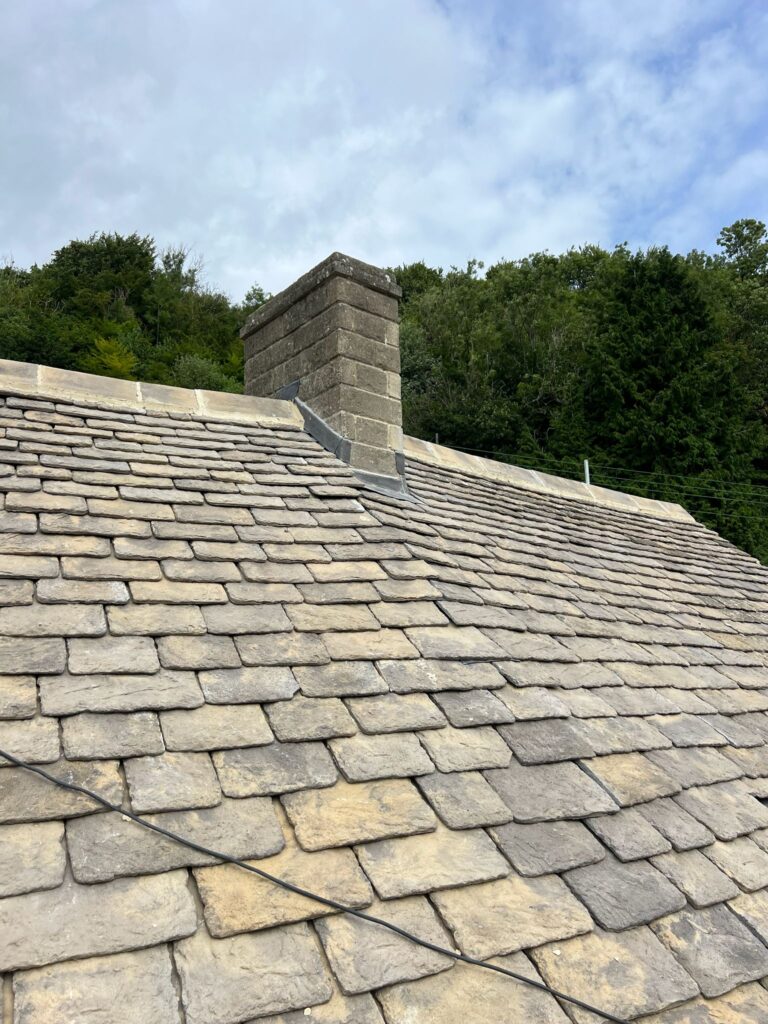
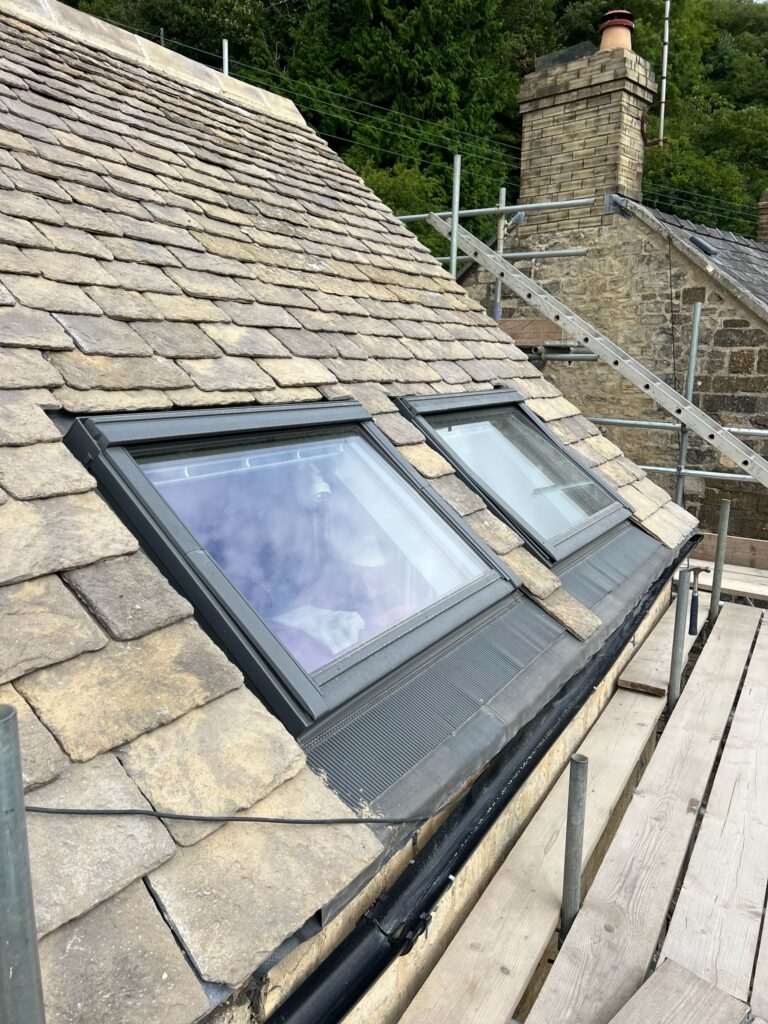
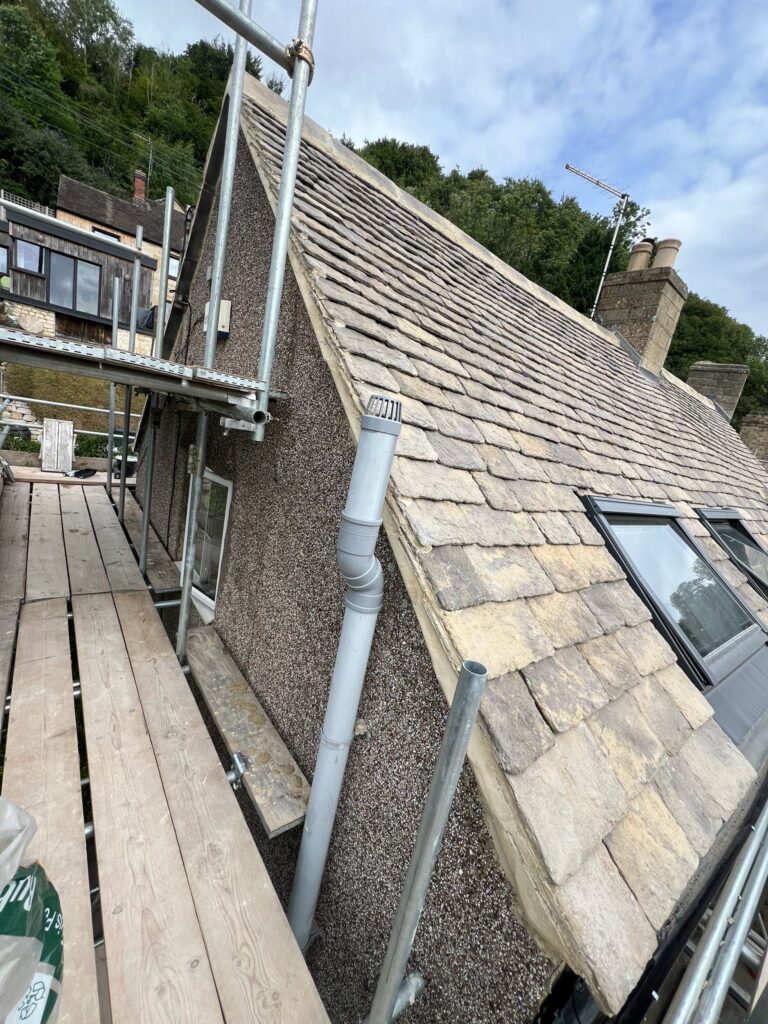
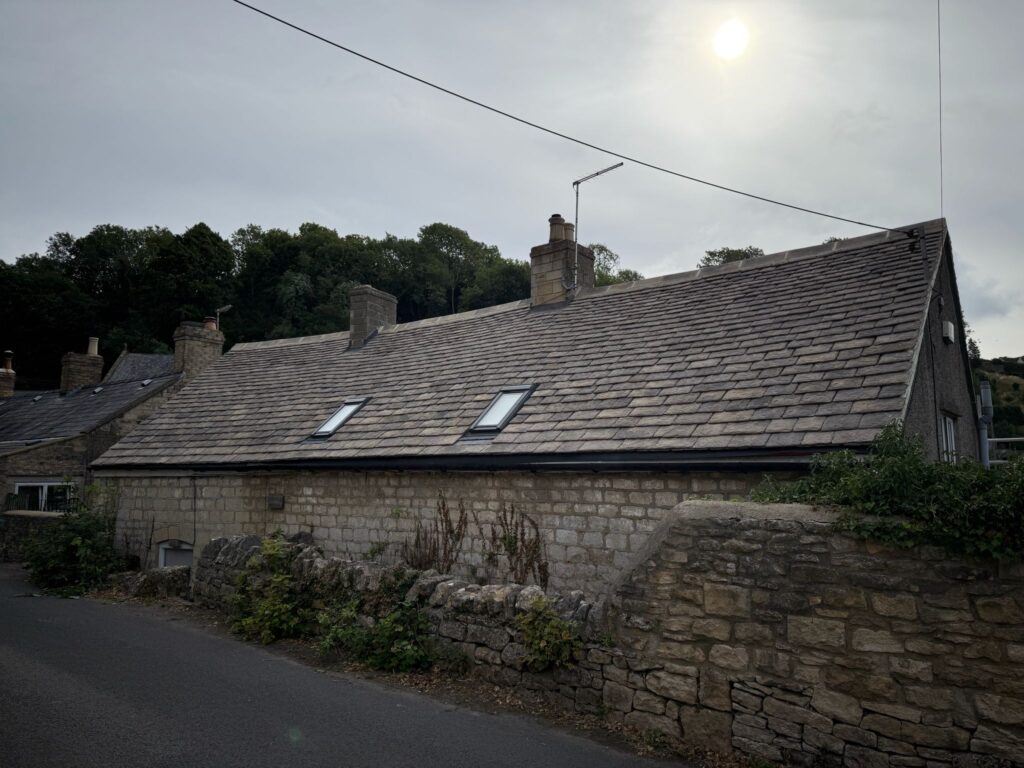
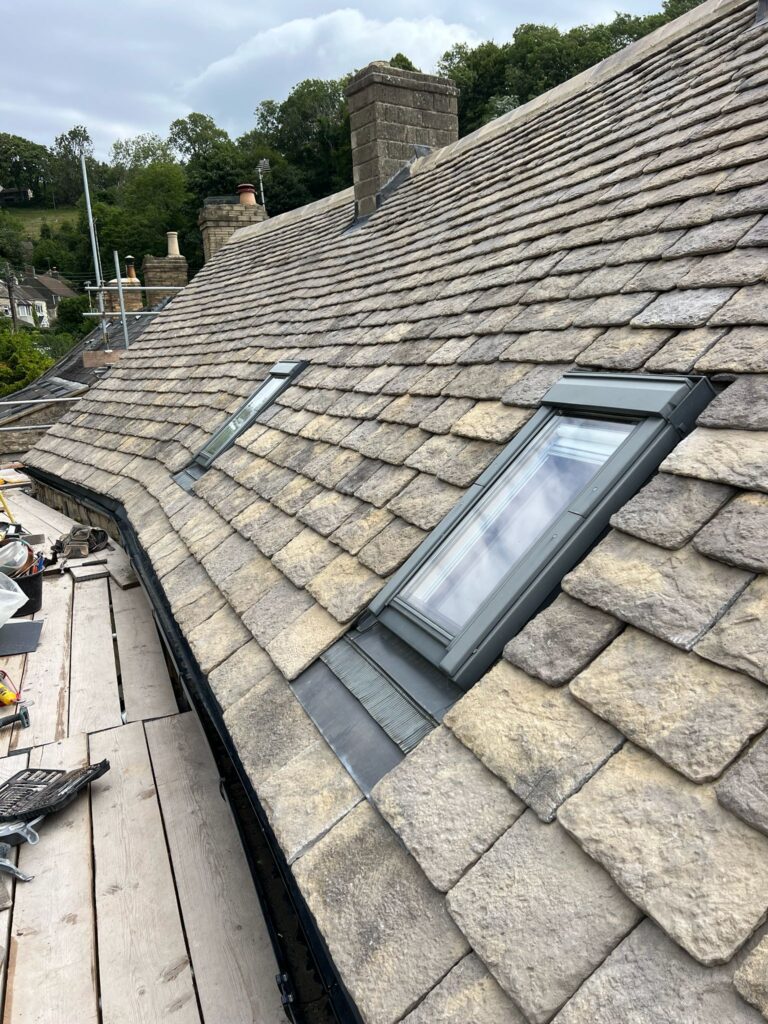
A roof that does what a roof is supposed to do — keeps the water out, holds the heat in, looks straight from every angle, and won’t need touching again for decades. The customer who had effectively paid twice for the work finally got what they should have had the first time round: a properly installed roof with a properly engineered build-up, new lead throughout, watertight rooflights, level gutters, and straight verges.
Why it stands out
This is the project that probably best represents what we do when we’re called in to fix what someone else has got wrong. The previous install wasn’t a problem we created, but it was a problem we had to solve — and solving it meant stripping a brand-new roof back to the rafters and rebuilding it properly. Every detail that had failed got the correct method this time round. It’s the showcase that says: if you’ve been let down already, we’ll put it right, and we’ll do it once.