
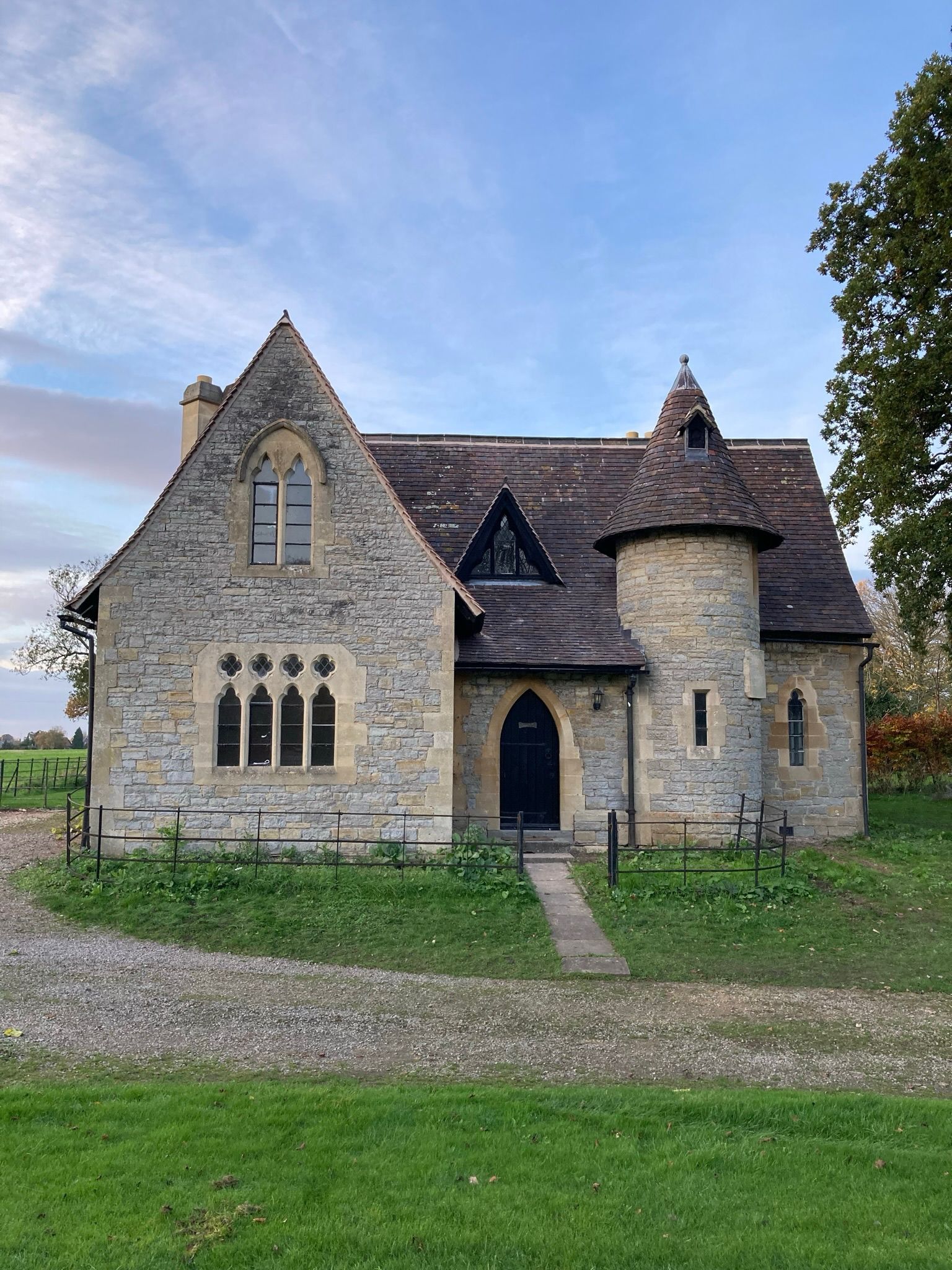
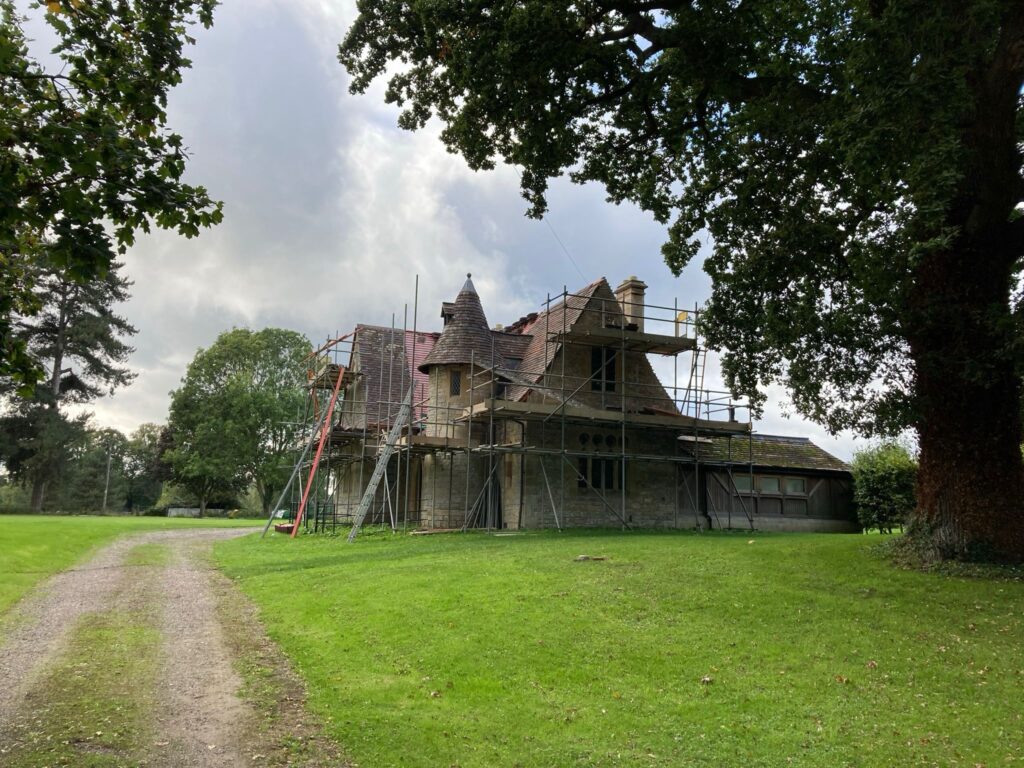
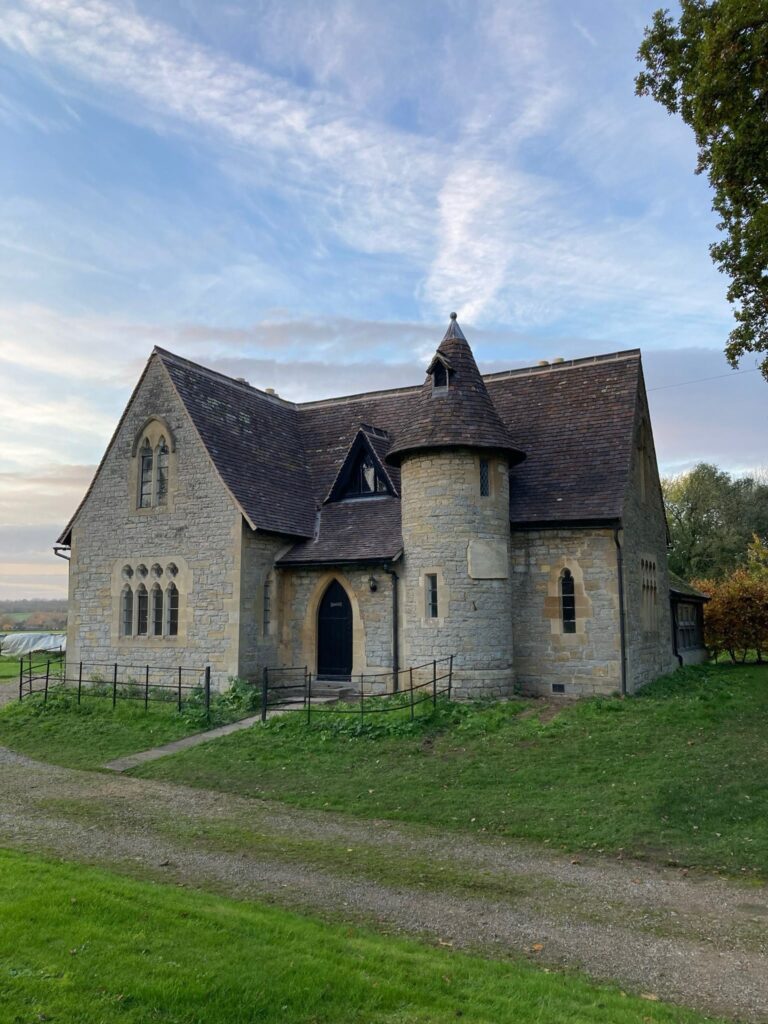
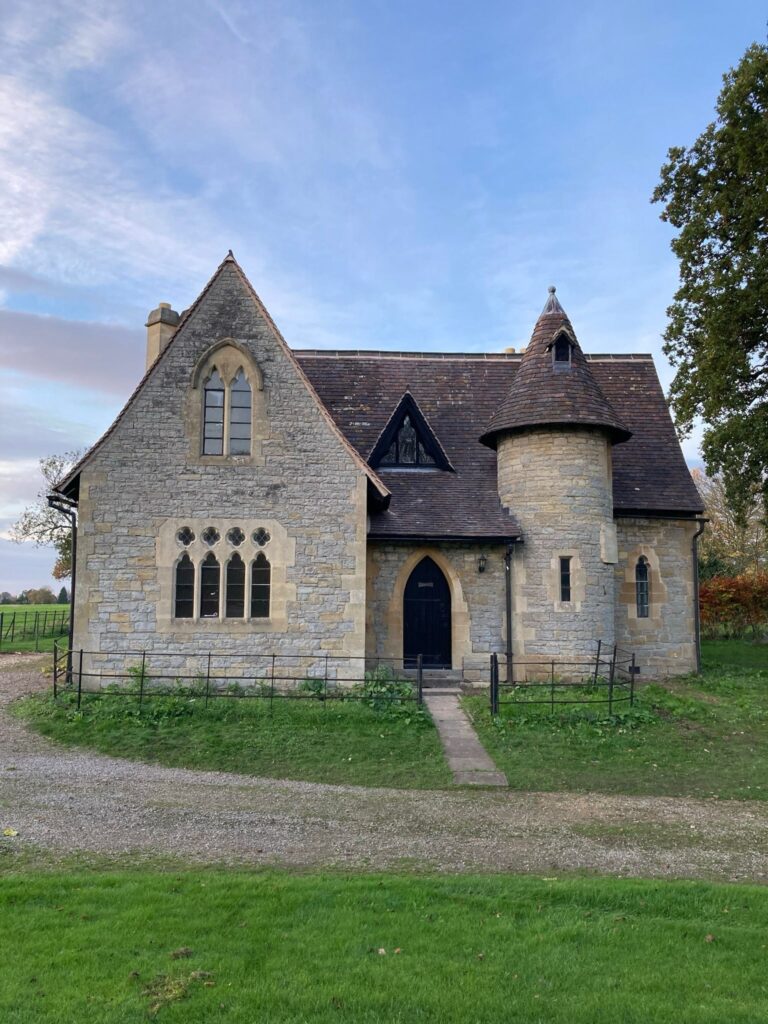
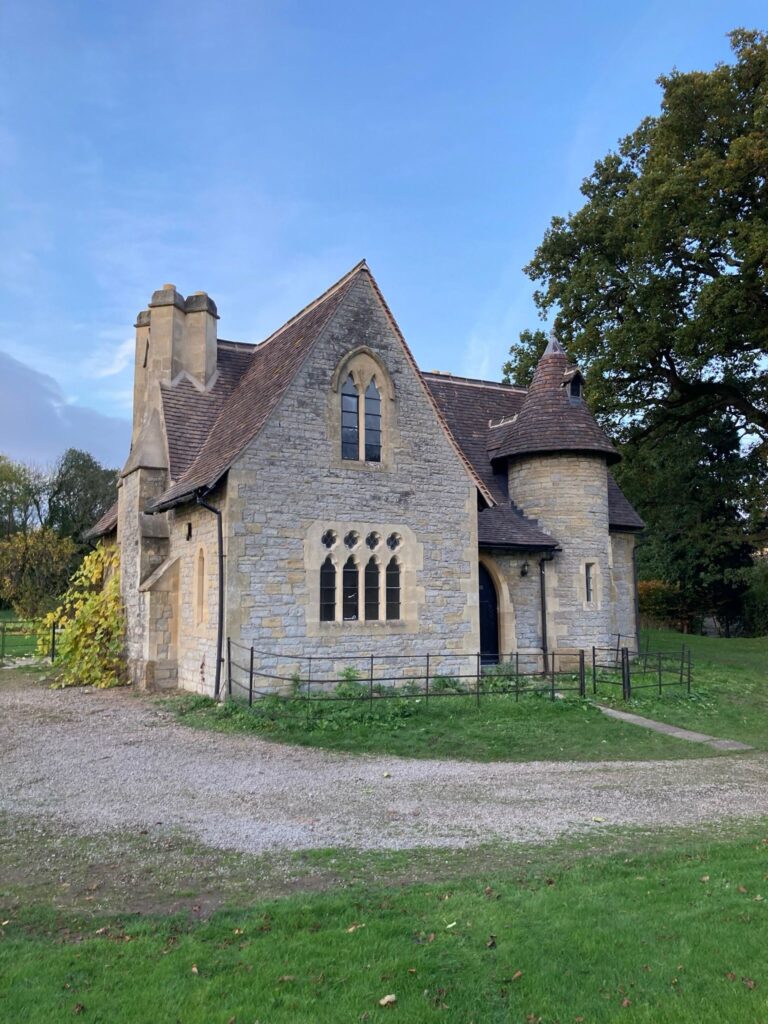
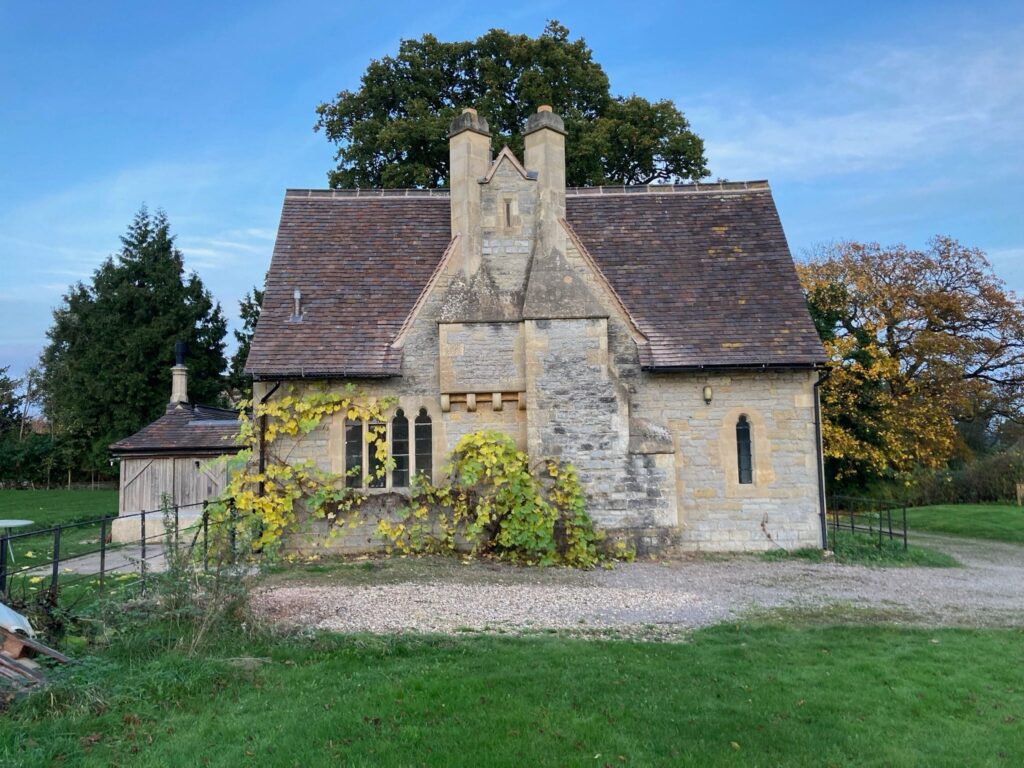
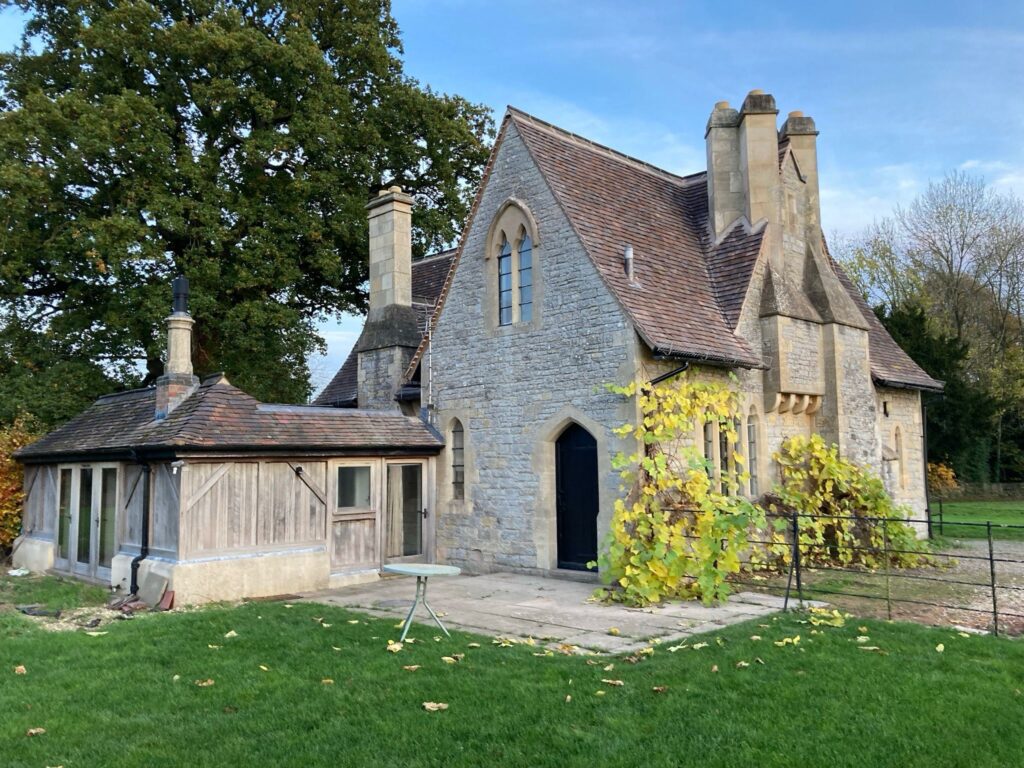
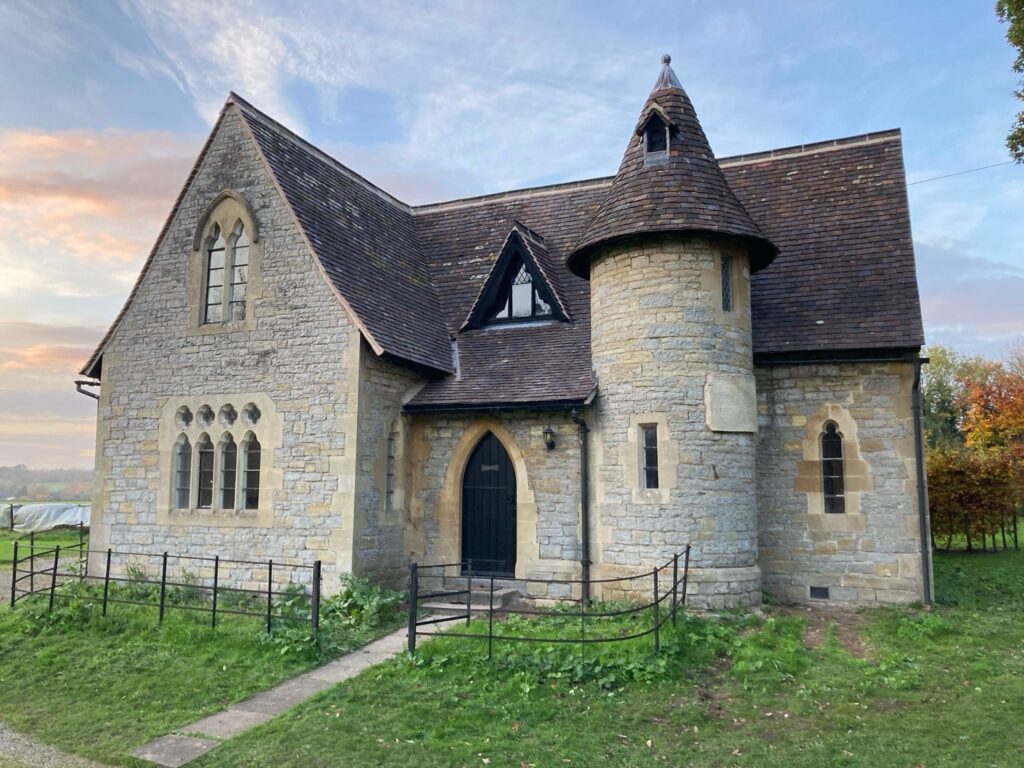
A full re-roof on a Grade II listed property in the Highnam conservation area — reclaimed handmade clay plain tiles bedded in lime mortar, blue clay ridges, a conical turret retiled with its refurbished finial reinstalled, complex lead work throughout, and an insulating underlay specified for the property’s future as a rental.
The property and brief
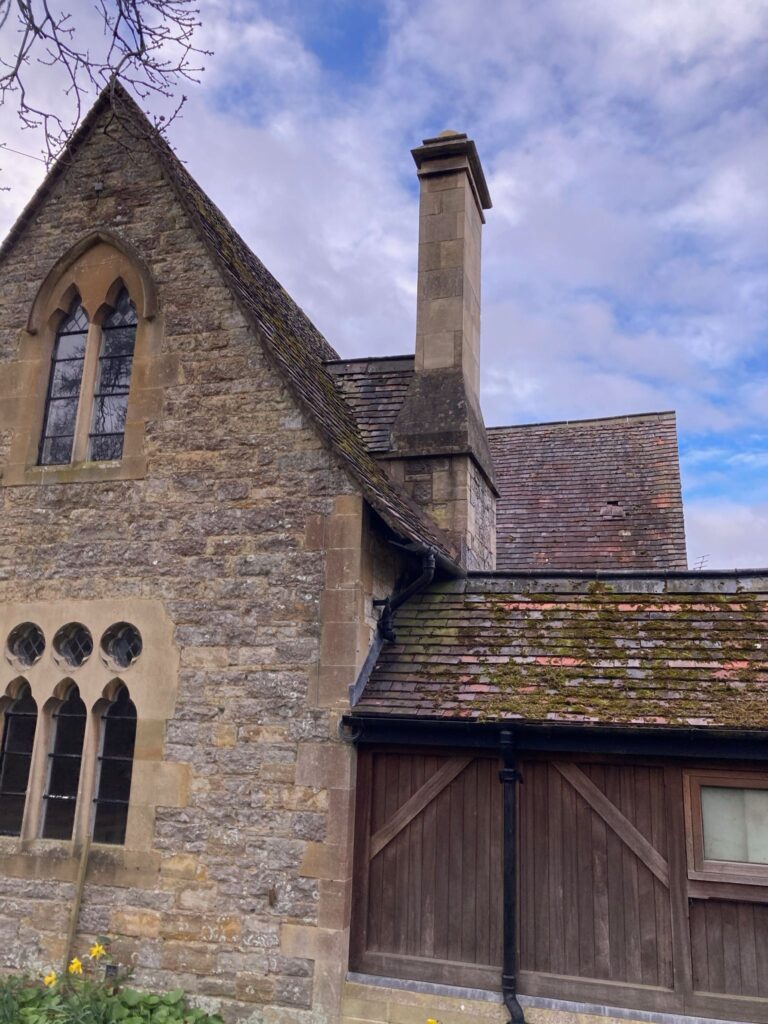
A Grade II listed property in Highnam, set within the village conservation area. The brief was a full re-roof that satisfied every conservation requirement — original materials reused wherever possible, like-for-like reclaimed replacements where they weren’t, lime mortar throughout, and all the original details (ridges, turret, finial, lead work) properly restored and reinstated. The owners were also preparing the property for the rental market, so the build-up had to deliver better thermal performance than the original roof.
The challenge
This was one of the most planning-heavy jobs we’ve taken on:
- Grade II listing and conservation area. Every material decision and detail had to satisfy both. Consents were secured up front and methodology agreed before a tile was lifted.
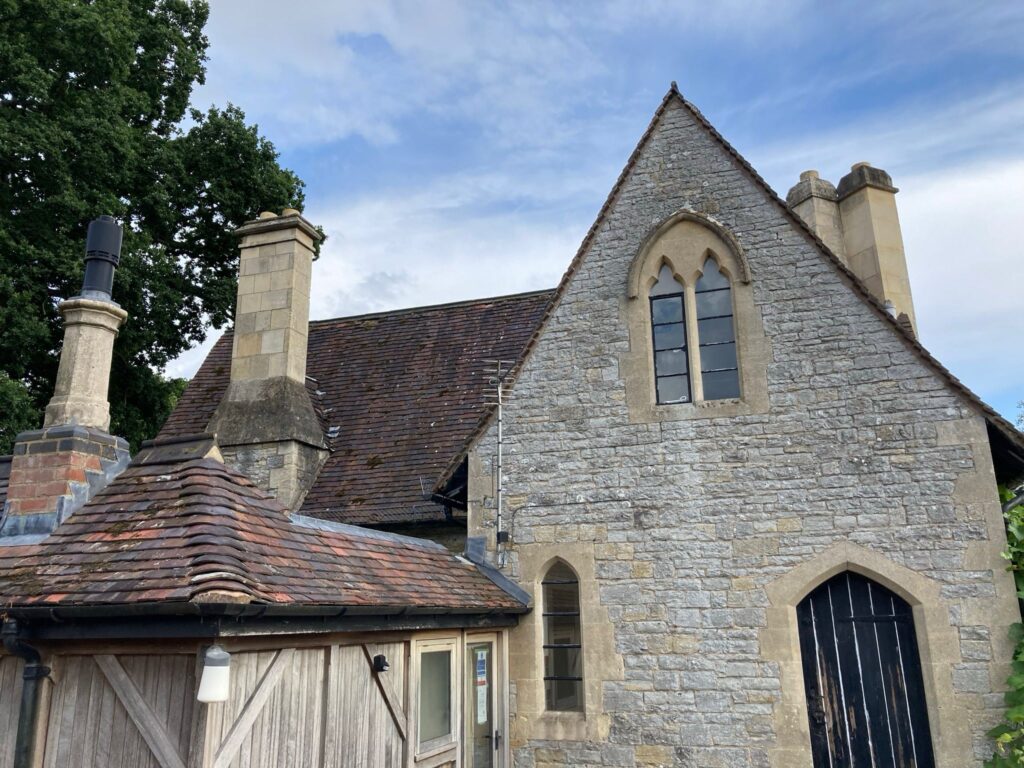
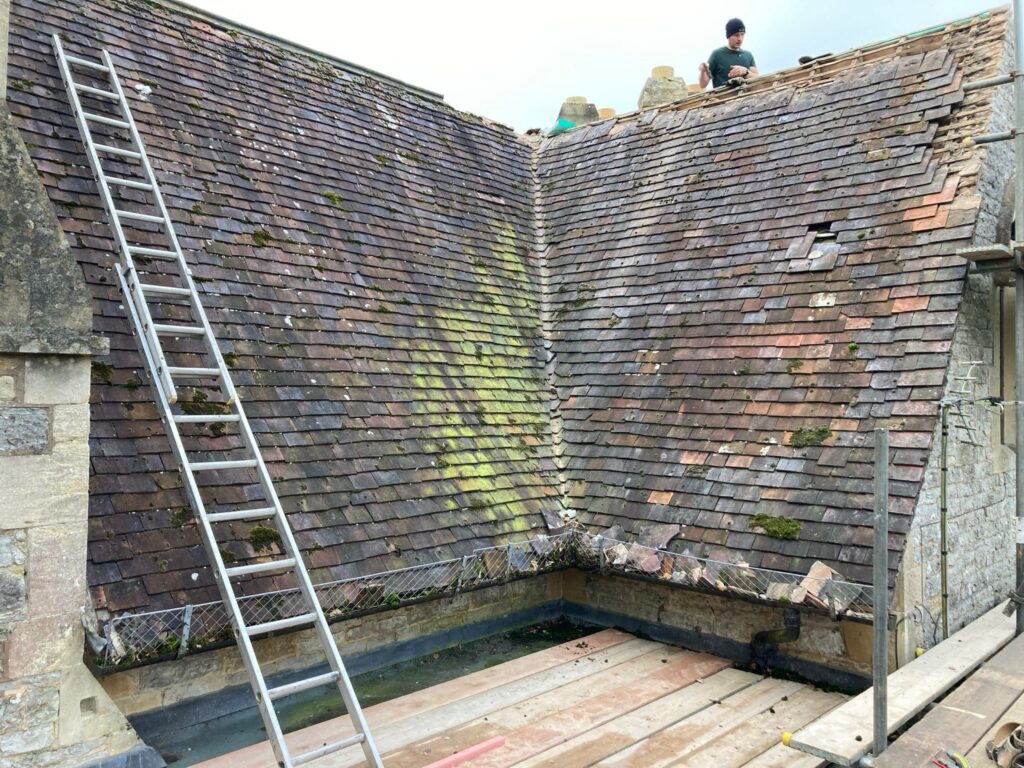
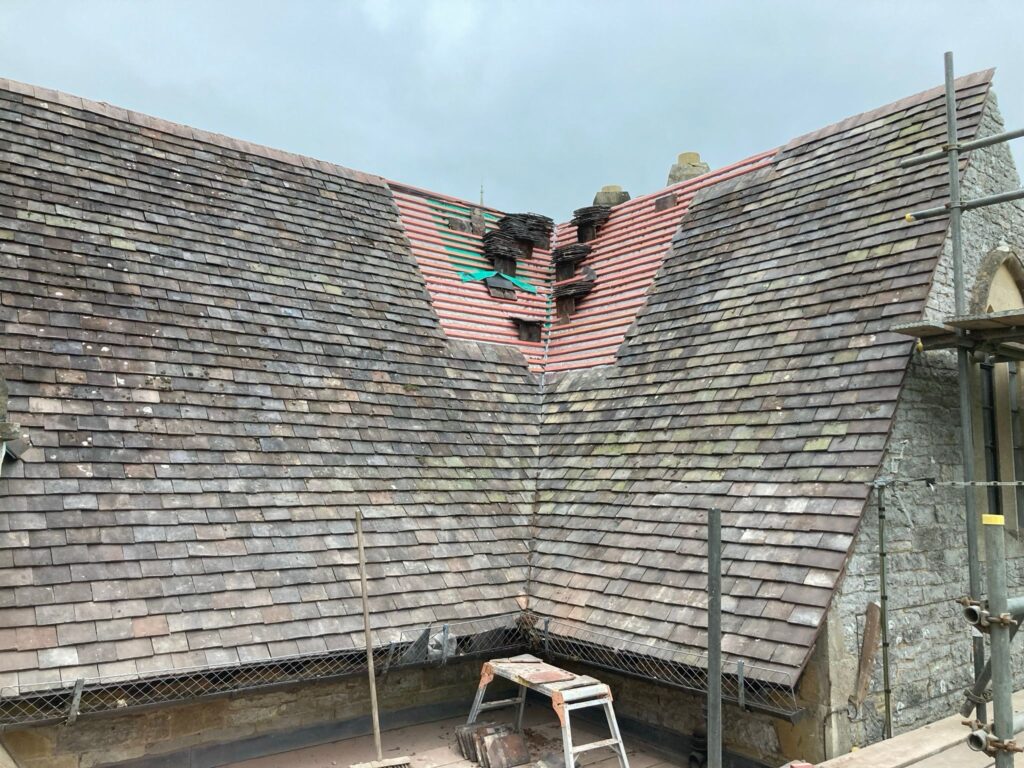
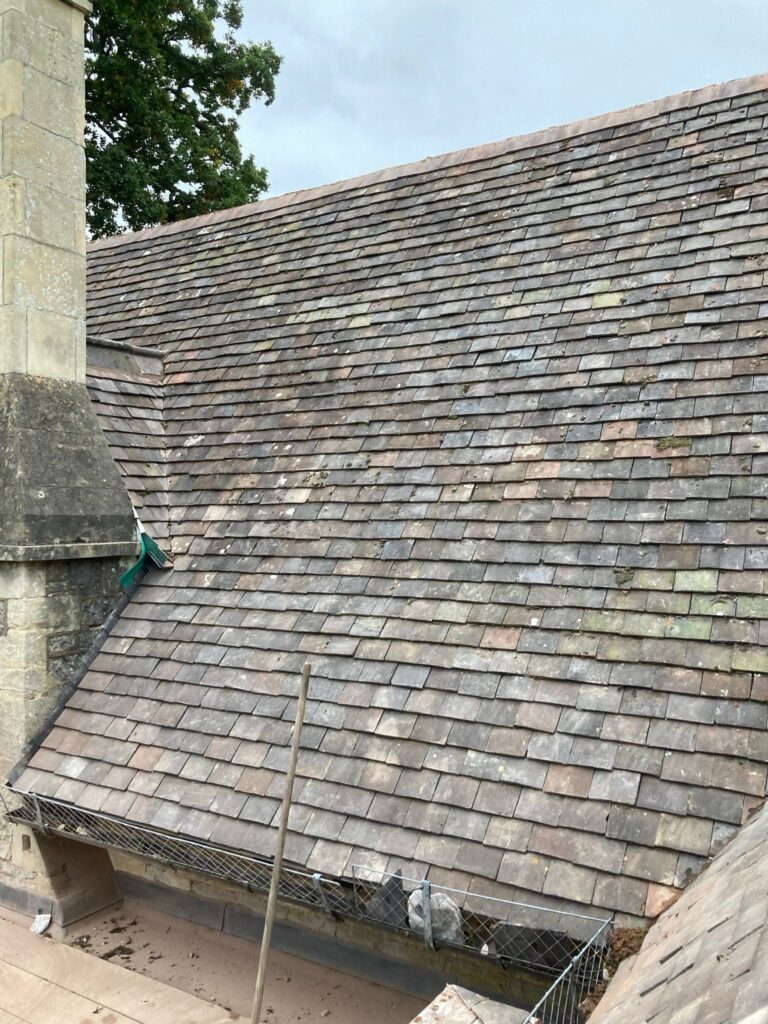
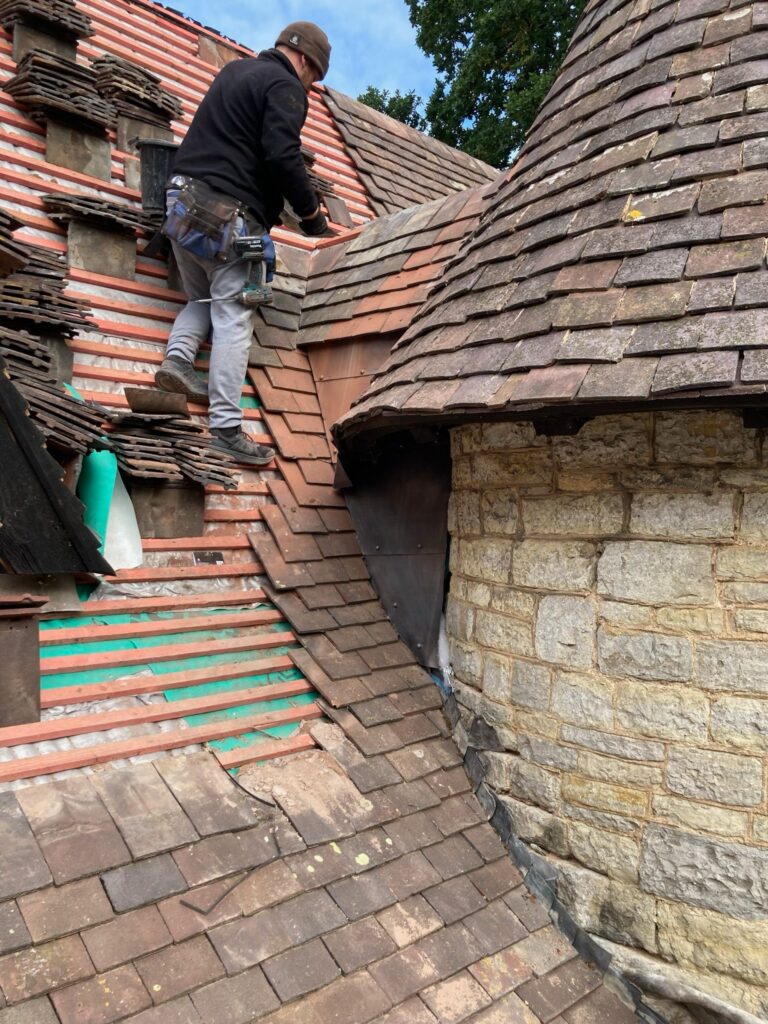
- Reusing handmade clay plain tiles. The originals are irregular by nature and can’t be reliably nailed. Every tile had to be bedded with lime mortar to hold it against wind uplift.
- Reclaimed replacements. Anything beyond reuse had to be sourced as reclaimed handmade clay plain tiles matching the originals in colour, weathering and form.
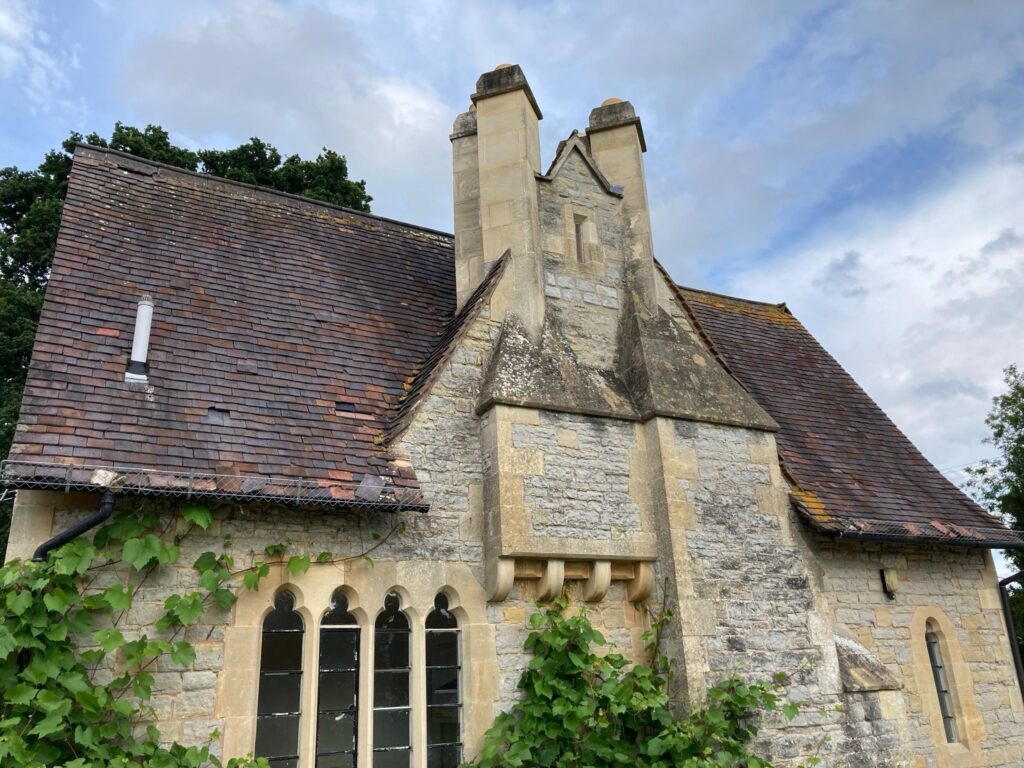
- Lime mortar throughout. Used wherever mortar was needed across the roof. Lime allows the building to move with seasonal expansion and contraction, and crucially does not corrode the blue lias stone walls the way modern cement mortar would.
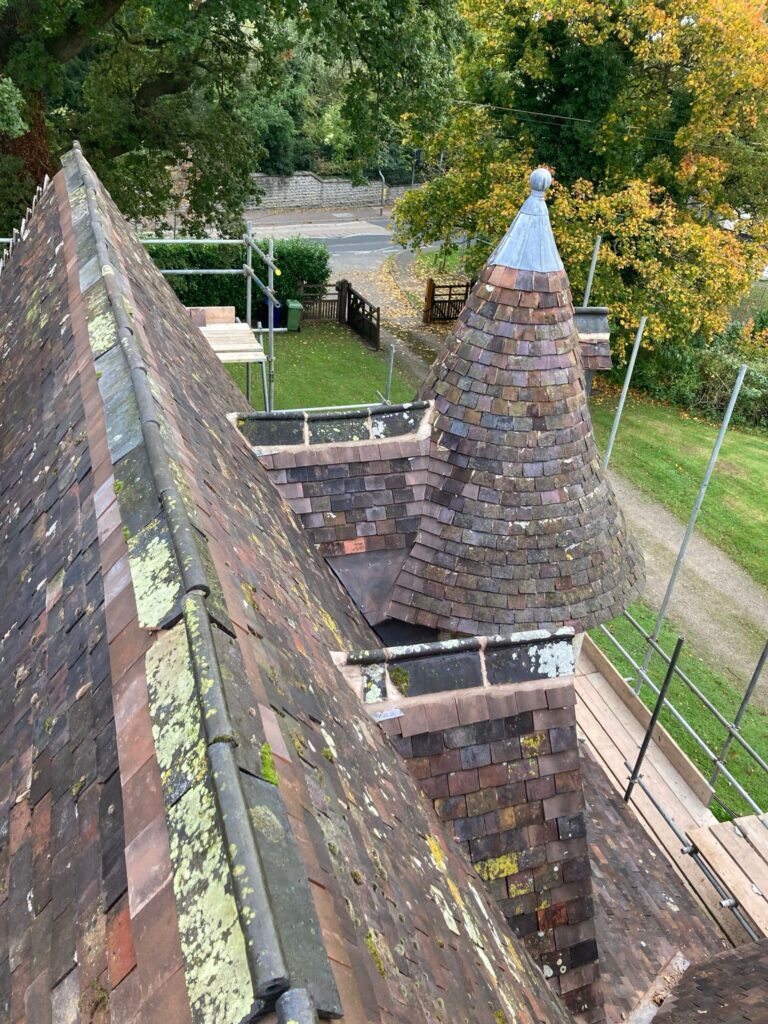
- Blue clay ridge tiles, with reclaimed pieces brought in to match the originals where replacements were needed.
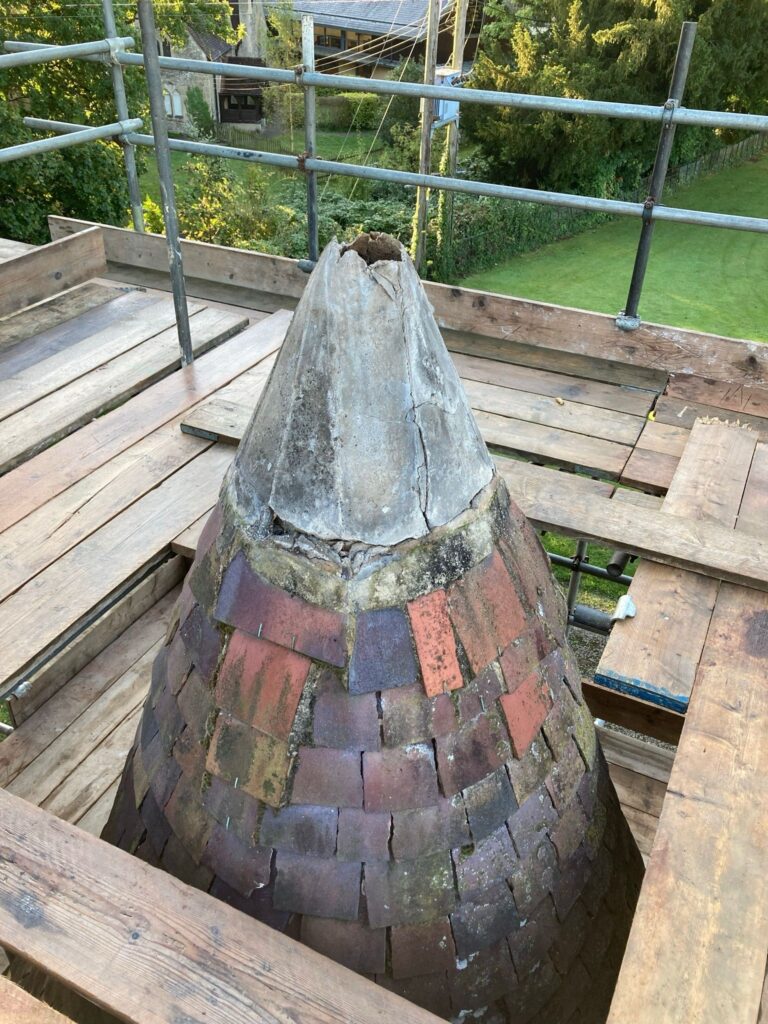
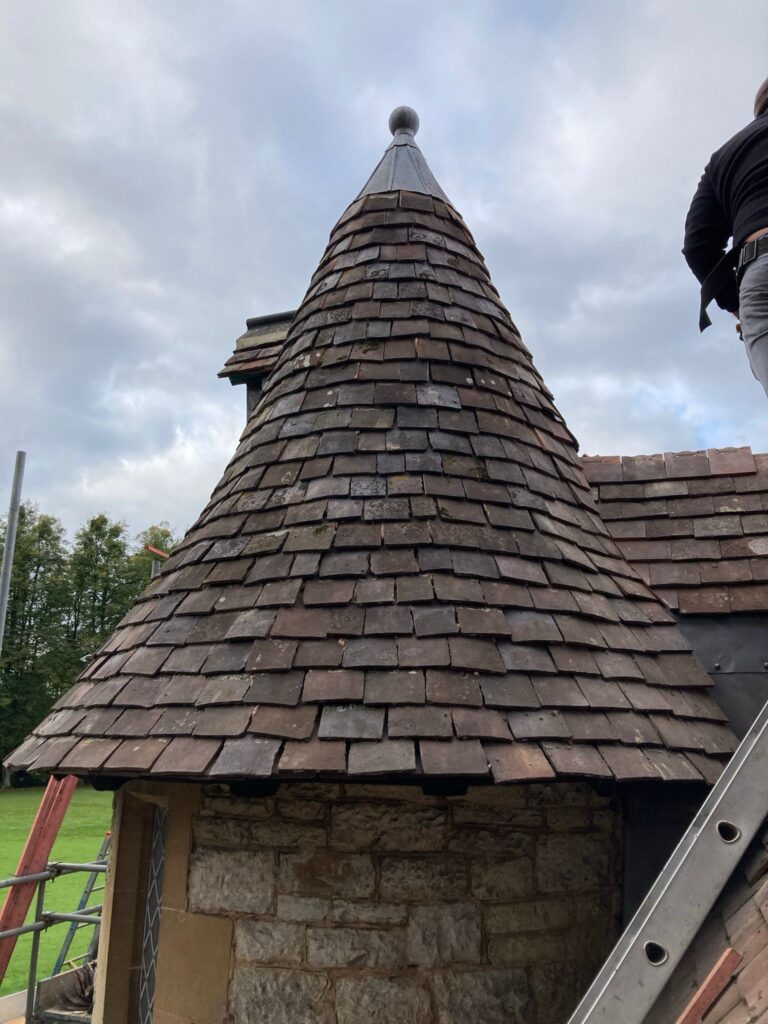
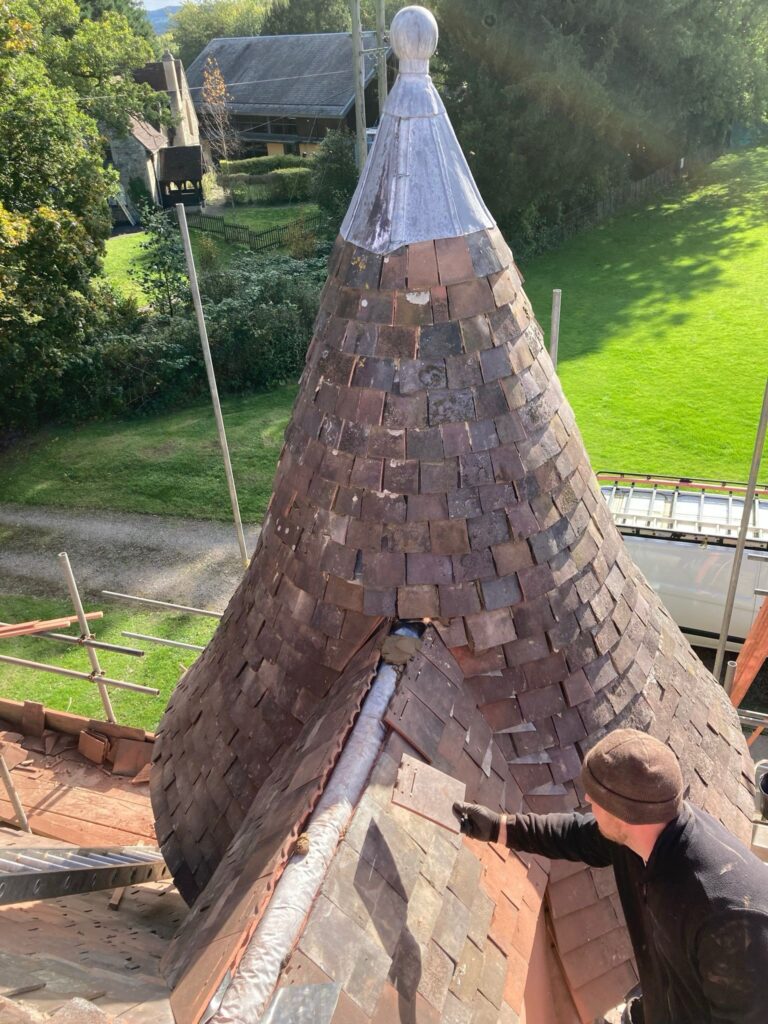
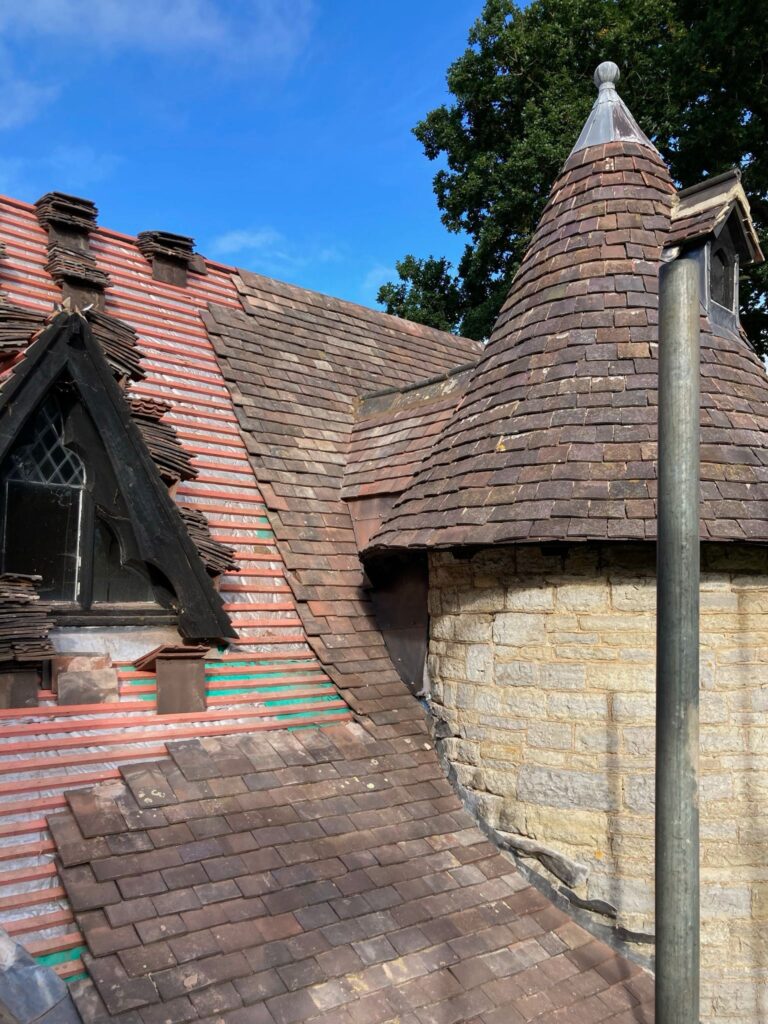
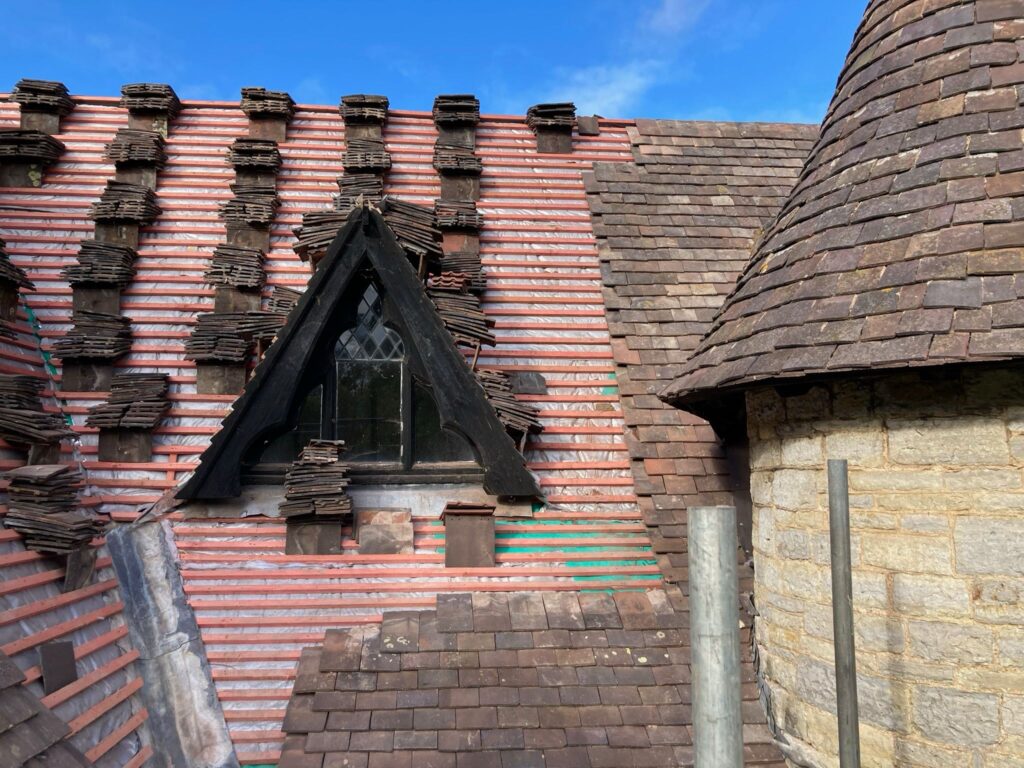
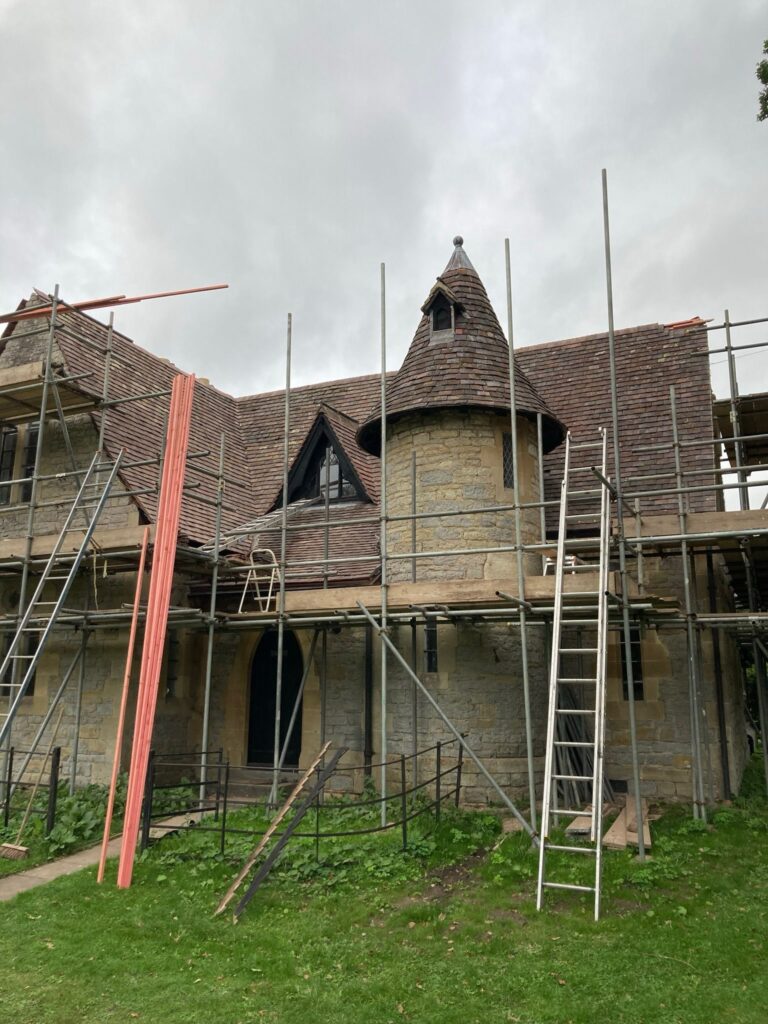
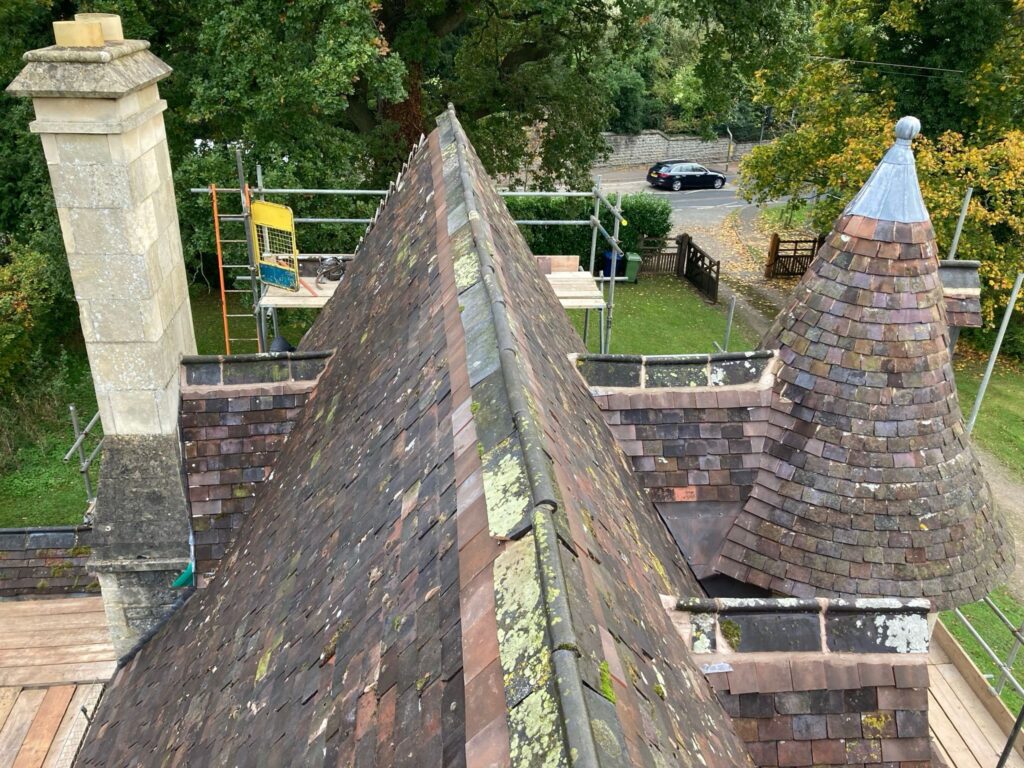
- A round turret. Stripped back, re-felted and re-battened, then retiled with the clay tiles laid in to the cone. The original finial was carefully removed, refurbished and reinstalled at the apex.
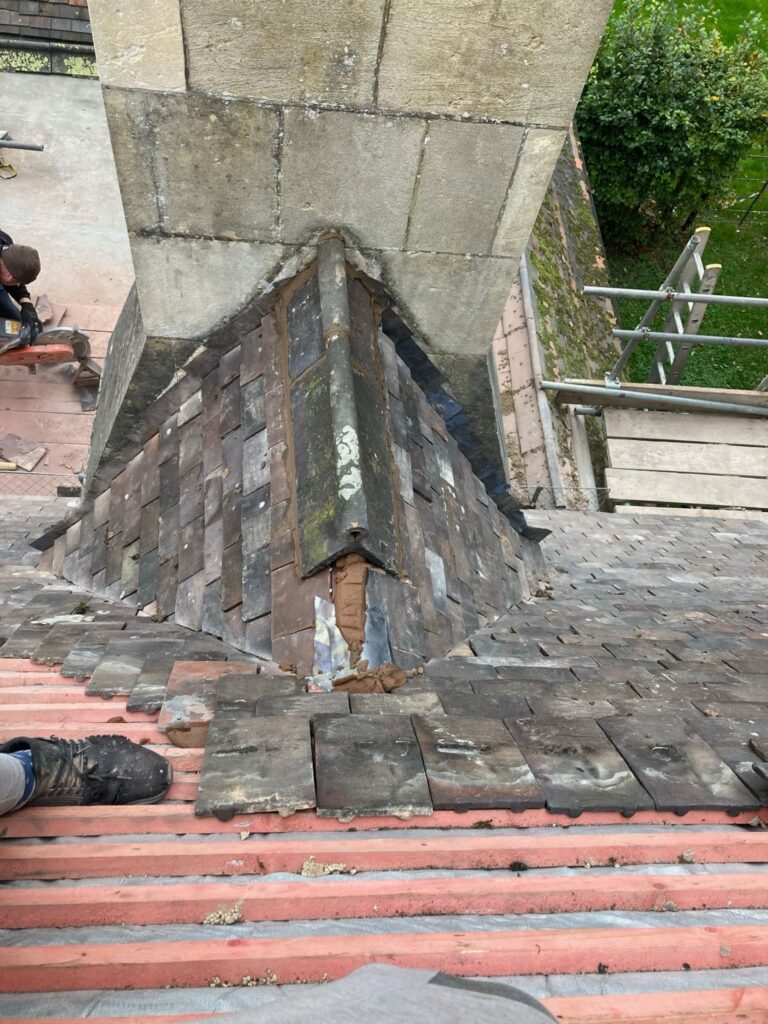
- Multiple complex details with significant lead work throughout — valleys, flashings, soakers and abutments all formed by hand.
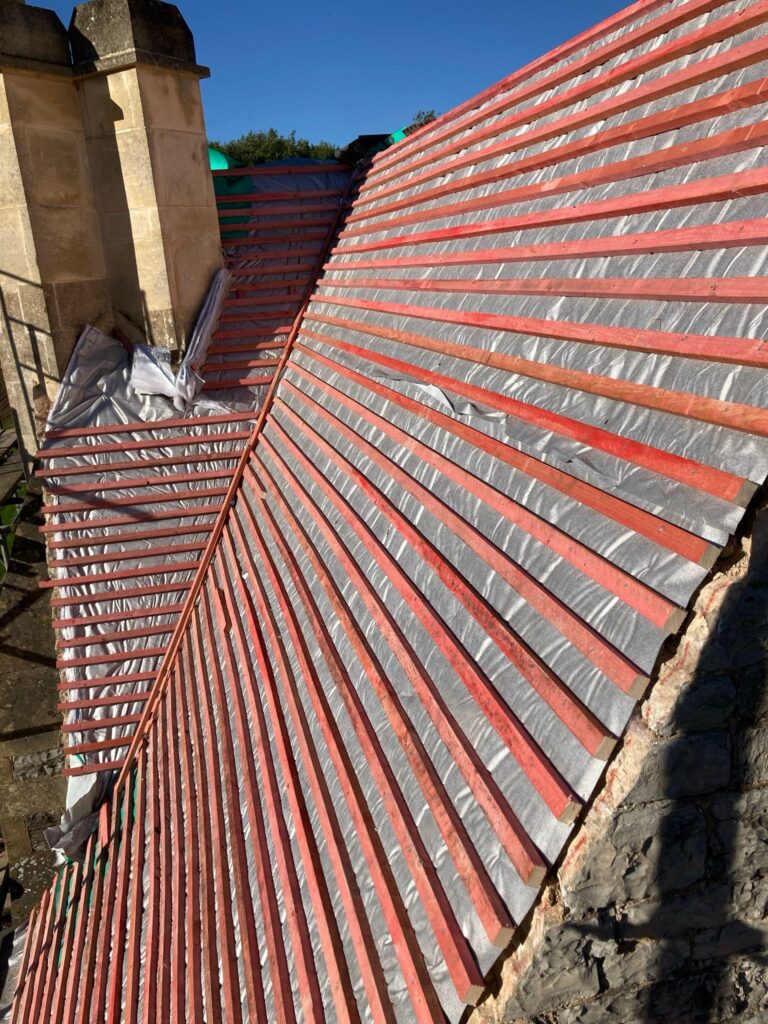
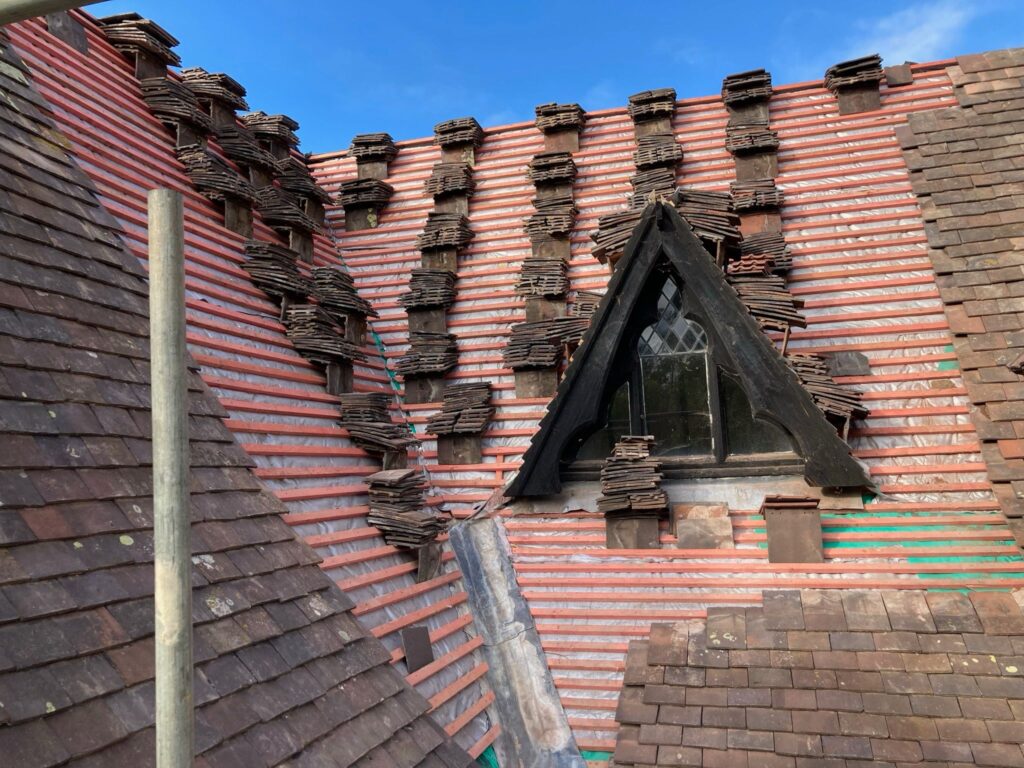
- Insulation upgrade. With the property being prepared for rental, we installed an insulating underlay so the roof would deliver a meaningfully better U-value than the original build-up.
What we did
Stripped the existing covering carefully, salvaging every reusable handmade clay plain tile and blue clay ridge. Topped up the shortfall with carefully matched reclaimed stock. Felted and battened with the insulating underlay specified to lift the thermal performance. Bedded each tile in lime mortar and pointed throughout with lime mortar so the wall heads and the rest of the structure stay protected. Stripped, re-felted, re-battened and retiled the turret, finishing with the refurbished finial. Formed all the lead detailing — valleys, flashings, soakers — by hand.
The result
A Grade II listed roof that looks like it has always been there, but now sheds water properly, holds its tiles against the wind, performs noticeably better thermally, and protects the blue lias walls below it from any aggressive modern mortar. The conservation officer signed it off, and the property is ready for its next phase as a rental.
Why it stands out
This one is about discipline. Heritage materials demand patience and the right techniques — every tile bedded, every mortar mix lime, every reclaimed piece sourced to match, the turret retiled cleanly to a cone, the lead work done by hand. It’s the kind of job where you can’t take a single shortcut and the finish has to look like nothing has changed even though everything has.