
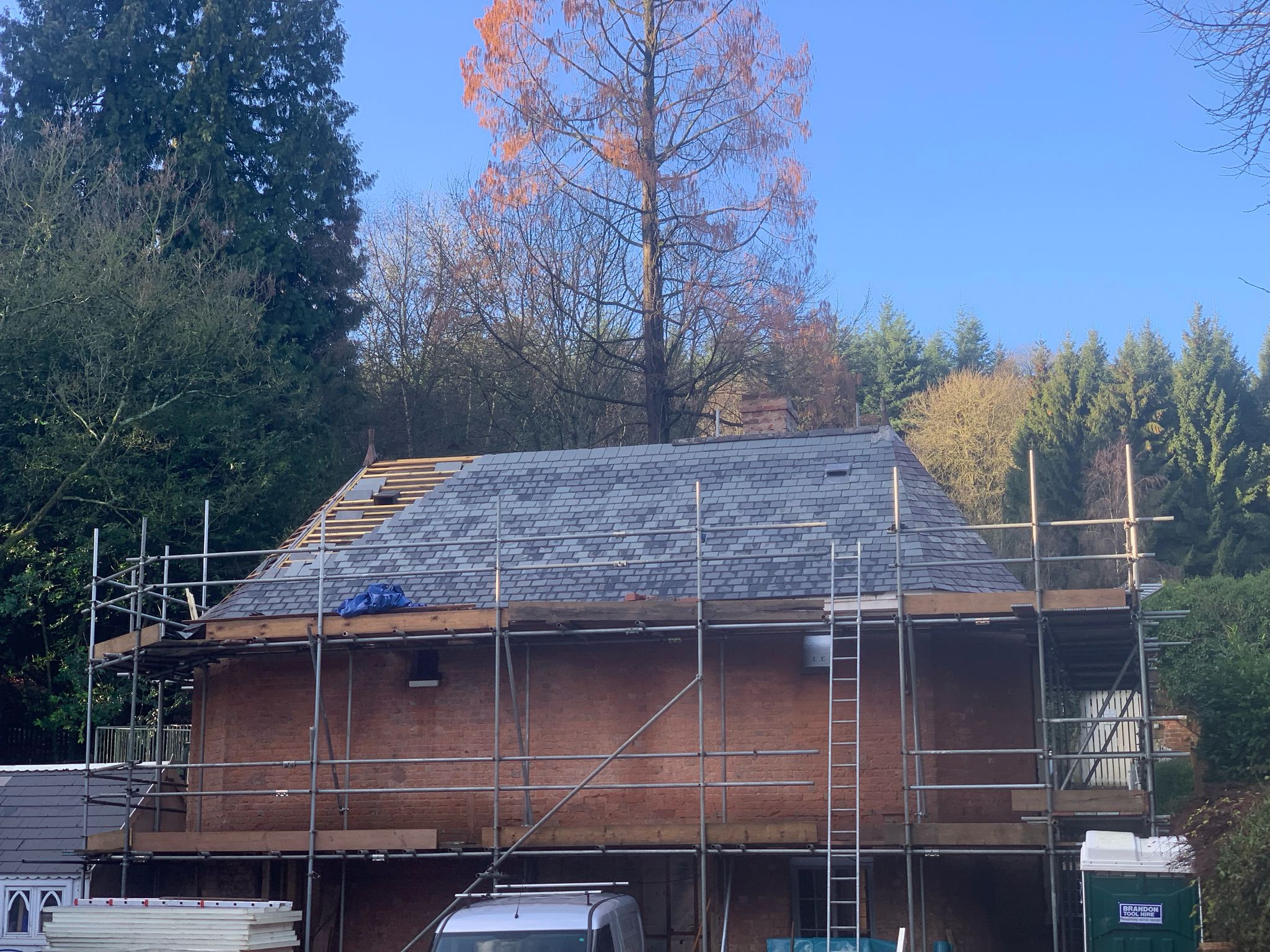
A full re-roof on a historic coach house in Huntley — carried out inside a confirmed bat sanctuary and breeding roost, with conservation officer oversight, contrasting Brazilian slate with mitred hips and hidden lead valleys, hand-crafted lead bat access boxes, refurbished lead finials, and a recovery from a major mid-project setback.
The property and brief
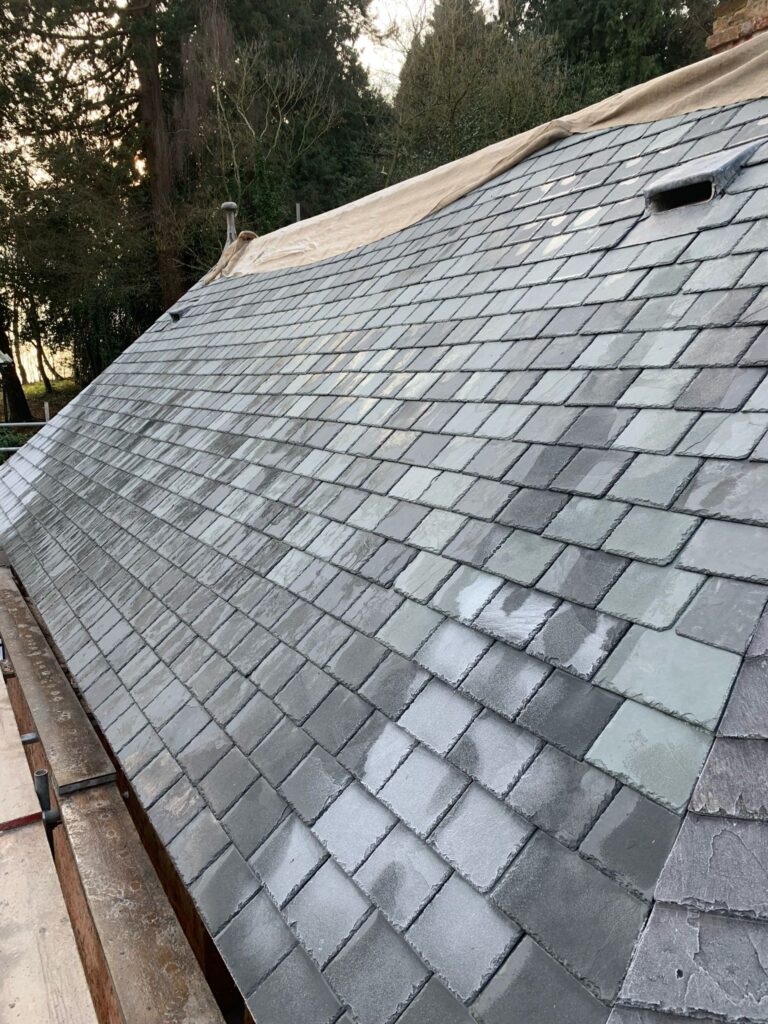
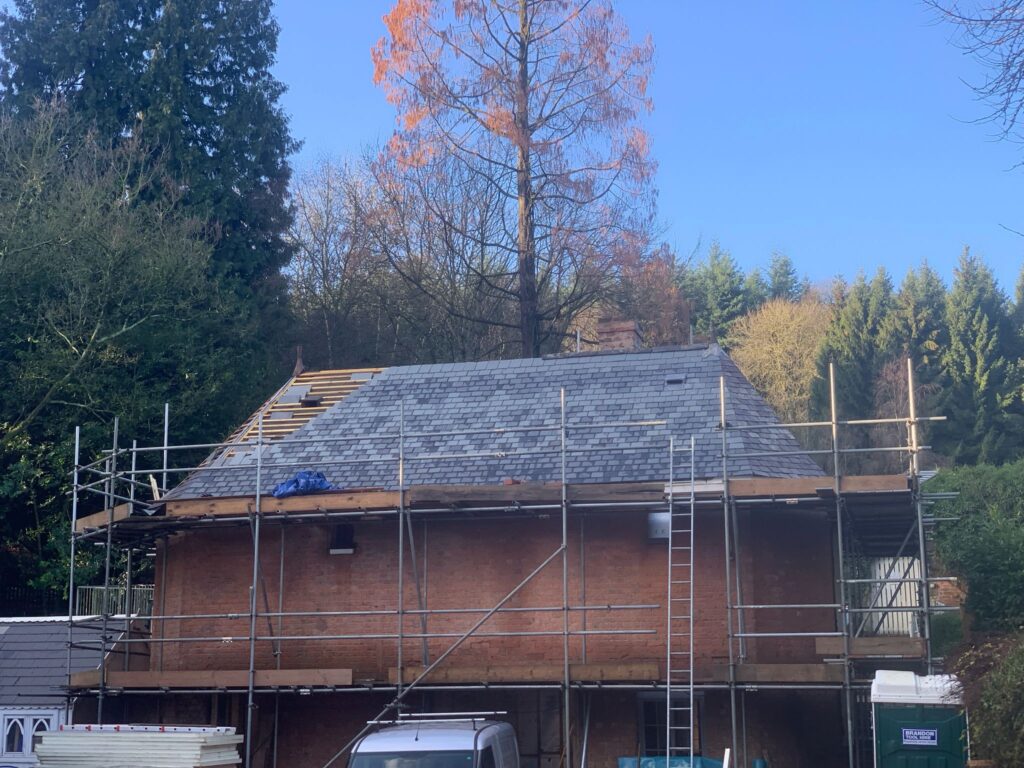
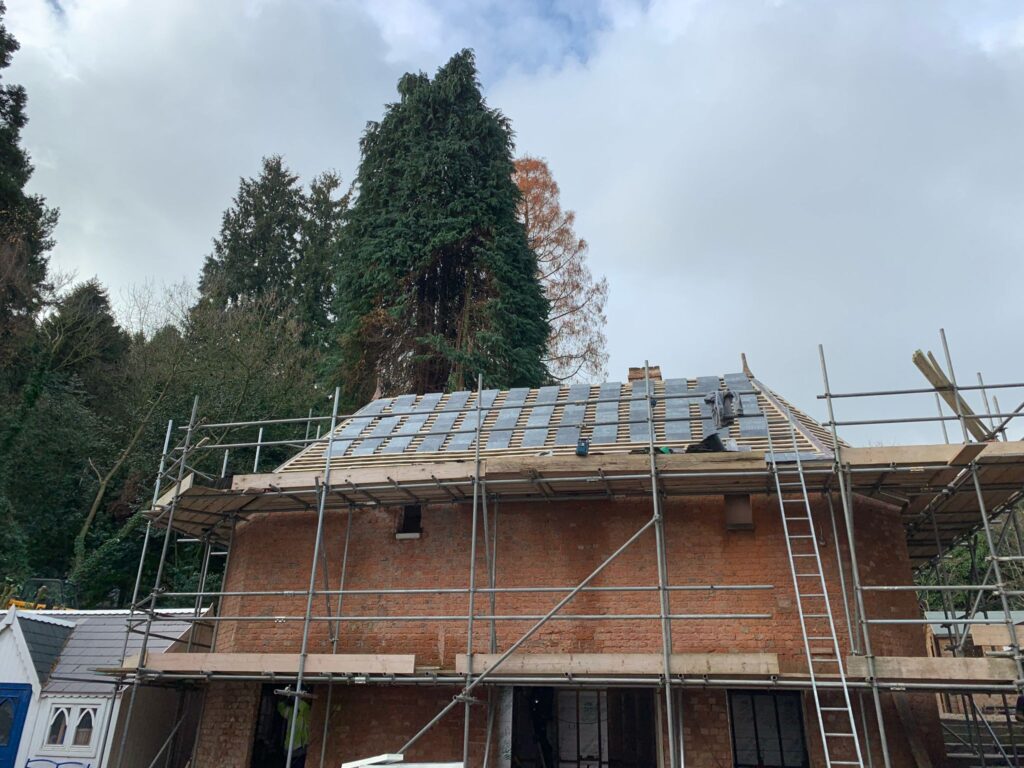
The coach house sits within a heritage estate in Huntley, in a designated bat protection area. The brief was a complete re-roof of the building, retaining its traditional character while bringing the structure and waterproofing back to a properly serviceable standard. The architect specified a slate finish using two contrasting Brazilian slate colours, laid to a defined pattern across the roof.
The challenge
This one carried a lot more than the usual considerations:
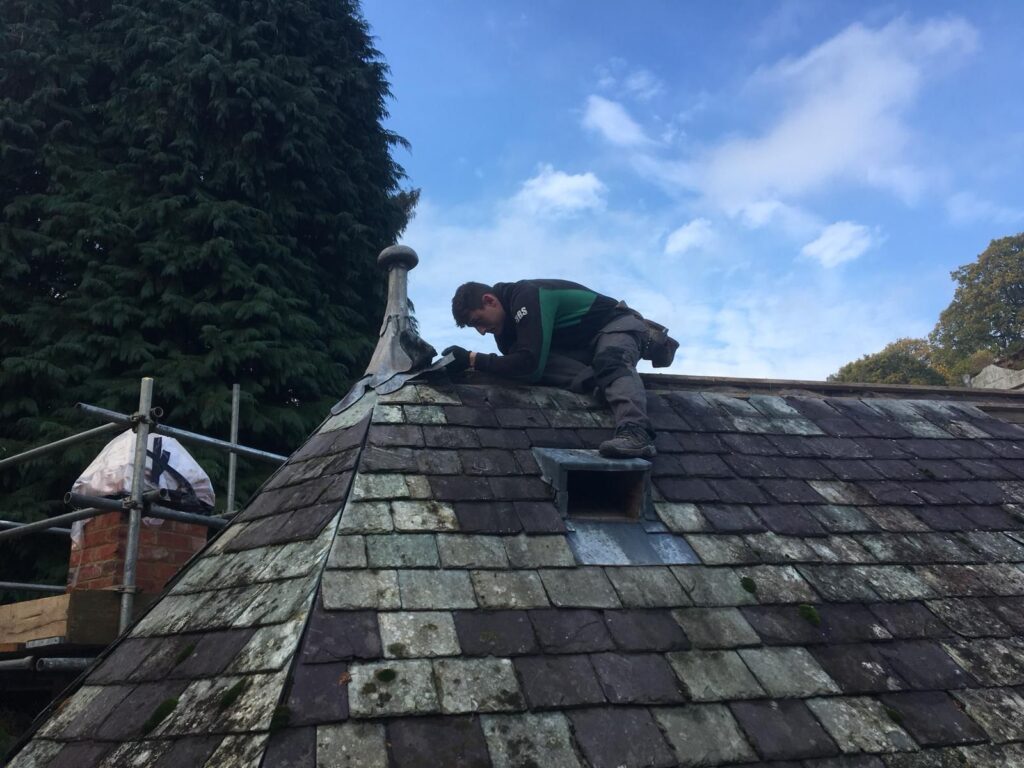
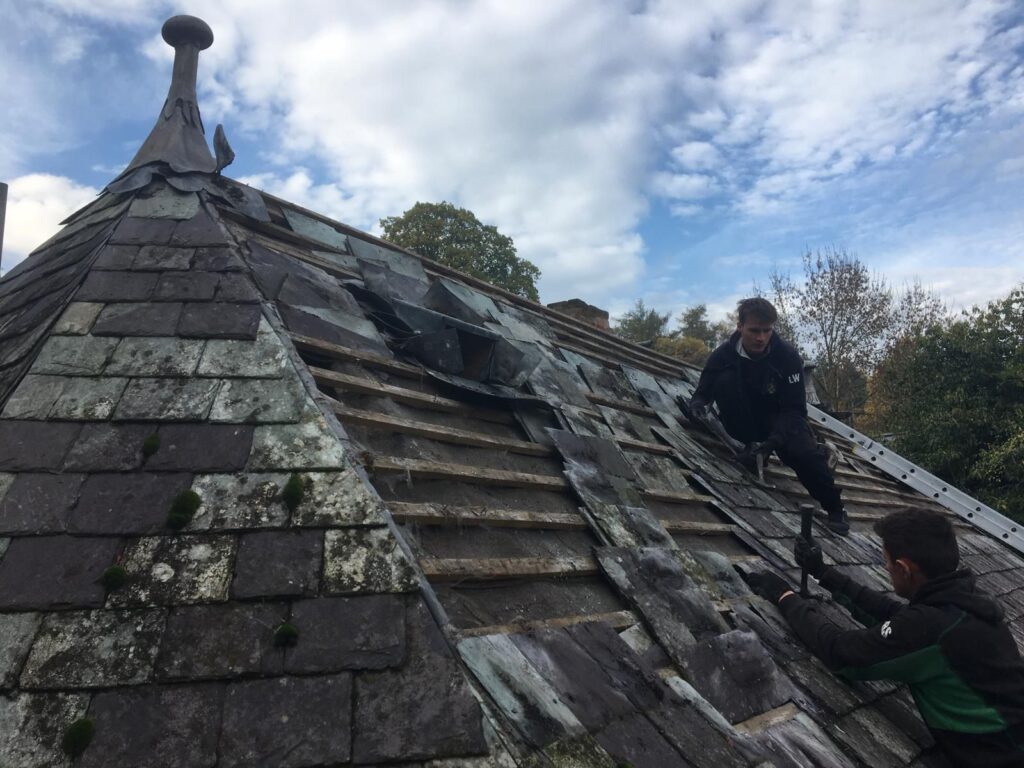
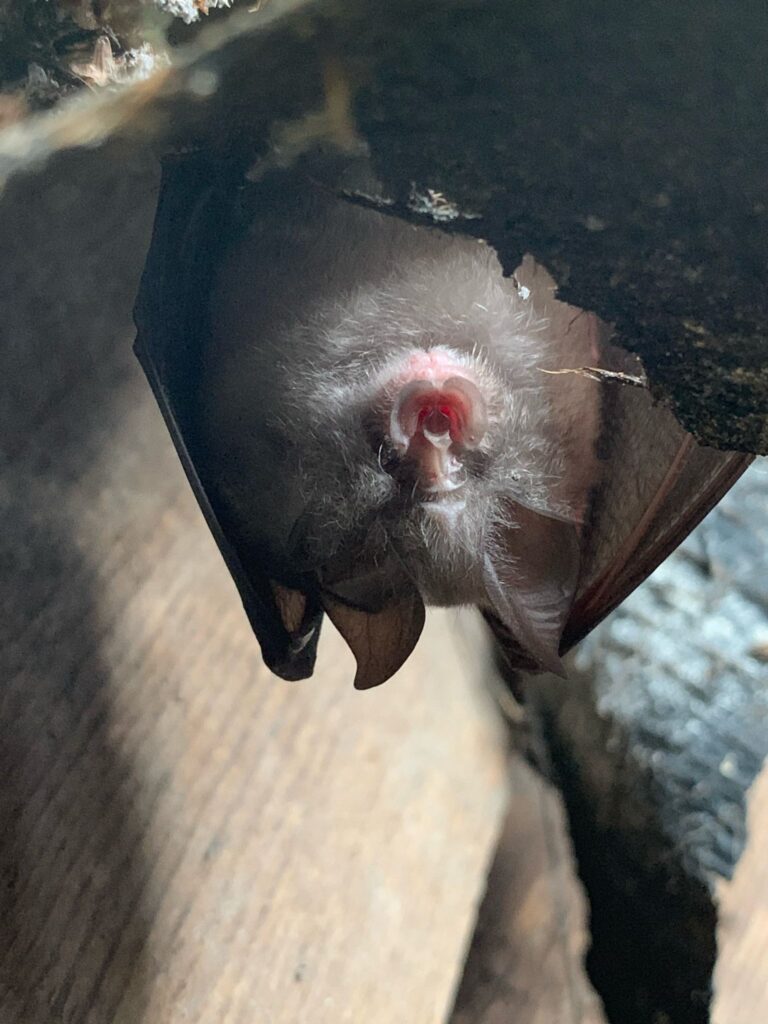
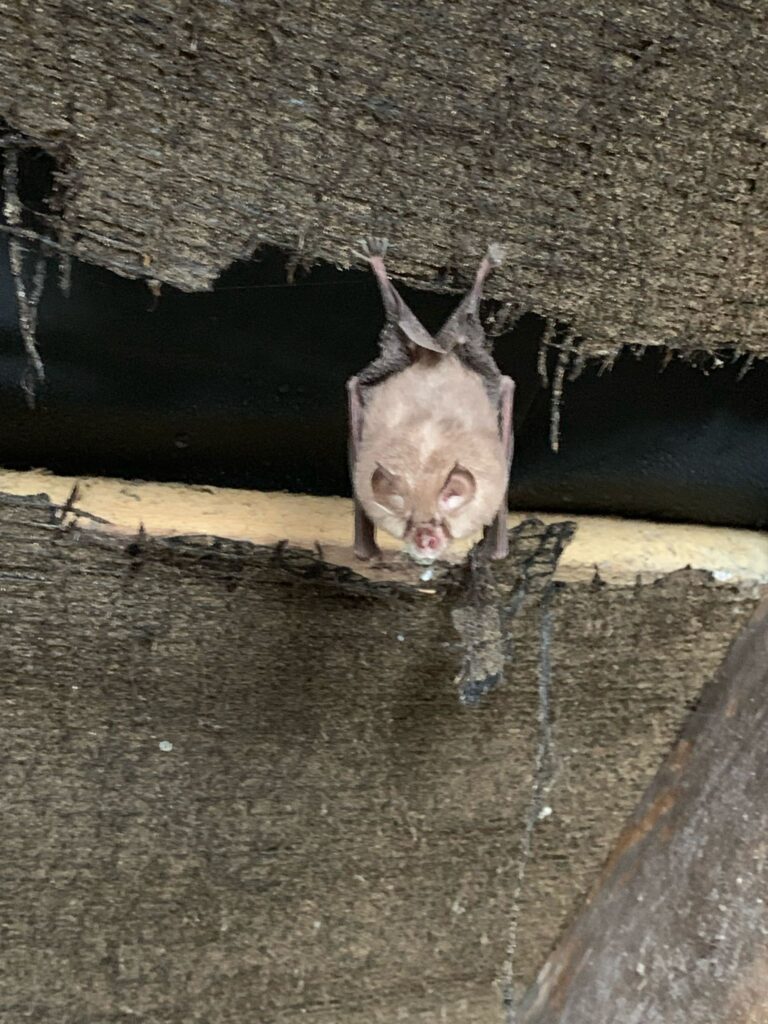
- A confirmed bat roost and breeding site. The coach house was home to over 250 lesser horseshoe bats — one of the UK’s rarest species and among the most strictly protected — alongside 15+ Pipistrelles. Every slate had to come off without disturbing the colony, and the works had to fit around the breeding cycle.
- Working under licence with the bat ecologists and the local conservation officer, with methodology agreed before a slate was lifted and reviewed throughout the job.
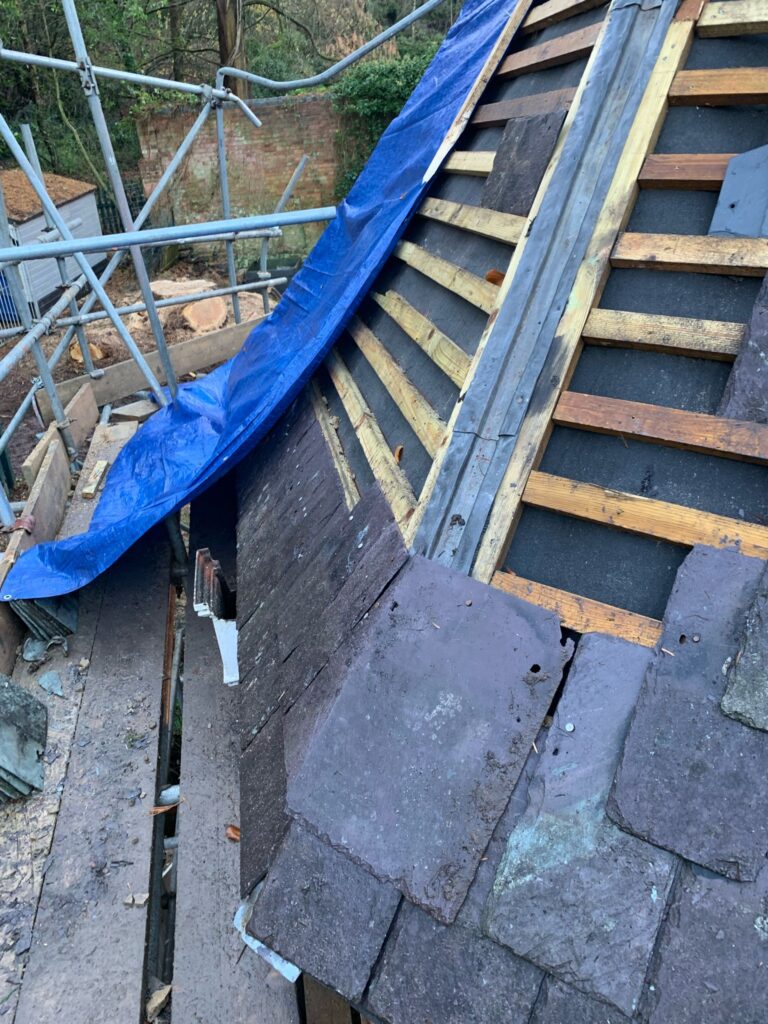
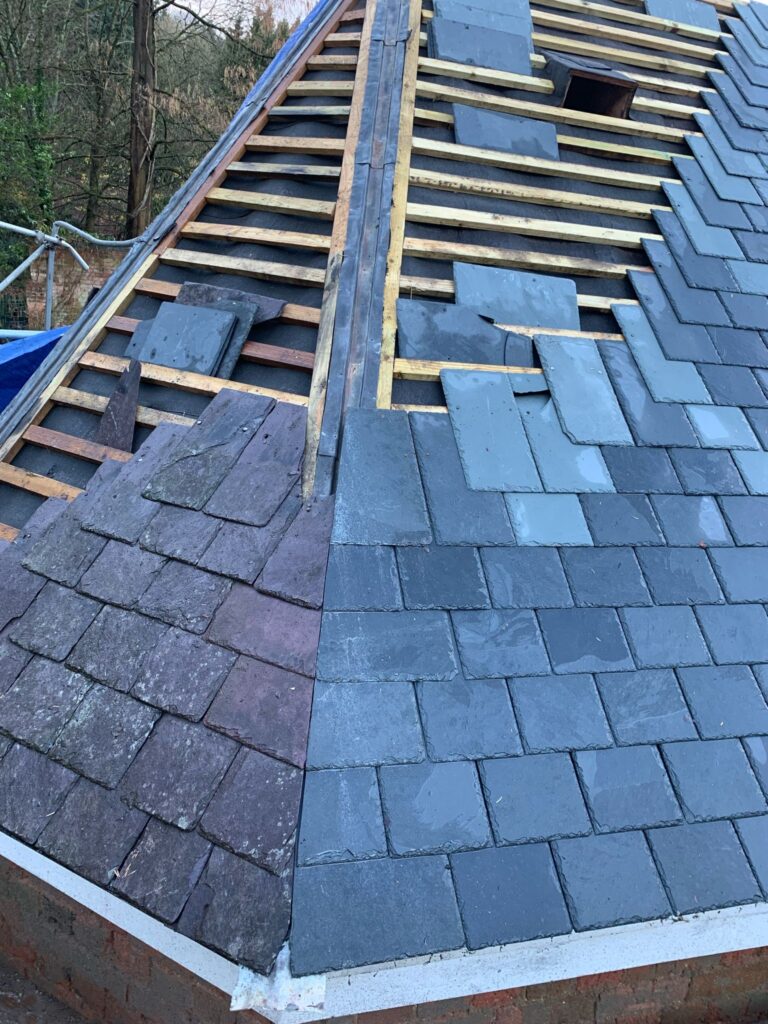
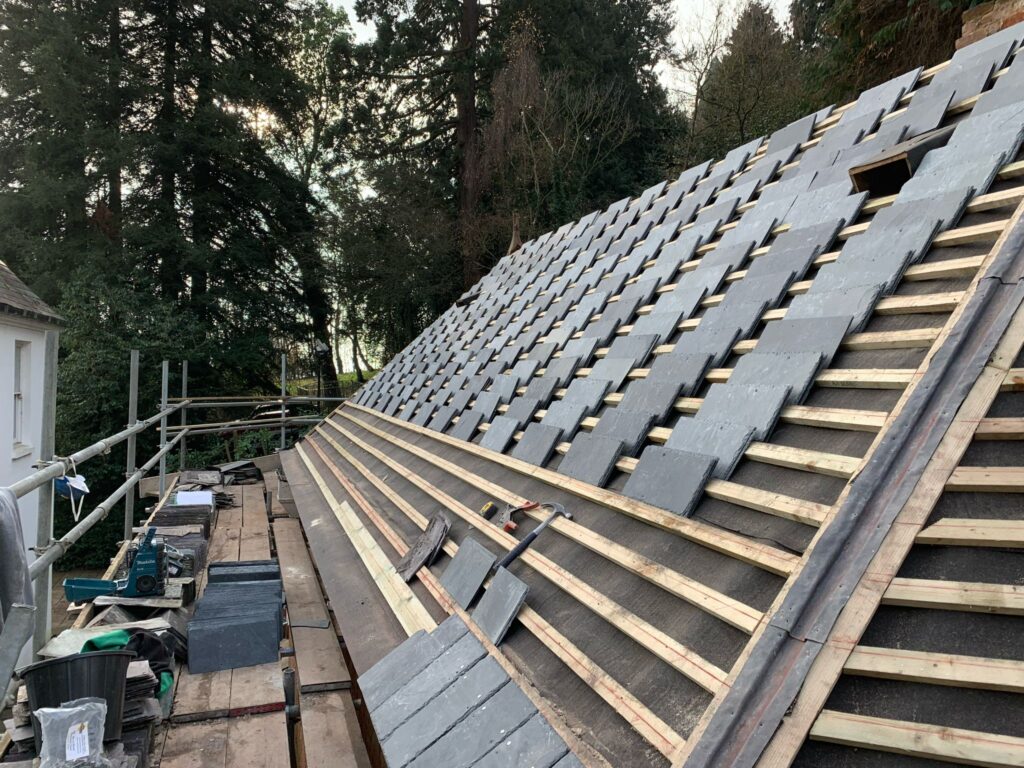
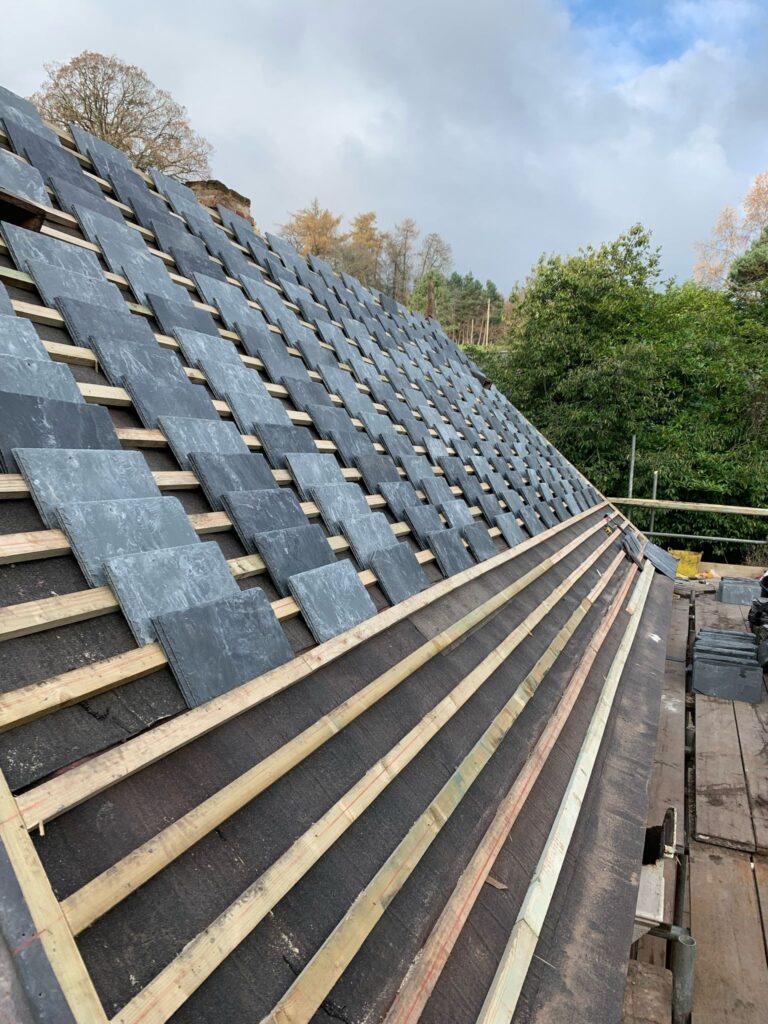
- Membrane choice driven by bat safety. Modern breathable membranes are too fibrous for a bat roost — bats become entangled in them and die. We installed traditional bitumen 1F felt instead, in line with bat conservation guidance for known roost sites.
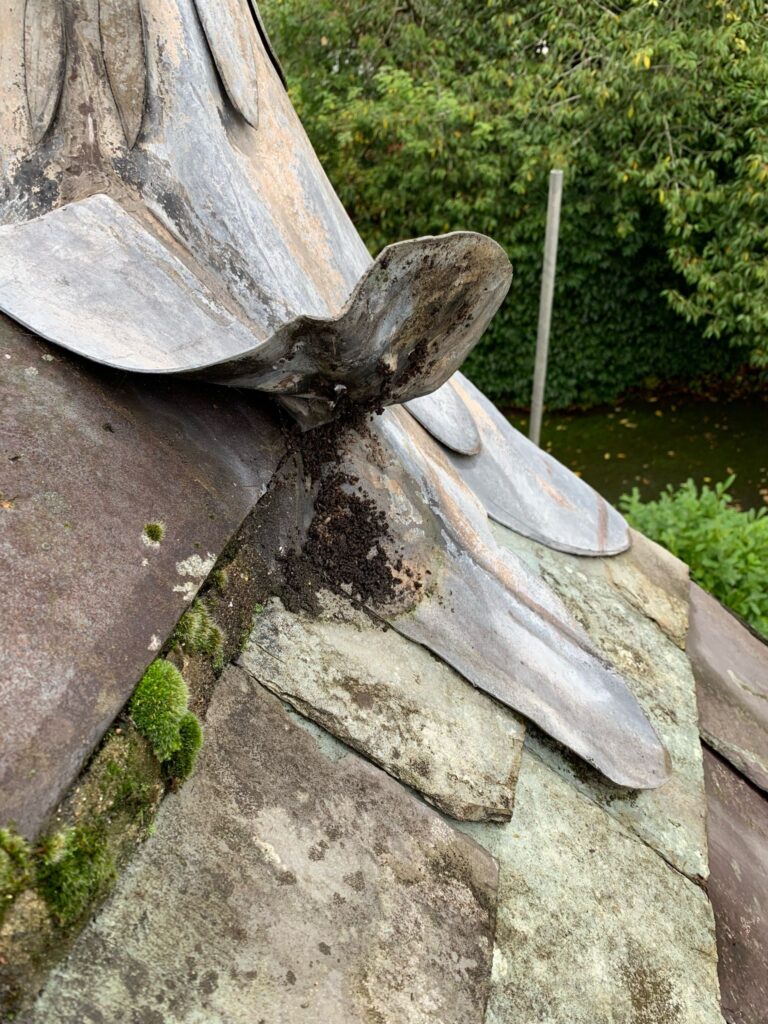
- Hand-crafted lead bat access boxes. Custom-formed in lead and built in to the roof so the bats can come and go safely — a conservation requirement that has to be properly integrated into the lead work, not bolted on as an afterthought.
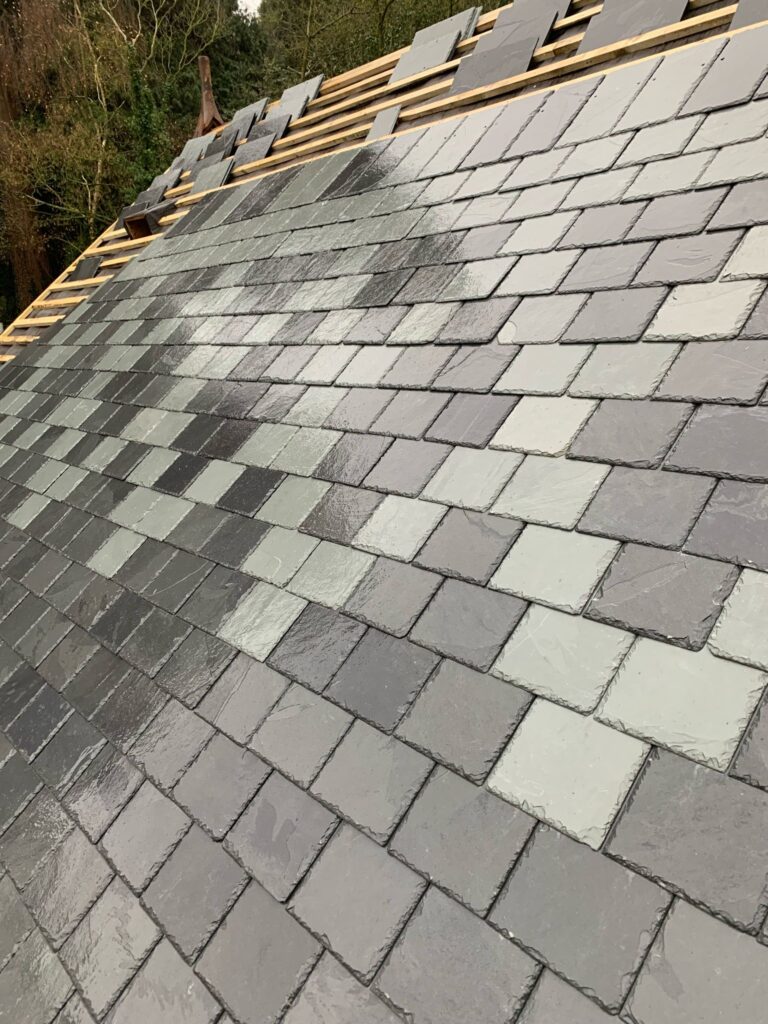
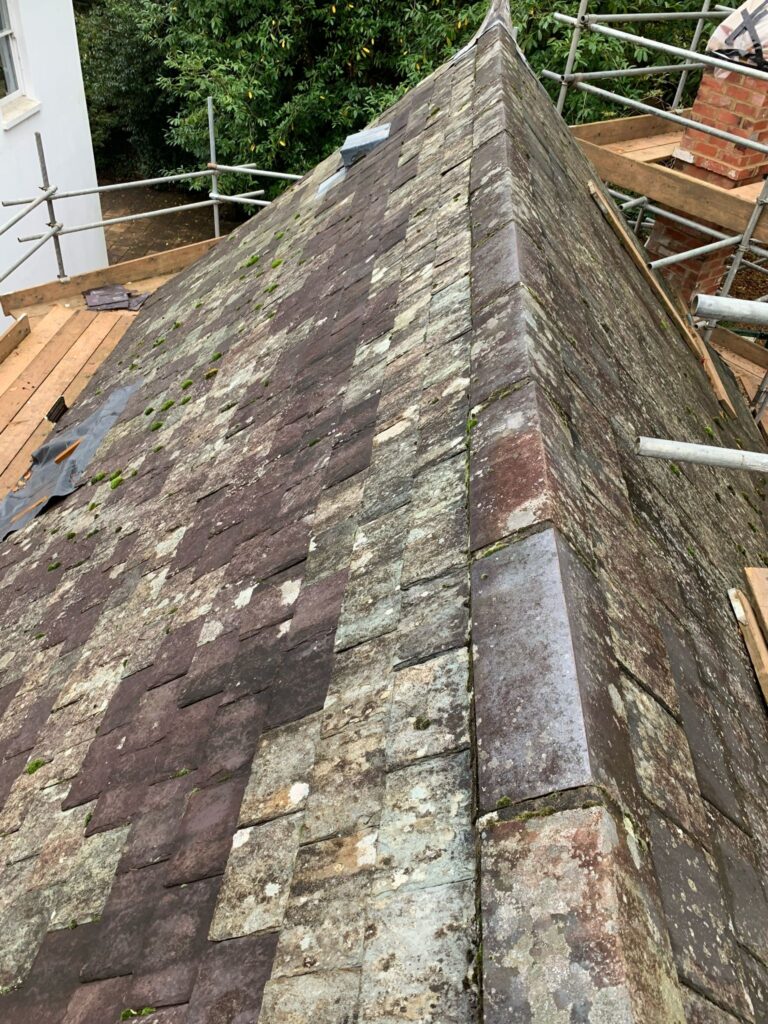
- Two-tone Brazilian slate pattern to the architect’s specification, with the contrasting colours set out cleanly across the slope.
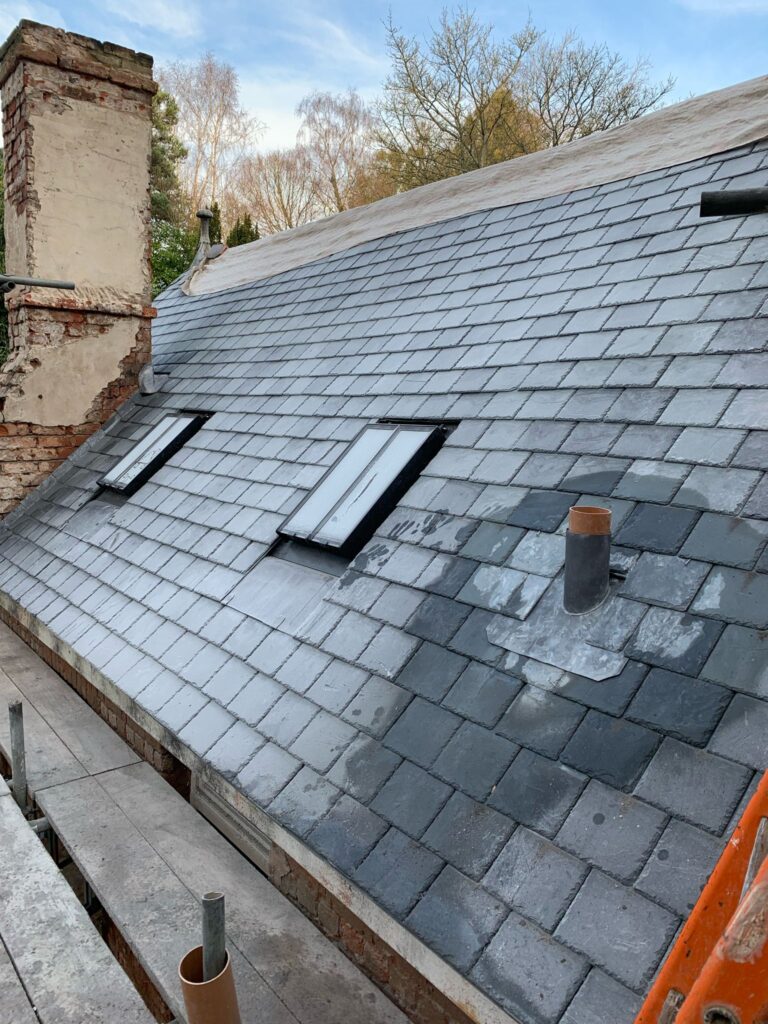
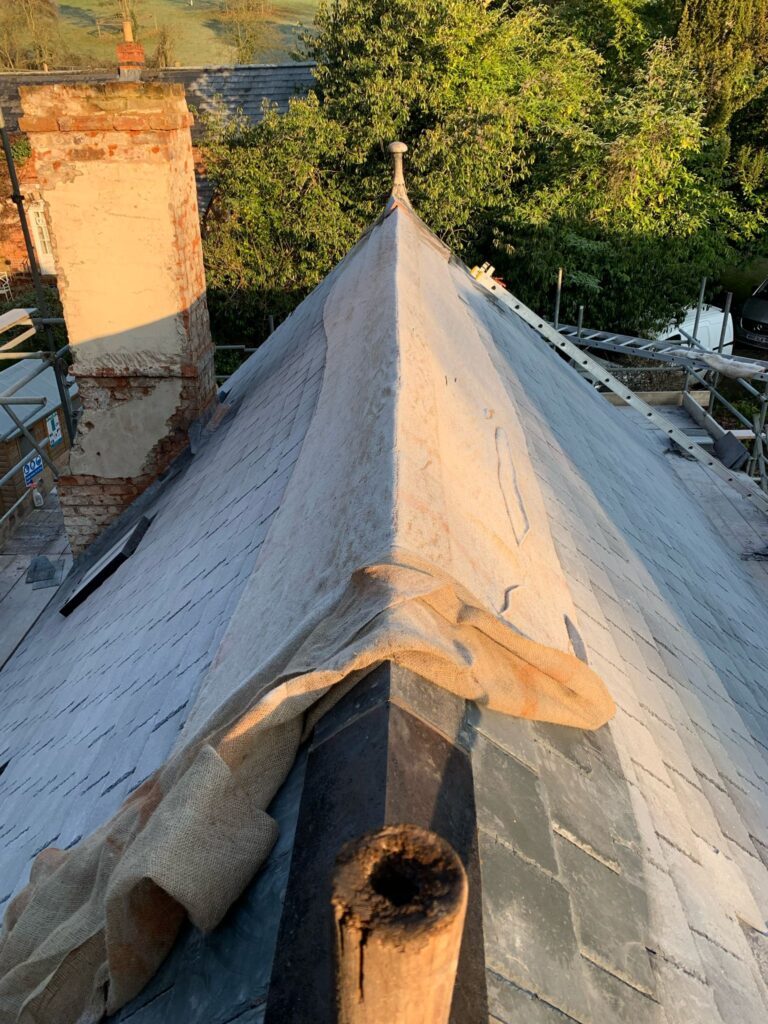
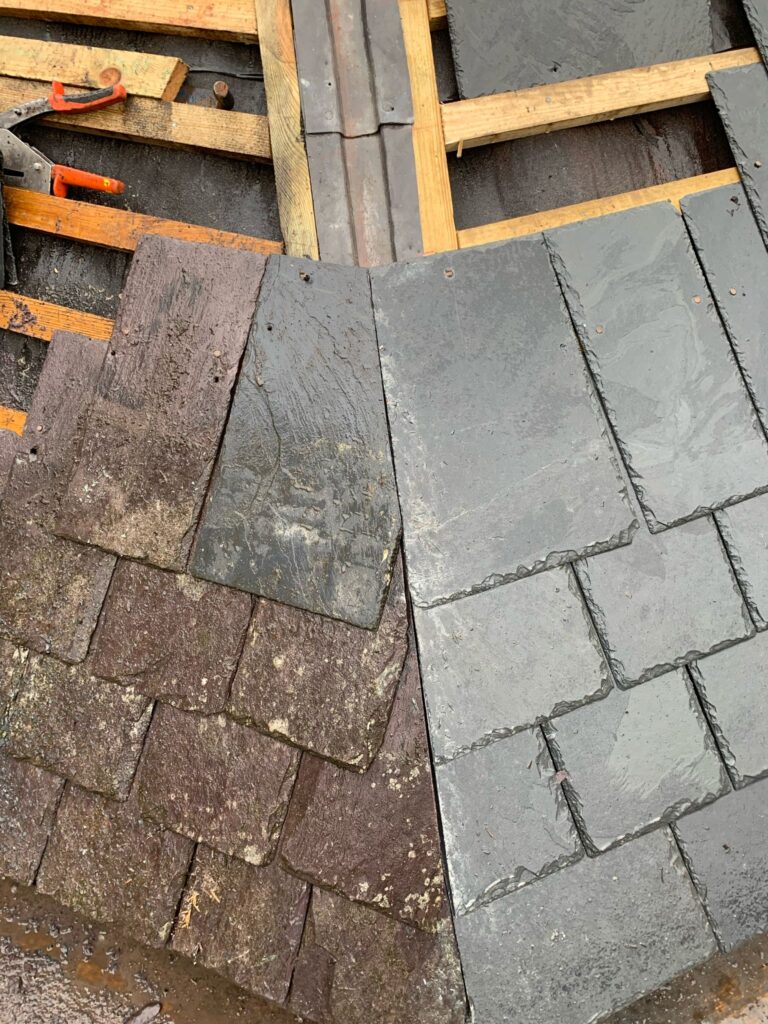
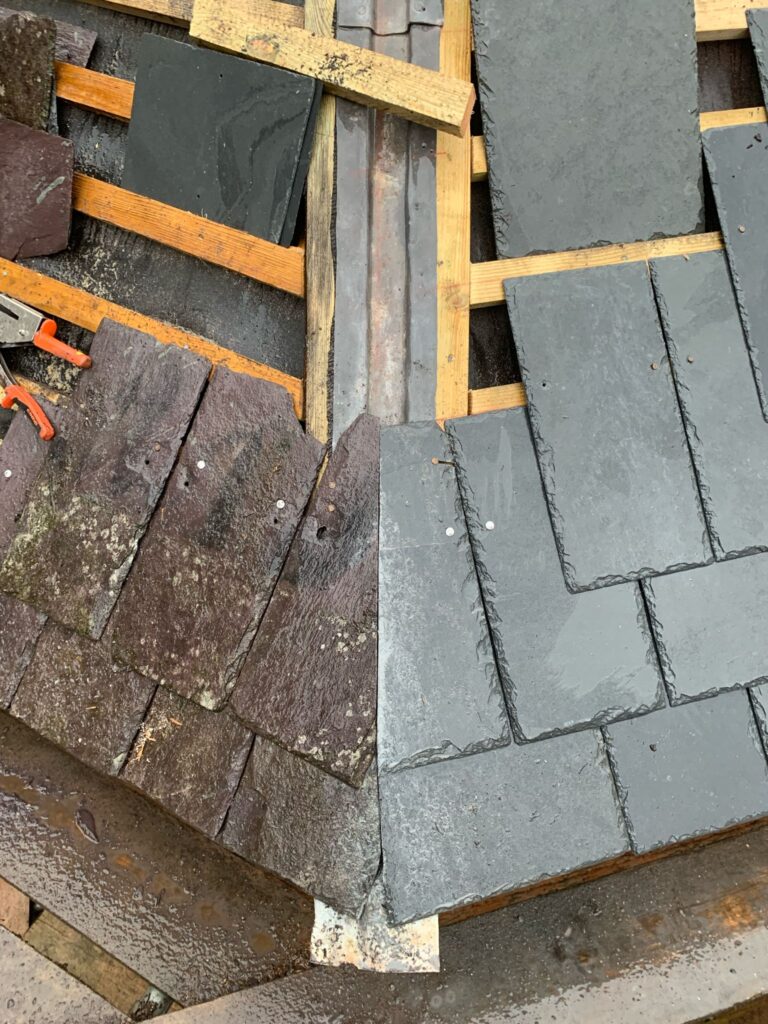
- Mitred hips. Slates cut and dressed to meet along the hip line without hip tiles or rolls — a traditional craft detail that leaves a clean, continuous slate finish.
- Hidden lead valleys. Lead-lined valleys dressed in below the slates rather than left open, keeping the visible finish clean and the waterproofing concealed.
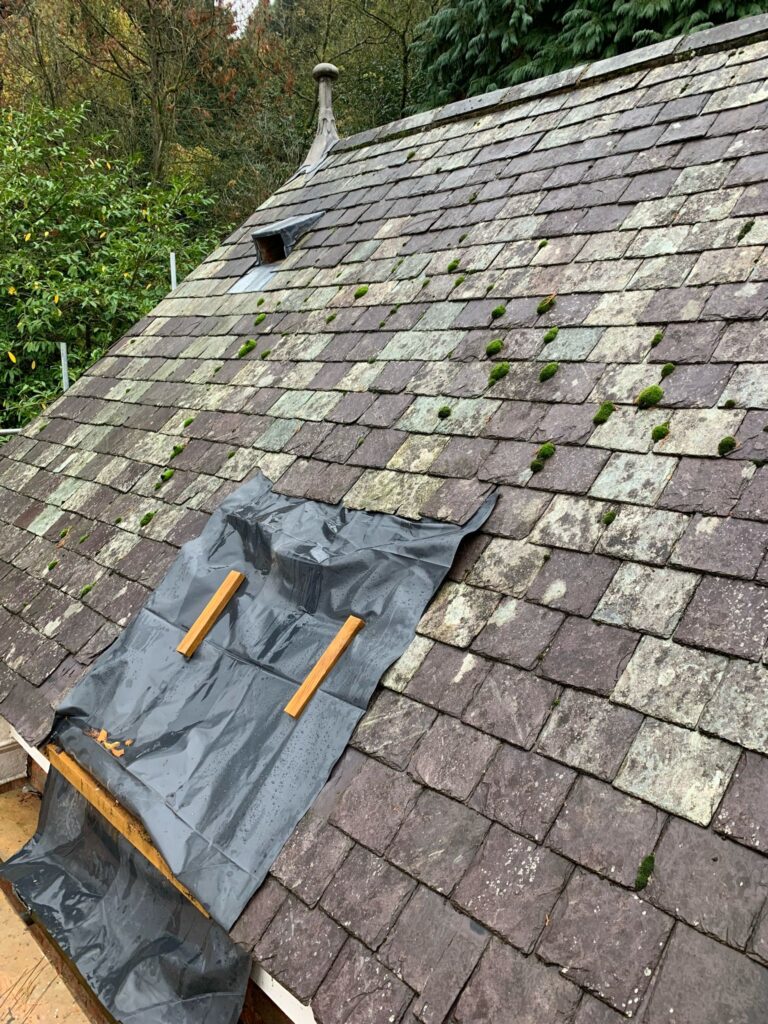
- Refurbishment of the original lead finials, carefully removed, restored off-site and reinstalled.
- A conservation rooflight installed to the rear, chosen for its flush, traditional appearance to satisfy the conservation officer.
A major setback – and the recovery
Part-way through the job, with the roof freshly battened, a tree being felled nearby came down in the wrong direction and landed directly across our works. The damage was substantial: the oak king truss was snapped clean through, a recently rebuilt chimney was demolished, and the scaffold was mangled. We dealt with the immediate make-safe, rebuilt what needed rebuilding, and carried on. The finished roof gives no hint that any of it happened.
The result
A heritage coach house with a properly executed two-tone Brazilian slate roof, the original lead finials reinstalled, a conservation rooflight tucked discreetly into the rear elevation, and a fully protected bat colony that came through the entire works undisturbed. The architect’s pattern reads cleanly across the slope and the conservation officer signed the job off.
Why it stands out
The combination is what makes this one. Heritage materials, a major protected species roost, conservation officer oversight, and a serious mid-project setback we recovered from without compromising the finish. It’s probably the single project that best sums up what we take on and how we deliver it.