
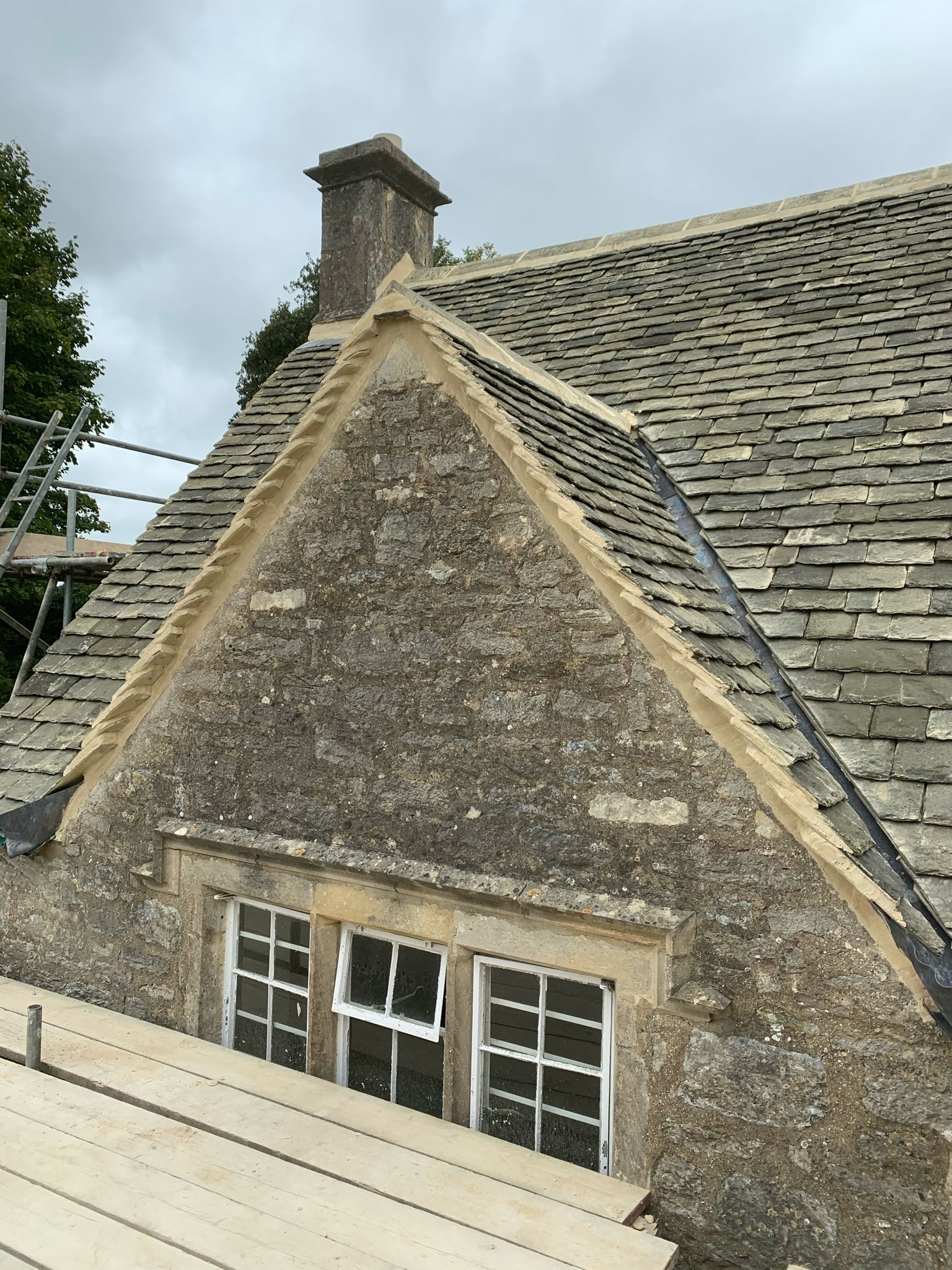
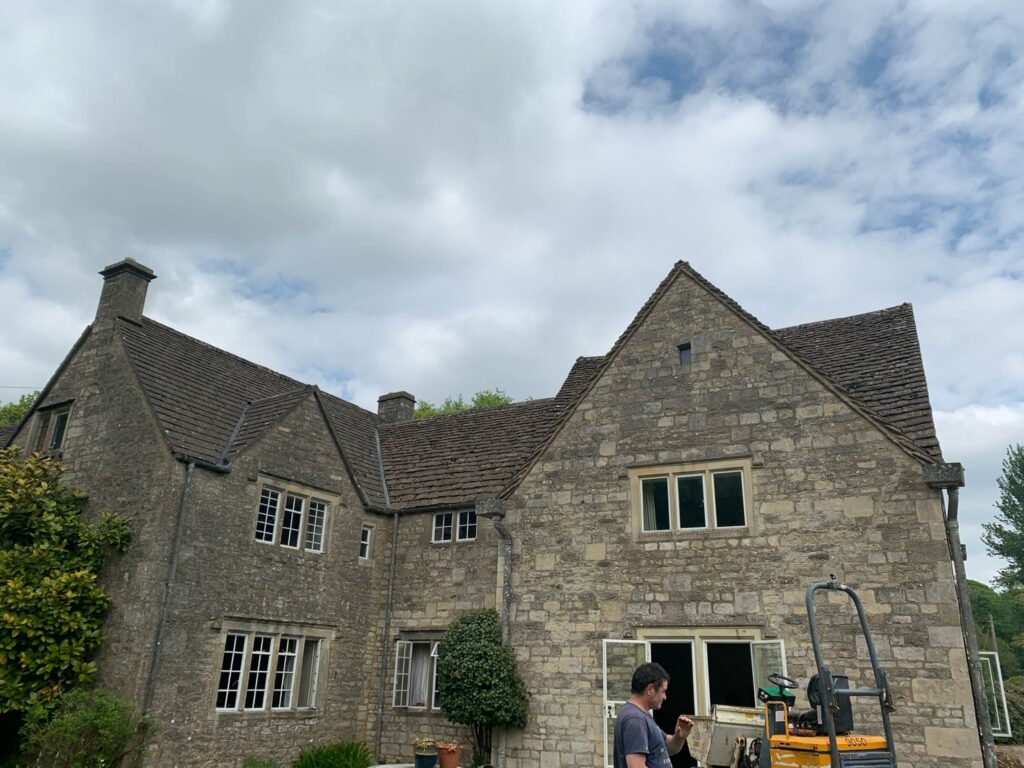
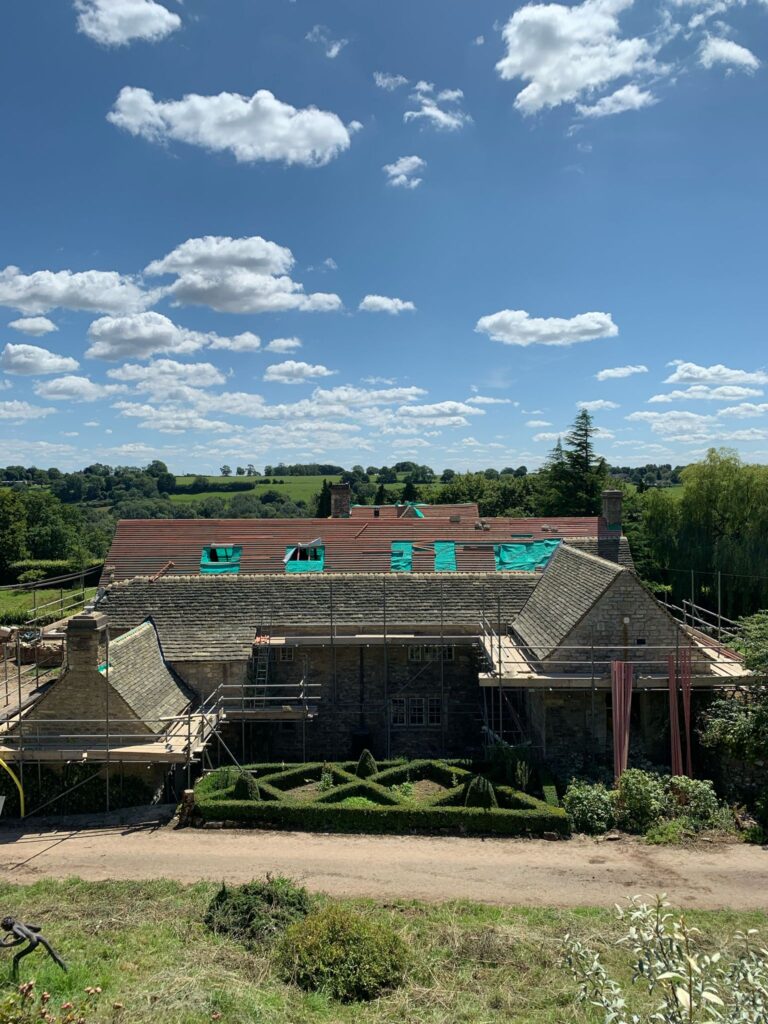
A full heritage roof restoration on a substantial Bisley property — natural Cotswold stone stripped and replaced with reconstituted Cotswold stone, complete with dormers, lead valleys, hidden valley soakers and conservation rooflights.
The property and brief
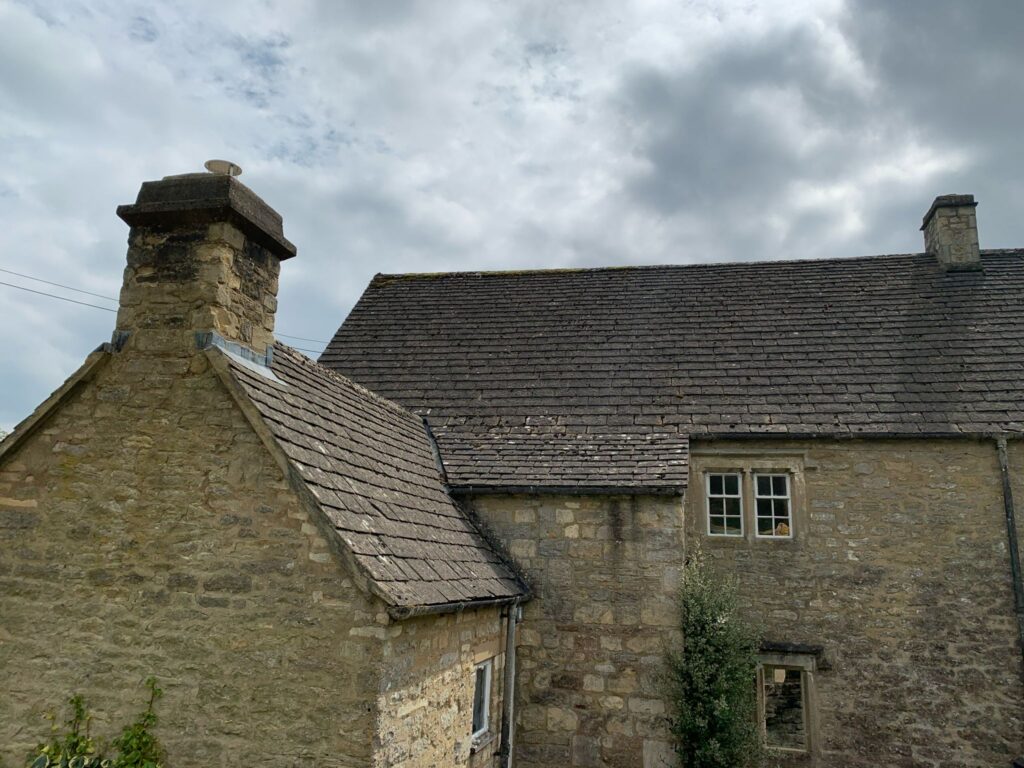
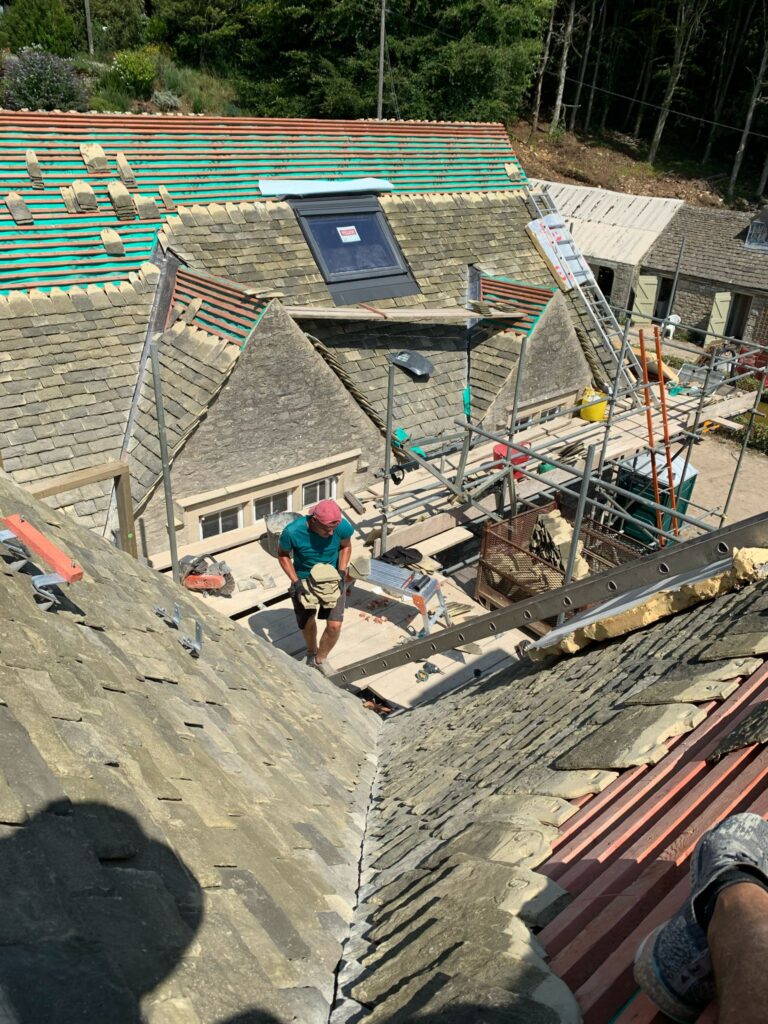
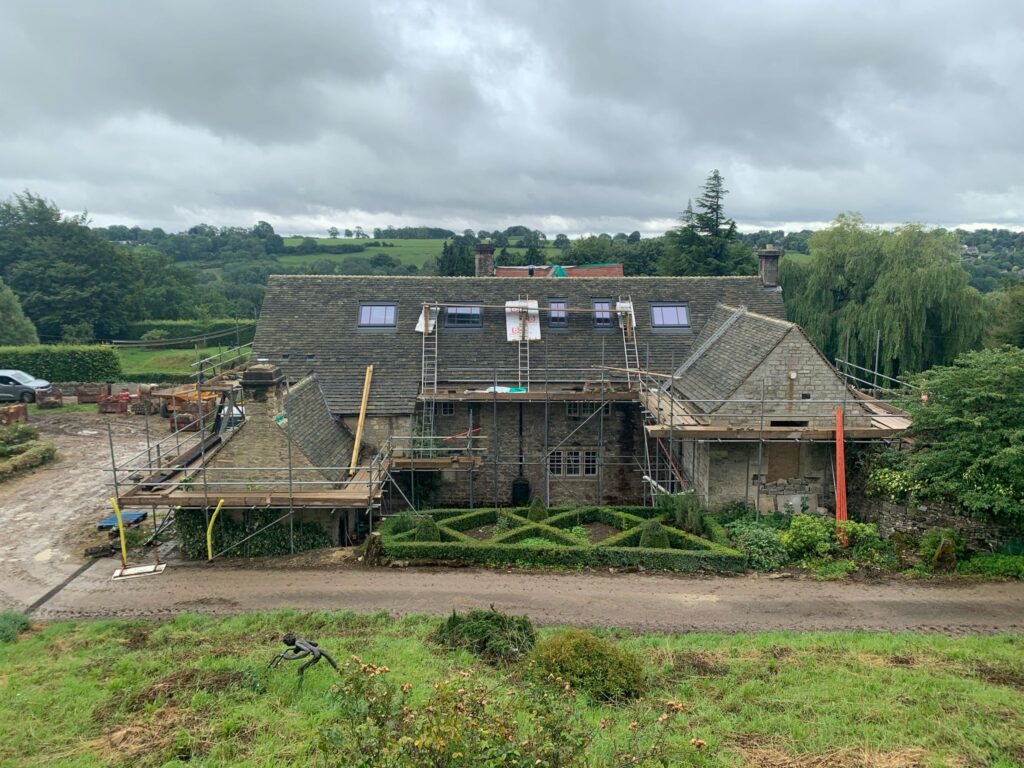
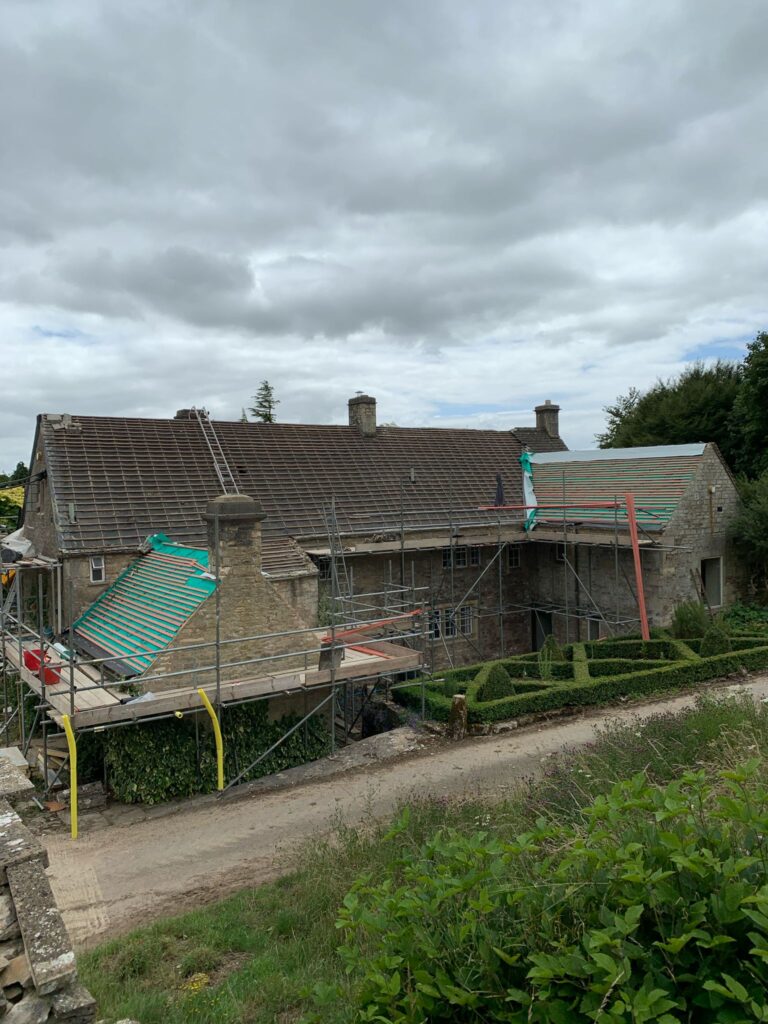
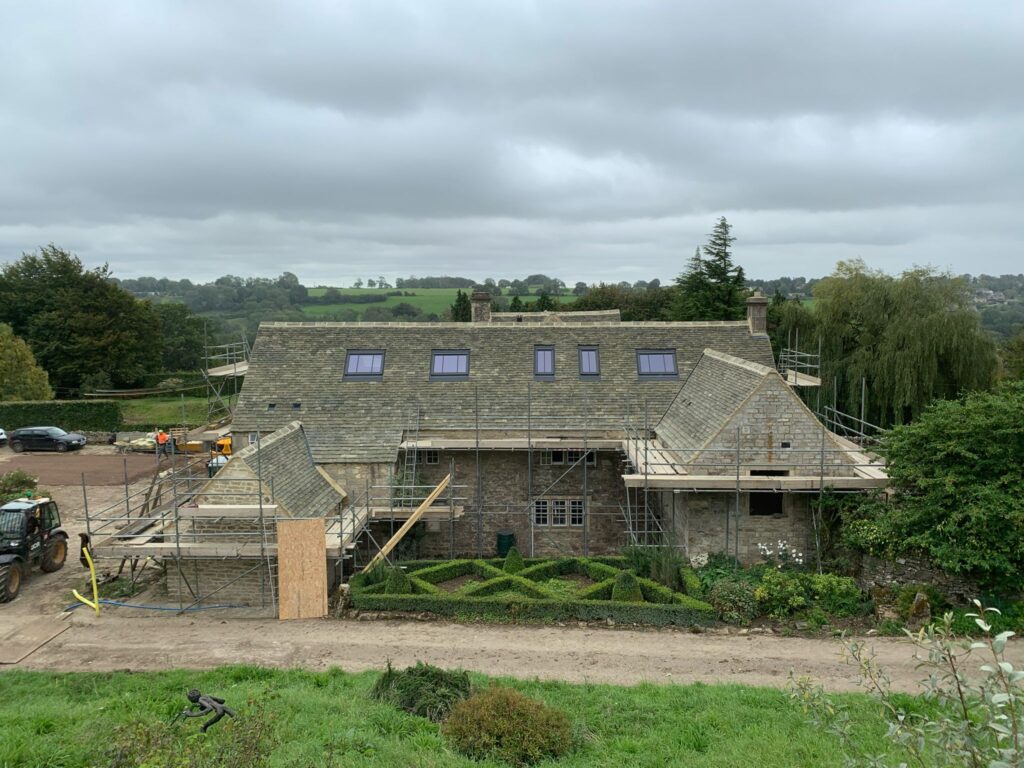
A 350m² Cotswold roof on a substantial Bisley property in need of a full restoration. The existing natural stone covering had reached the end of its serviceable life, and the owners wanted a finish that kept the character of the original while delivering modern weathering performance and a long, predictable lifespan.
The challenge
Several things made this one anything but routine:
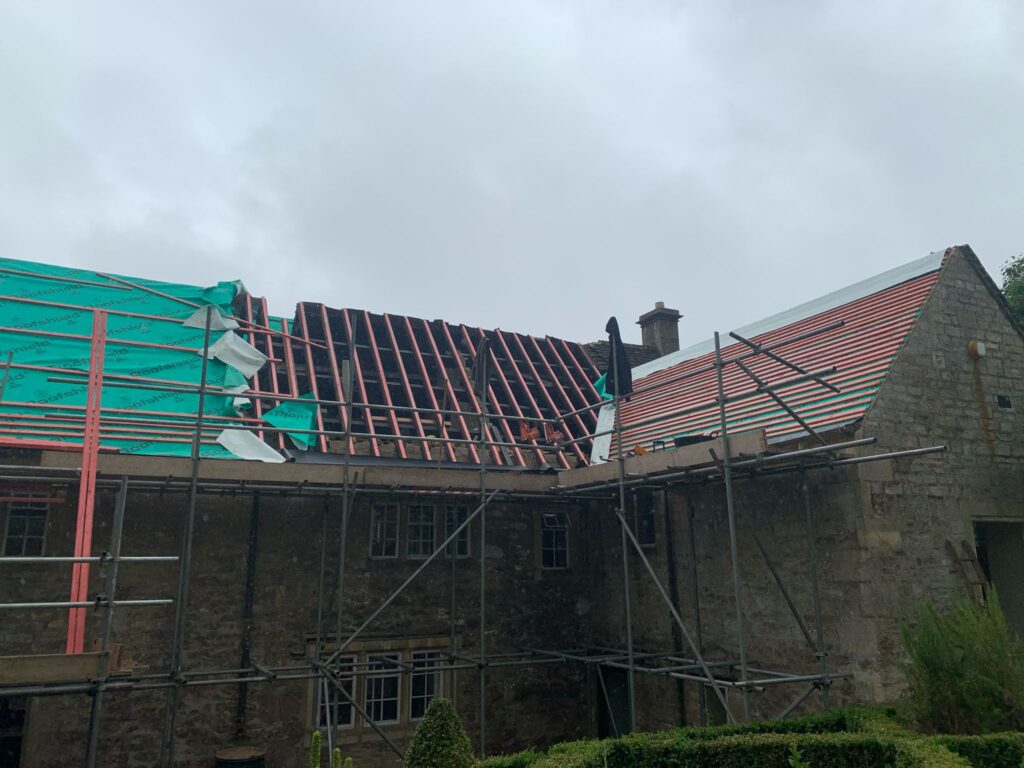
- Active bees’ nests in the existing roof structure, discovered once stripping began — and confirmed the hard way after a few of the crew were stung. Work paused while we brought in a specialist pest control firm to clear them safely before we could continue.
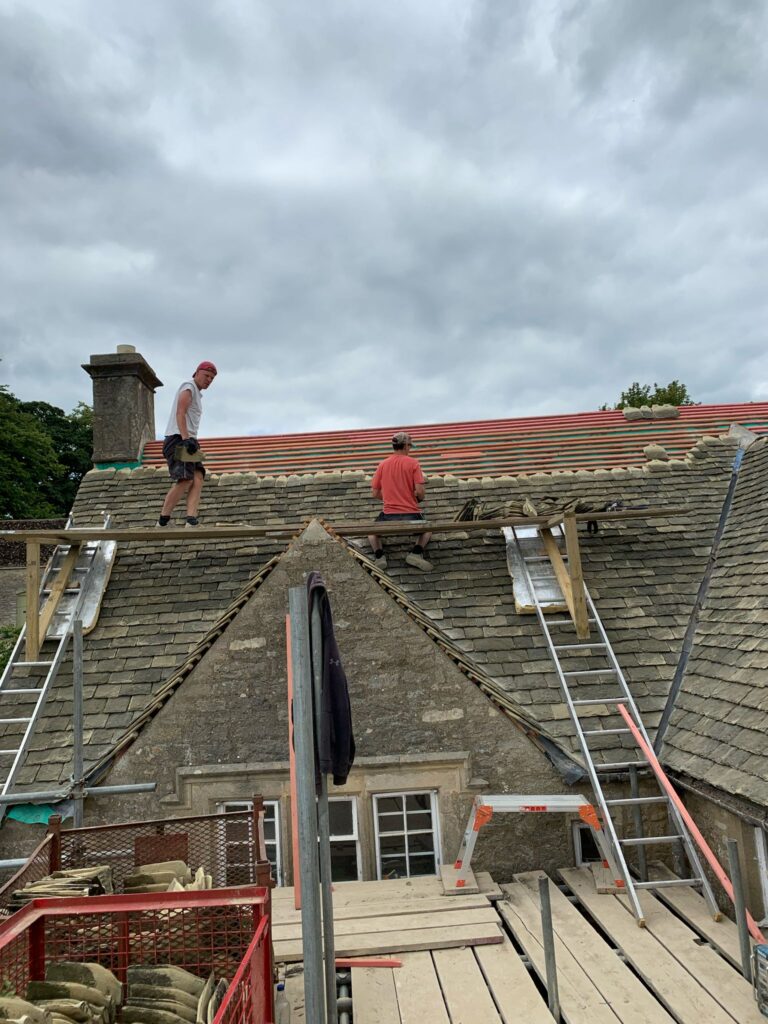
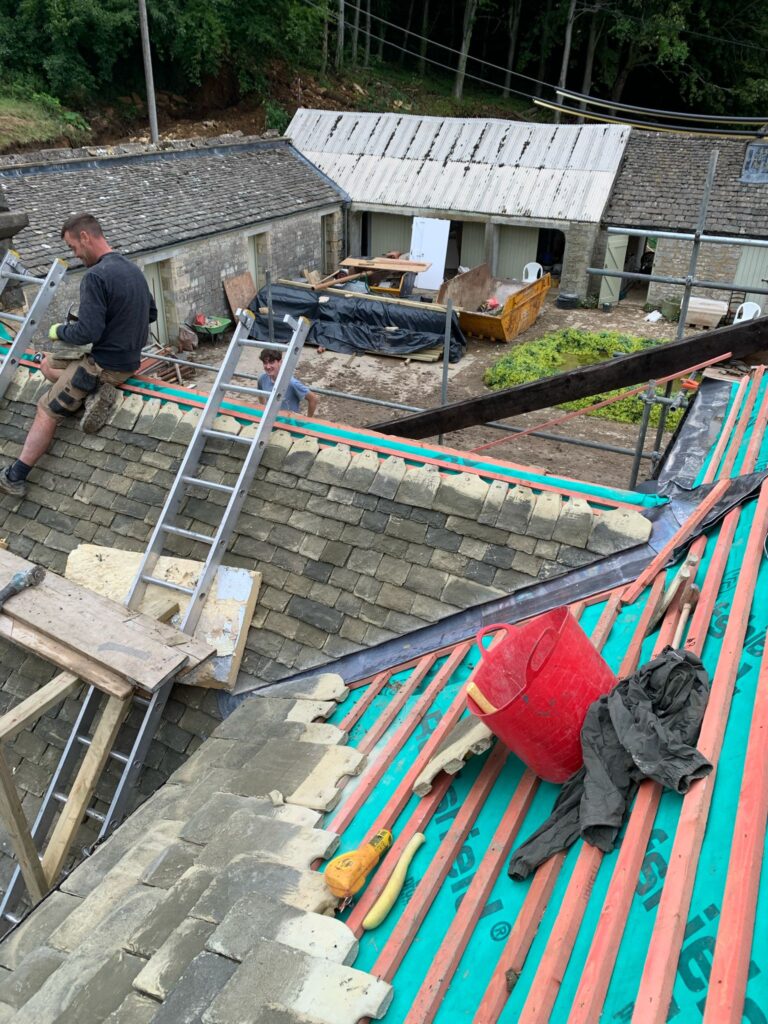
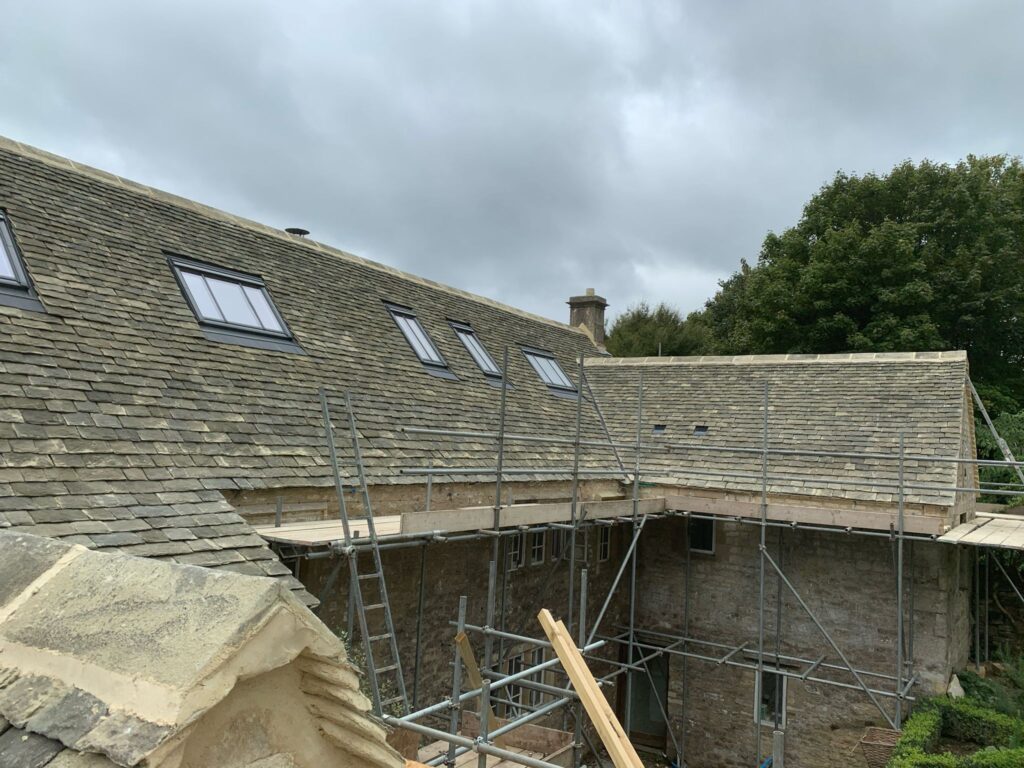
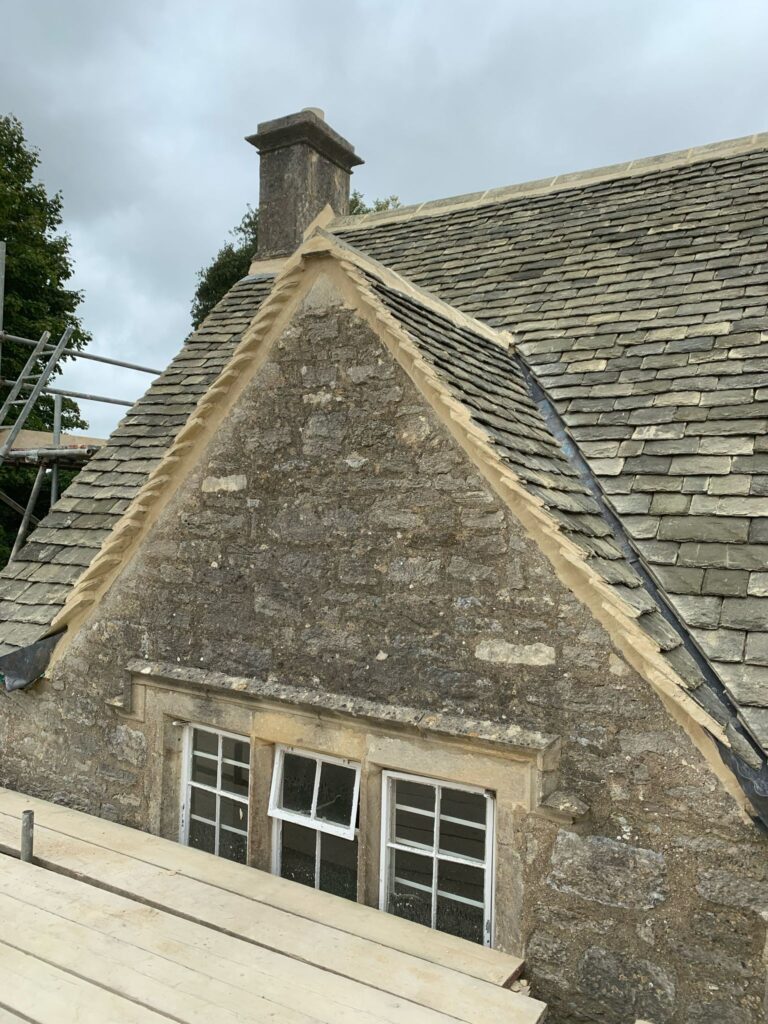
- Multiple dormers with lead valley detailing, each one needing to be reformed cleanly to match the new covering.
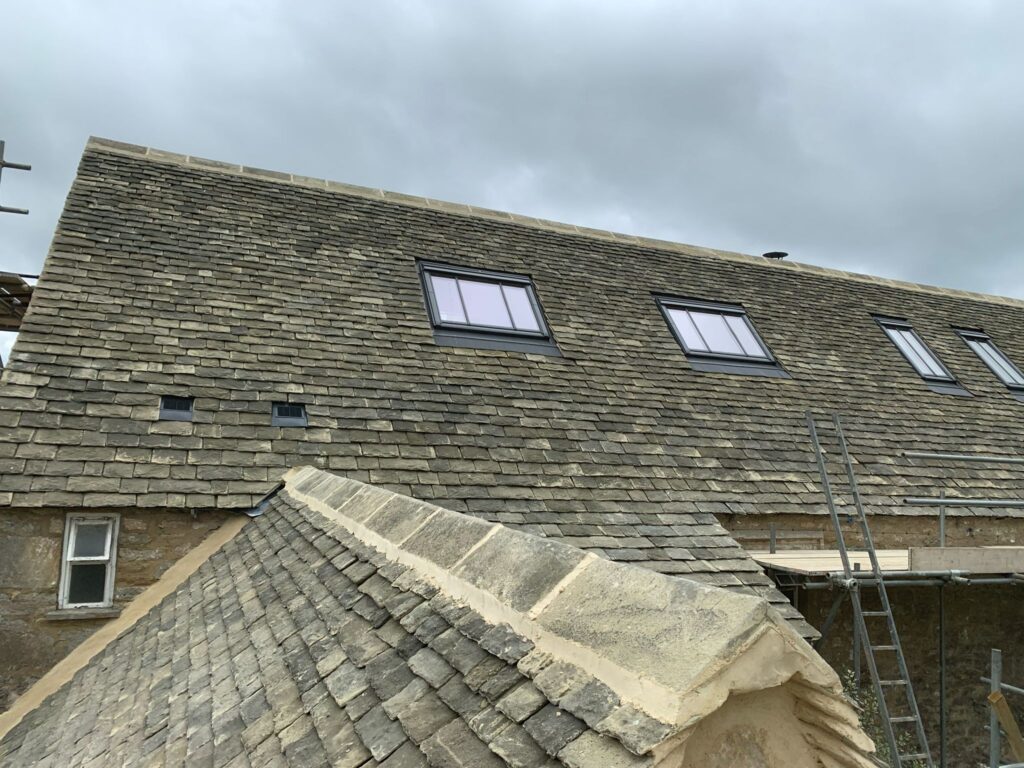
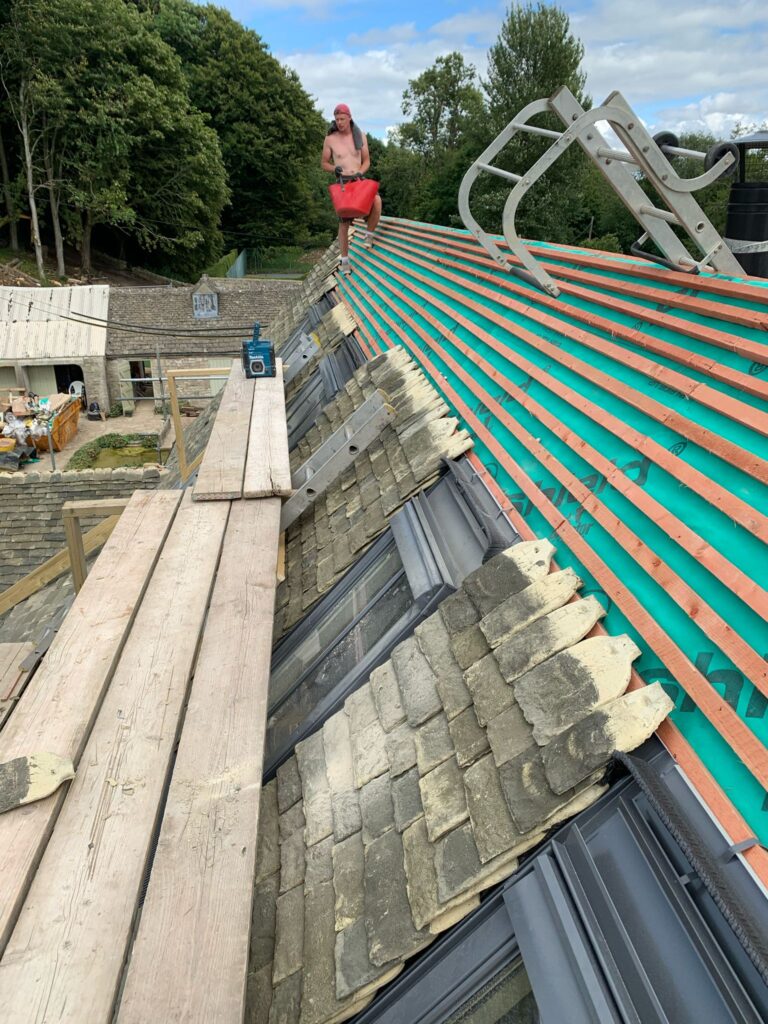
- Multiple conservation rooflights to be installed and flashed in — chosen for their flush, traditional appearance in keeping with a Cotswold heritage roof.
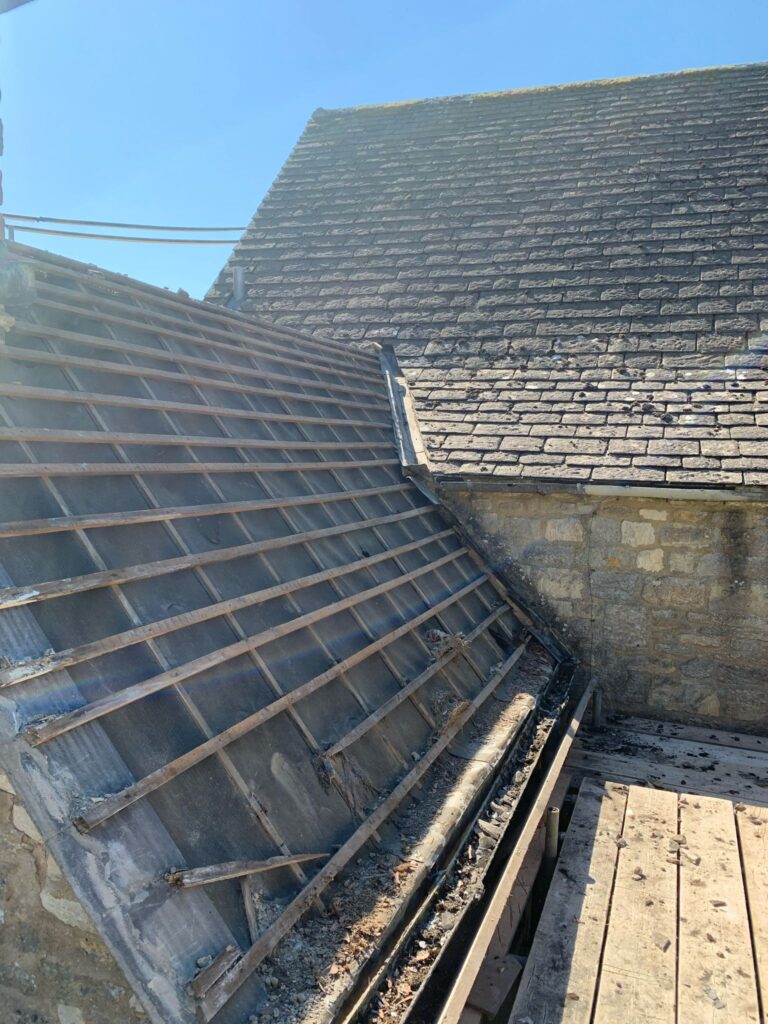
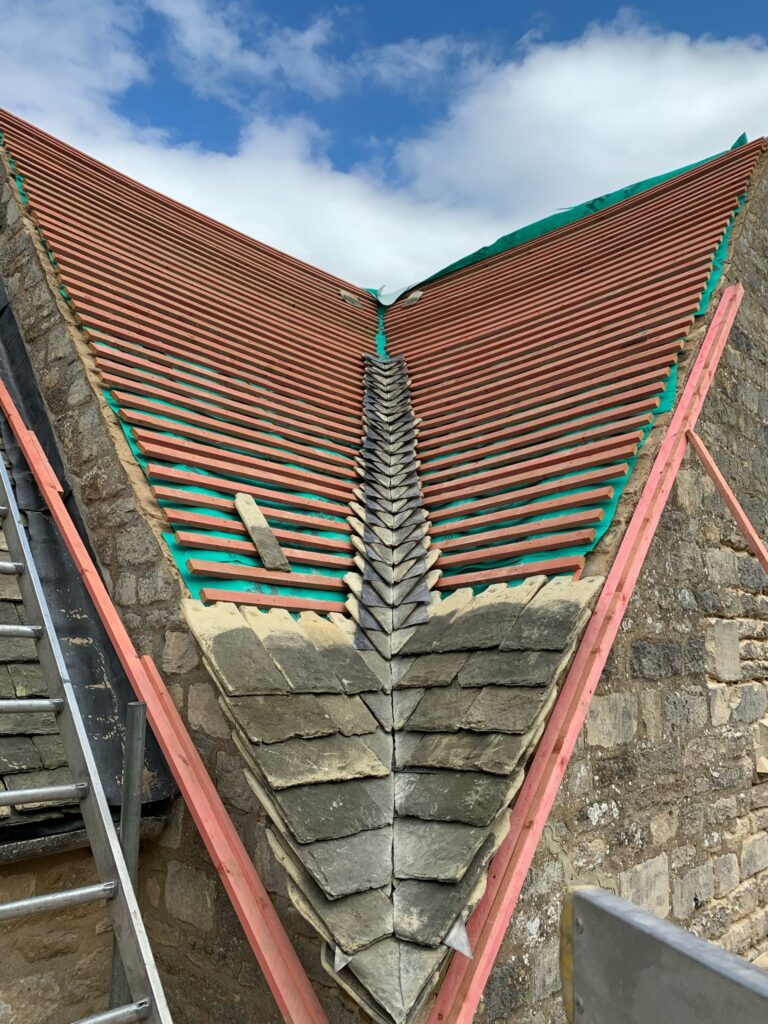
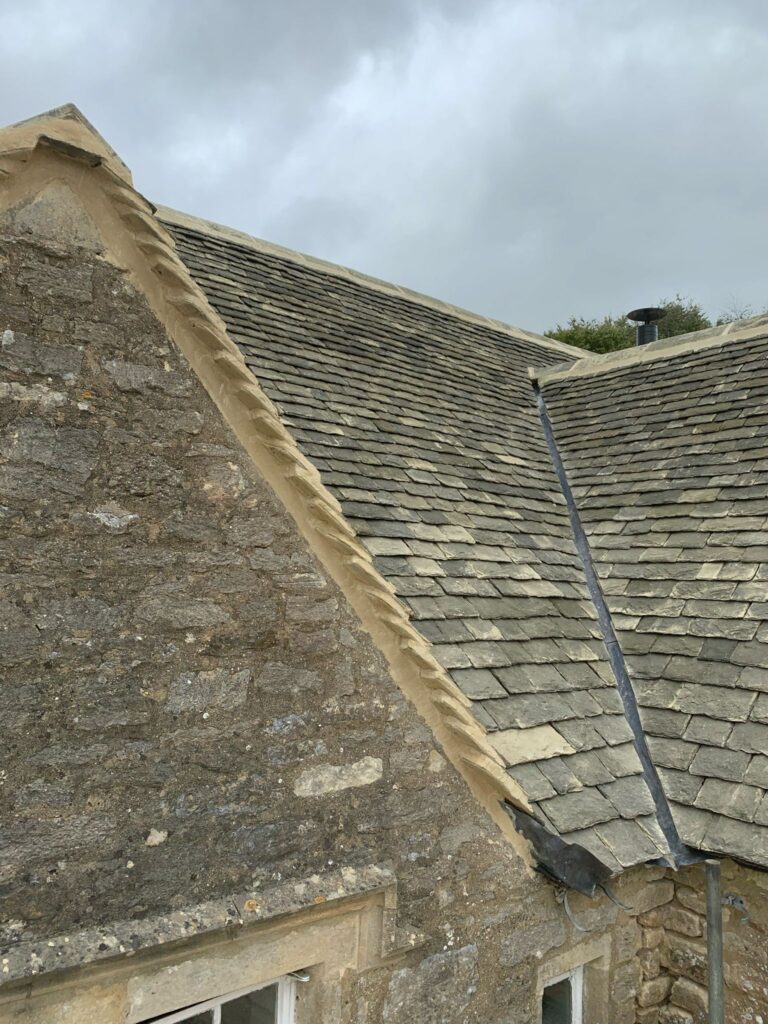
- Hidden valleys dressed with fish-tail lead soakers — a traditional detail that disappears into the finished roof but does the hard work of keeping water out.
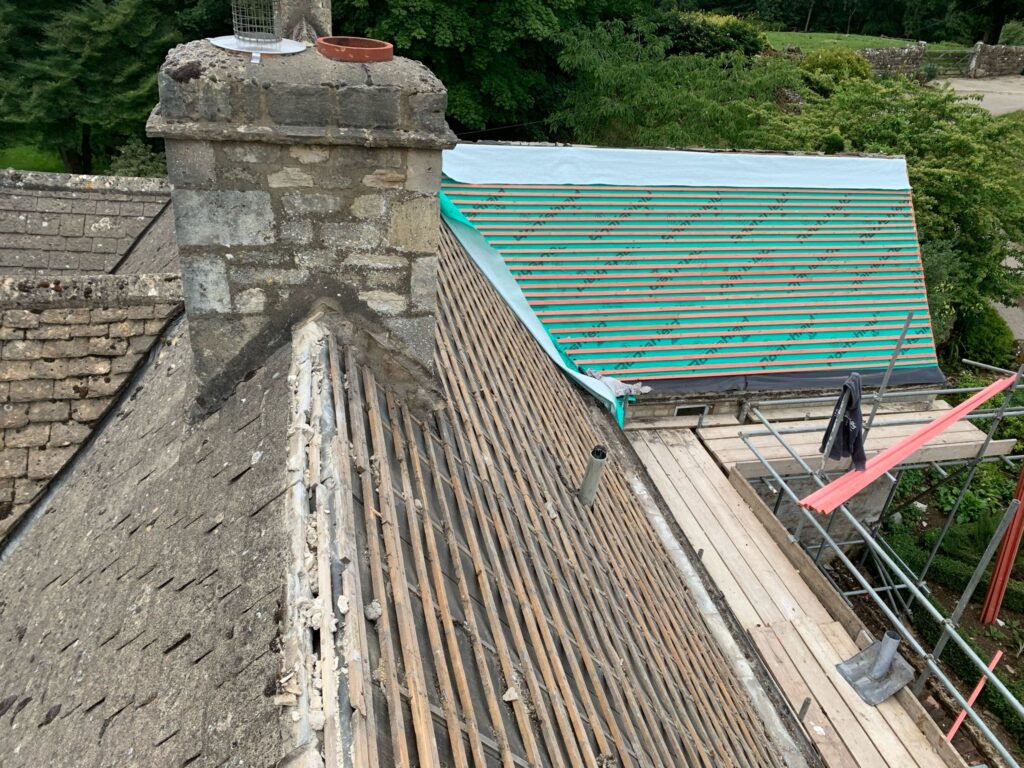
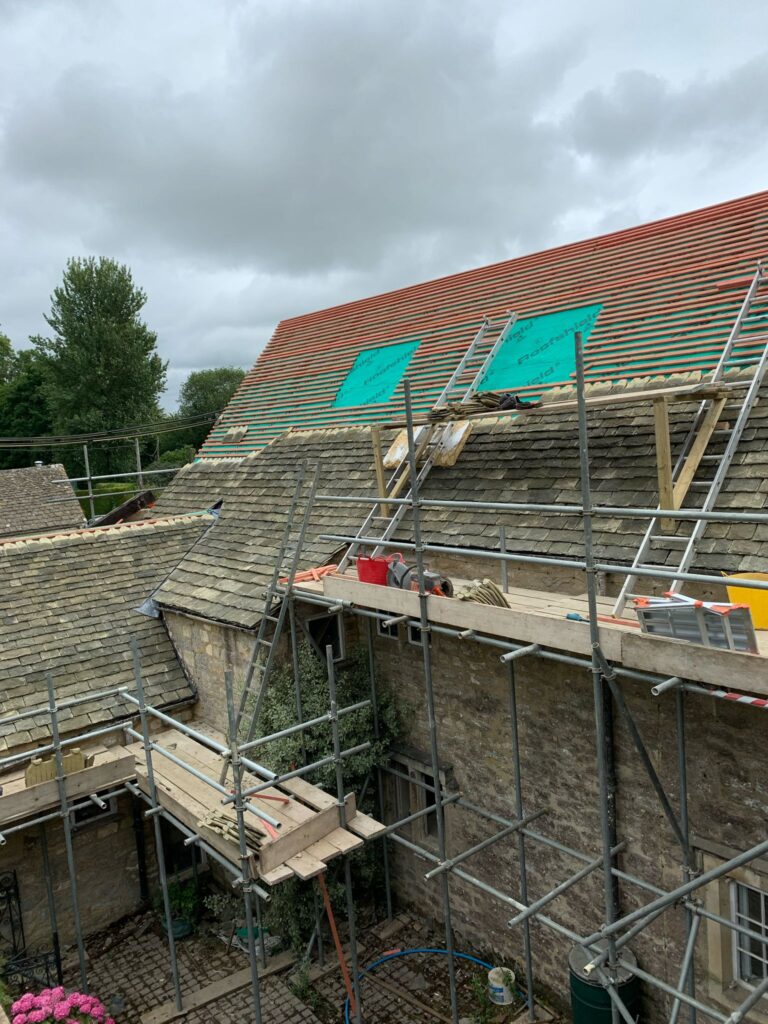
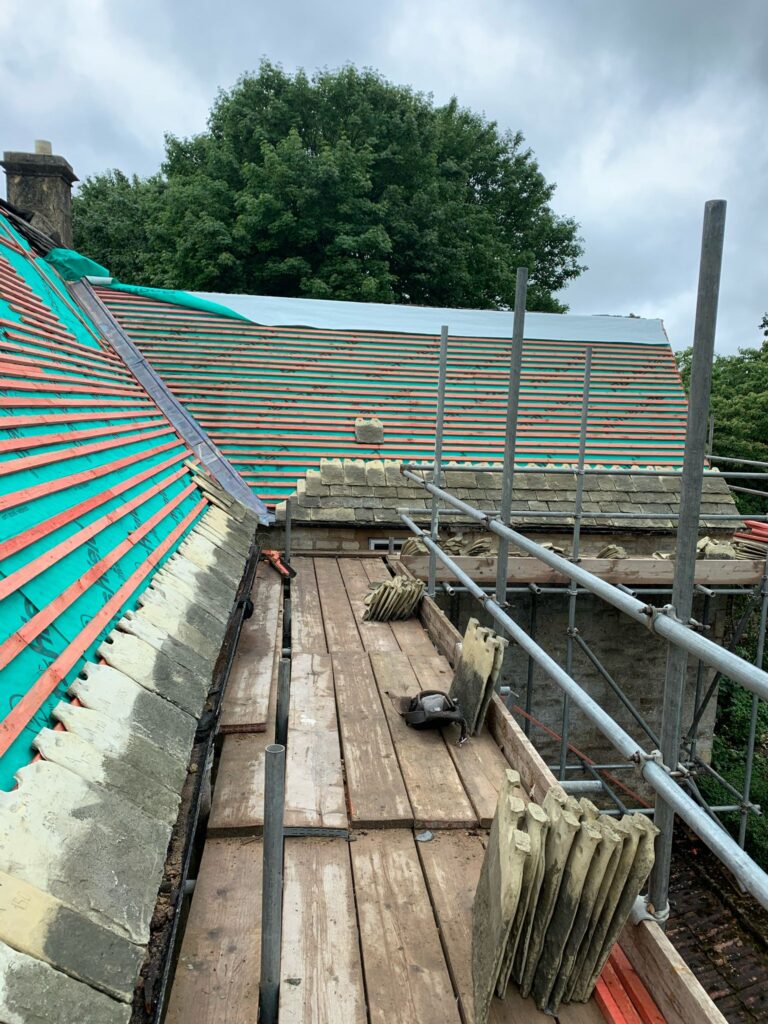
- Counter battening through the build-up to maintain a continuous airflow gap between the roofing felt and the PIR insulation boards — vital for keeping the structure dry and the insulation performing as intended.
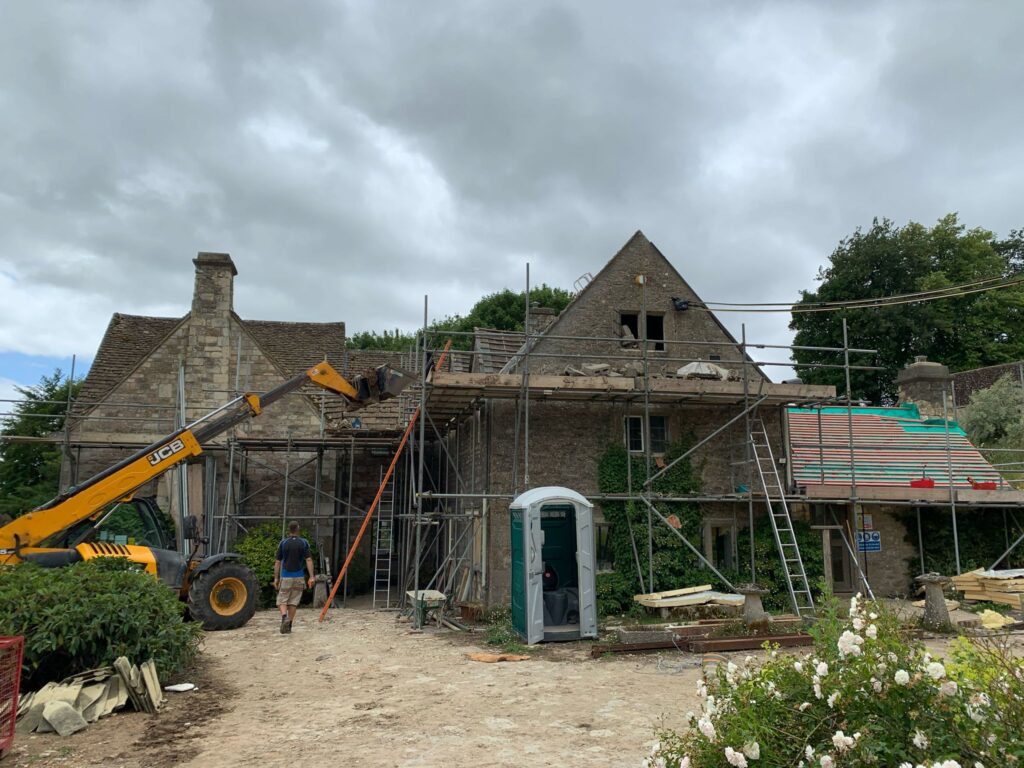
- A restoration brief that meant the interior had to be protected throughout. Stripping a roof of this size opens the building up to weather and debris, so planning the sequencing, temporary covering and daily make-safe was as important as the roofing itself.
What we did
The original natural Cotswold stone was carefully stripped and the structure inspected before the new build-up went on. We installed counter battening to keep a continuous airflow gap between the roofing felt and the PIR insulation, formed lead valleys to all dormers, fitted the conservation rooflights with full flashing kits, set in fish-tail lead soakers to the hidden valleys, and finished with Cardinal reconstituted Cotswold stone — chosen to replicate the look of natural Cotswold at a scale and weight properly suited to a roof of this size.
The result
A 350m² roof that reads as a genuine Cotswold roof from the ground, with the dormers, valleys and detailing executed cleanly throughout. The interior came through the works untouched, the insulation and ventilation are properly specified, and the owners have a covering built to give decades of low-maintenance service.
Why it stands out
Size and scope. Most Cotswold-style roofs we tackle are smaller domestic jobs — this was a full heritage restoration on a substantial property, with every traditional detail done properly and to a standard the whole crew is proud of.